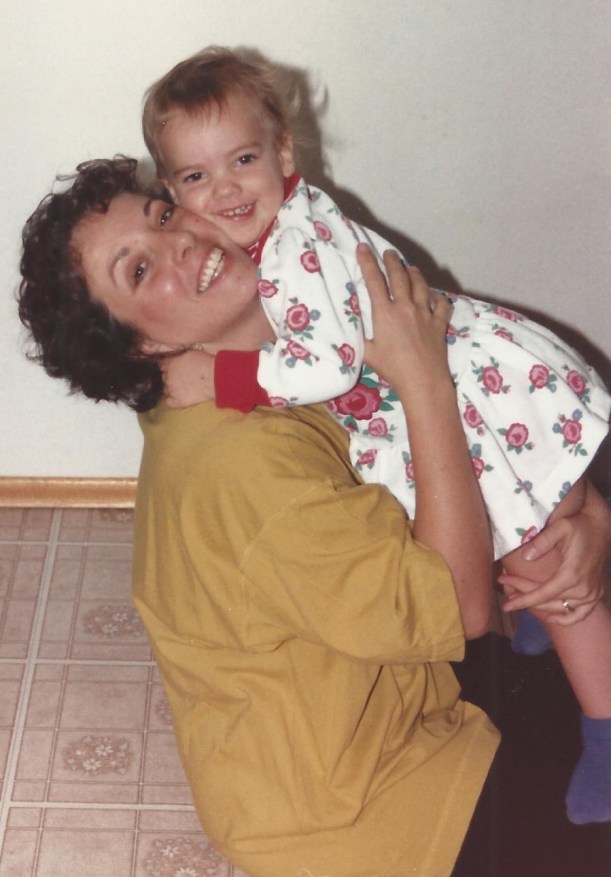
Now, mamas, I’m not going to tell you, “Don’t let your babies grow up to be cowboys,” but I will say, “Seize those moments!” I’d love to go back to this moment and enjoy that face-smashing hug a few more times!
Circa 1992, this photo shows my (our) daughter, Chelsie, loving her mama, right there in the middle of the floor. Sometimes you have to just be on the floor. Or the couch, the bed, the dirt, the tub, even, eh-hem, the potty. Wherever and whenever the moments present themselves, go for it! Abandon the to-do’s and not-right-now’s and seize the moment.
Lesson to me, the Nana. I need to remember this when my grands are all over the place. They are growing up so fast! Nothing is more important than those sweet hugs and kisses. I’d pass on the germs they share, but that goes with the territory of young children building up their immunities.
Seize a moment today.
P.S. Comment below and let me know which moment you captured!
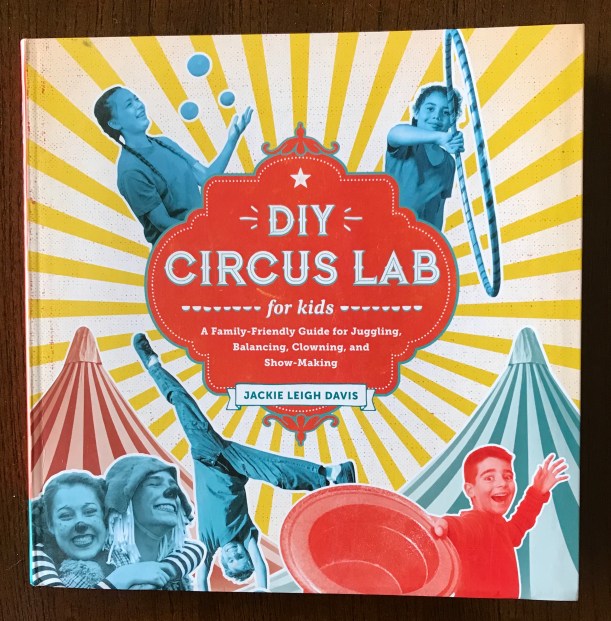
DIY Circus Lab for Kids, A Family-Friendly Guide for Juggling, Balancing, Clowning, and Show-Making
By Jackie Leigh Davis
Photography by Scot Langdon
(Quarto Publishing Group USA Inc., 2018)
Once upon a time, I did some clowning. Really! Just last week I ran across a picture from my “Bubbles” the clown days. A more thoughtful person would have grabbed it up and used it for this post, but I didn’t put two and two together. Now that photo is nearly 200 miles away lost in a box in a storage unit. Oops!
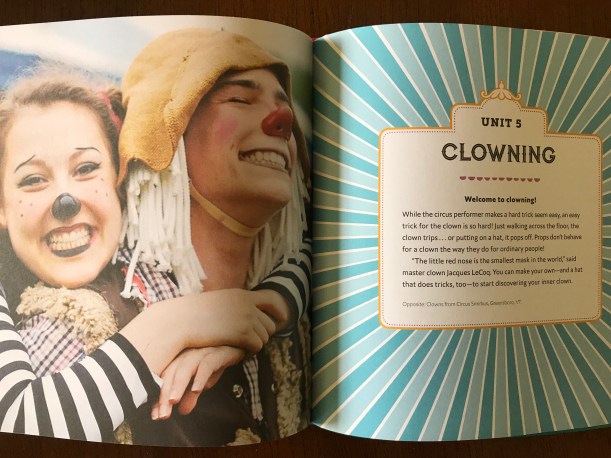
Circus fun – for kids! How cool is that? Jackie Leigh Davis has penned an informative, easy to read, step-by-step book that helps kids (and families) enjoy many circus activities. Great photographs demonstrate what she is describing and will help the visual learners. There is so much information about learning circus skills and putting together a show, DIY Circus Lab should be a resource – for any circus hobbyist or serious performer. Additional resources at the back of the book provides even more details.
Juggling sticks, hoops, poi, juggling scarves, armpit juggling (LOL), stilts, tight-rope walking, acrobatics, pyramids, clowning, and putting together a show: those are just a few of the various topics covered in DIY Circus Lab. This book makes me want to gather a group of kids and get circusing!
Well done, Jackie Leigh Davis and Scot Langdon.
P. S. Thanks, Vivian Kirkfield, for introducing me to this great circus book and sending a free copy. Excellent resource!
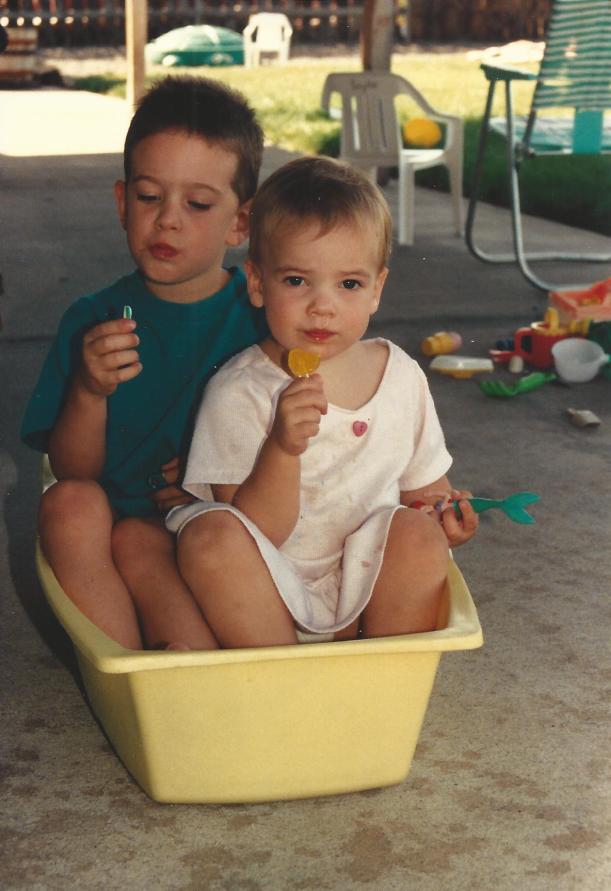
Taylor and Chelsie enjoy a sticky treat while lounging in a plastic baby bathtub.
A tub can be . . .
Actually, a child’s plastic bathtub can be:
a snacking spot
a boat
a water table
a push car
a chair
a sink for washing
an actual bathtub
a container for small animals
a storage unit
a reading nook
a garden box
an art project
a doll bed
a watering tub (for animals or kids)
a pond
a fairy garden
a mud pie factory
sand box
a cat box (if one is not careful)
Taylor and Chelsie (circa @1992) are enjoying some good old sticky lollipops as they sit in the baby bathtub. It was no longer a bathtub at this point, but instead became the object of many imaginative games.
How about you? What other uses have you found for a plastic baby bathtub?
It seems I always have 3 things on hand: paper, something to write with, and a camera. Those ideas and great shots aren’t going to just record themselves!
While searching photos for images of my wonderful and recently passed mother-in-love (my second mom, mom to my honey), I found this little nugget. My photo habits might just predate the need I have to write (and write and write).
What habits or hobbies do you have from waayyyy back? I’d love to hear!
Update: After messaging with Natalie (see comments), I realized I nearly always have 4 things on hand: paper, writing tools, camera, AND a book (or multiple books-one I’m reading and several on standby in case I finish reading a book and need the next read).
Reading, writing, and taking photos, those are my lifelong loves in the categories of hobbies and habits. WE go waayyyy back!
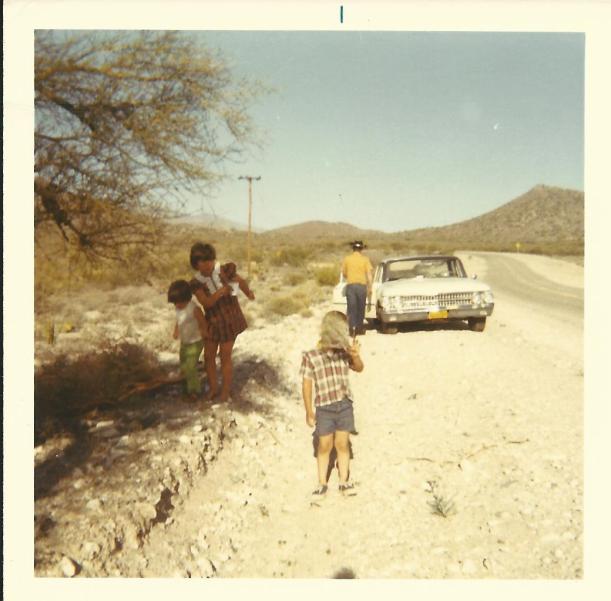
The Hill kids, Mark (blue suit), me (tallest), Tracy (white knee socks), and James (bib), next to the family roadster!
Station wagons and me, we go way back.
In the late 80s, my husband accepted employment with a new company, one benefit being a company car. “Anything would be cool, but please don’t come home with a station wagon. And especially not one with fake wood details.”
Ahem. Yes. He came with a station wagon. Adornment of imitation wood panels? Whew. Dodged that faux grained bullet.
Even earlier than the 80s & 90s version of the station wagon work vehicle was the early 70s family models owned by my parents. We had at least 2 different family touring vehicles, blue and white. Those wagons could really hold people and belongings. And pets, groceries, camping equipment, children, toys. Nothing like the little trunks in modern cars.
The family station wagon, mid-trip exploring the Arizona desert.
Some of my fondest memories are the days we spent exploring the southwest. We’d load up 2 parents, 4 kids, and 1 collie dog. The first mandatory stop would be a mini-mart so we could purchase the required bologna, cheese, white bread, and soda for our snacking pleasure. Sometimes we ate hot dogs (always cold) instead of bologna, but either one was a treat. Then we would hit the road.
The Arizona desert is a wondrous place for questing. Forests, rivers, desert lands, mountains, ghost towns, dirt roads, historical sites. My parents loved to haul us around seeing what we could see. I have vivid pictures in my mind of those trips, but I can’t help but wonder if we didn’t drive mom and dad the slightest bit crazy. 4 kids and a dog in a station wagon? Even if we did use the fold-up seats in the way back to separate us.
Horned toads, tarantulas, snakes, spiders, scorpions, cacti, sagebrush, thorns, stickers, heat mirages, dust. Treasure is all in the eyes and heart of the explorer.
What about you? What memories do you have about a vehicle or early days with your family? I’d love to hear your tales on this #ThrowbackThursday.
You know, the ones who dart out between cars to grab one penny. The ones who poke gum on a stick to secure a coin in a hole. The one who makes others fall over the top of her as she stops post-haste and bends over to get whatever coin catches her eyes.
I will stop for pennies.
Pennies don’t carry much value, except for making change. They are perhaps the least favorite coin due to the fact that you need 100 before you can even get a dollar bill. Or 25 for a quarter, 10 for a dime, 5 for a nickel.
I still stop for pennies.
No matter their size or value, small things are important.
A smile. A wink. A hug. A pretty rock from a grubby little hand. A ladybug on a sleeve. Flowering weeds clutched and given as a bouquet. A scribbled drawing. A gentle touch. A helpful hand. A peanut butter kiss. A wave. A friendly, “No, you go first.” A penny on the sidewalk.
I stop for pennies. And small things. For small things pile up like treasures until our cups and hearts run over. It’s the small things that count.
We ‘hiked’ the trail at Selah Cliffs Natural Area Preserves on Saturday.
Where: Seven miles north of Selah, just south of mile post 3 on SR 821, or as locals know it, the Yakima Canyon Road (slightly northeast of Selah)
Distance: RT about 2.5 miles, if you go all the way to the cattle guard and fence that signals the Military Firing Center boundaries
Discovery Pass Required: Yes, though many parked beyond the nature preserve lot on the old canyon road
Tips: No toilet facilities and not much shade; Bring binoculars, bug spray, water, and hat
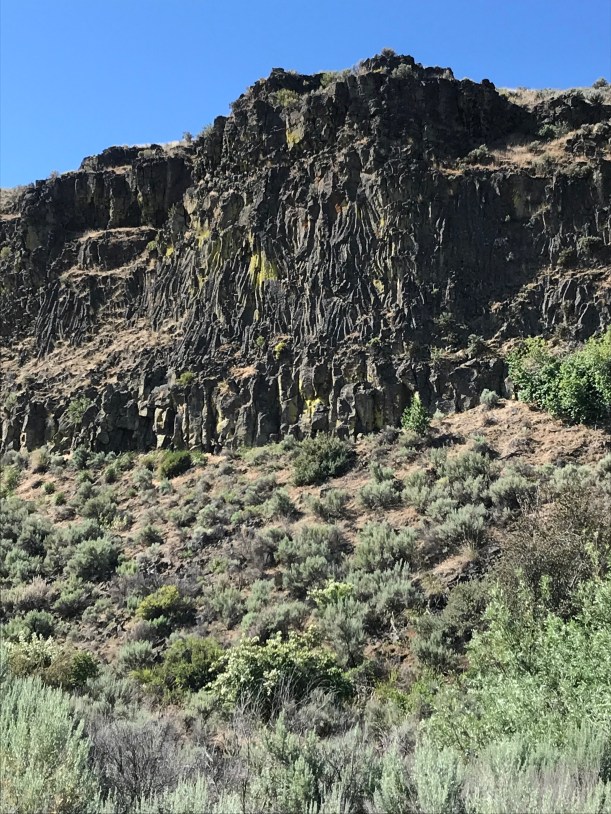
This is a local, easy hike with the hardest parts being concern for ticks, rattlesnakes, and heat. The views of the Selah Cliffs are gorgeous. As per signed instructions, we didn’t traipse off the path, which means we also didn’t see the basalt daisies for which the area is known. Judging by the trails leading up to the basalt cliffs, I’m sure some disregard rules. OR they could be game trails. Yes, I’ll go with that.
The hike/walk leads along a gravelled path for most of the distance. Towards the far end (headed east), hikers must go through a barbed-wire gate. After that, the gravel disappears and more clambering is required. During the entire hike east, we watched the Fred G. Redmon bridge loom ever larger and closer. Soon enough, we stood beneath the massive structure and listened to vehicles boom overhead. It was fascinating to look, listen, and call aloud. If you stand in just the right spot, your voice will echo back. I tried recording the echo, but there was too much interference.
We saw and heard a waterfall, but couldn’t get through the underbrush to get close. Plentiful birds, spiders, insects, lizards, and evidence of other wildlife kept us searching and entertained. The scenery was gorgeous, the basalt columns beautiful, and amazingly, the traffic overhead was negligible.
This is a repost from Literary Rambles. To see the complete post, go here.
Happy Thursday Everyone! Today I’m excited to be participating in the Beach Reads Giveaway Hop hosted by StuckInBooks. There’s a lot of new books that have recently released or will be published soon, and I’m excited to share them with you. I’m hoping to read more this summer and hope you’re planning to as well.
Can You Help Me Help a Friend Who Has Suffered a Tragic Loss? It’s Easy!
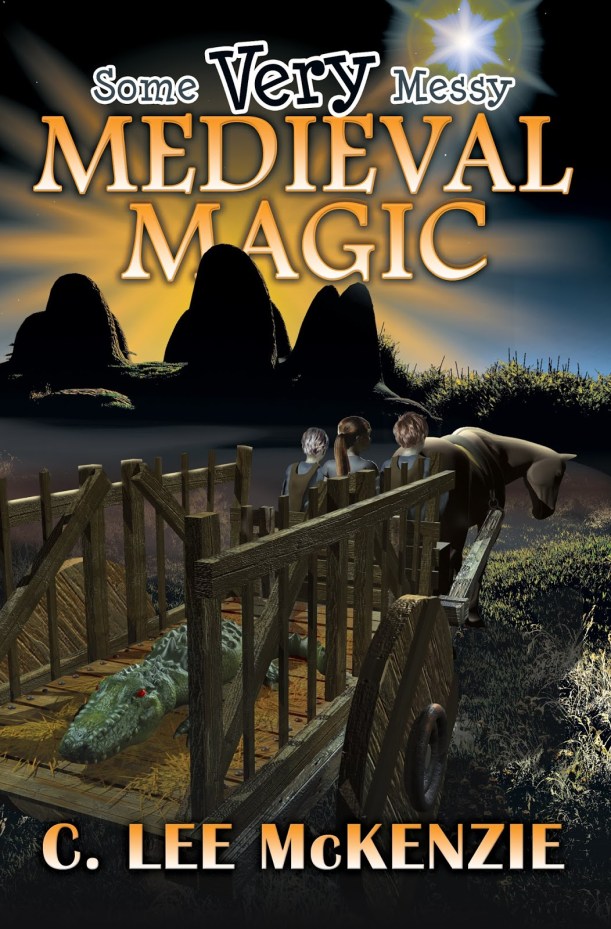
But before I get to the book selections, I need you to ask you to help me help an author friend who just suffered a tragic loss. Lee McKenzie has been a good friend of mine for years who I met through my blog. Her newest MG fantasy, SOME VERY MESSY MEDIEVAL MAGIC, released on May 15, 2018. Two days later, Lee suffered the tragic loss of her husband due to a sudden heart attack. I also suffered the sudden loss of my own husband a little over four years ago and know firsthand how heartbreaking this loss is.
While we cannot take away Lee’s grief, we could show her kindness and friendship by helping her promote her book. I know you all are book lovers and many have your own blogs. I’m hoping that you can do all or some of these easy things to help Lee:
Buy Lee’s book. An e-book is only $3.99. I just did that.
Post about Lee’s book on your blog and other social media sites. Ask your friends to help do by shouting out about her book and buying it
Here’s a blurb about what the book is about:
Pete’s stuck in medieval England! Pete and his friend Weasel thought they’d closed the Timelock.
But a young page from medieval times, Peter of Bramwell, goes missing. His absence during a critical moment will forever alter history unless he’s found. There’s only one solution—fledgling wizard Pete must take the page’s place. He travels to 1173 England accompanied by Weasel and Fanon, Pete’s alligator familiar. But what if the page remains lost? Will Pete know what to do when the critical moment arrives? Toss in a grumpy Fanon, the dukes’s curious niece, a talking horse, and the Circle of Stones, and Pete quickly realizes he’s in over his young wizard head yet again.







 Love, Laughter, and Life