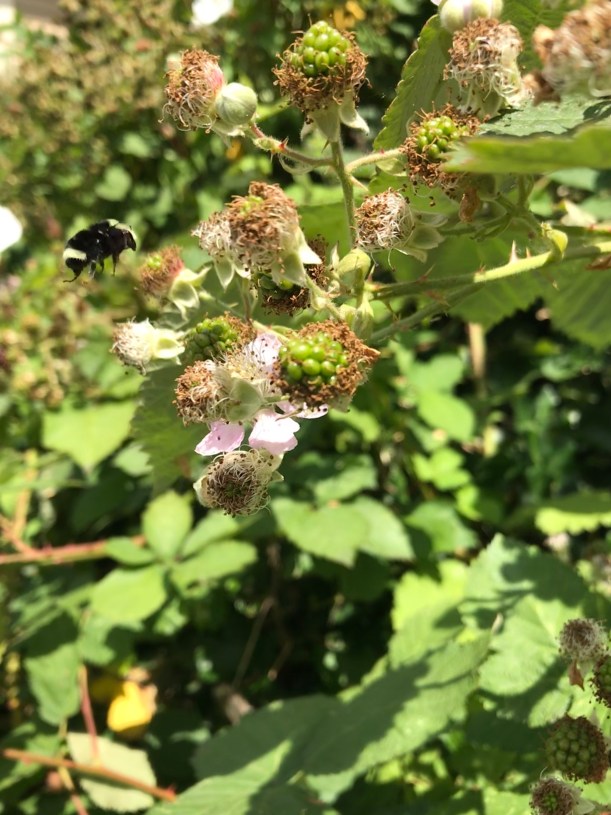
The Bumblebee
hovering fatness
worker intent on flowers
bumbling life giver
by Angie Quantrell
Do you love to haiku? Post your nature haiku in the comments. We’ll do the bumblebee dance to celebrate!

The Bumblebee
hovering fatness
worker intent on flowers
bumbling life giver
by Angie Quantrell
Do you love to haiku? Post your nature haiku in the comments. We’ll do the bumblebee dance to celebrate!

How does Hump Day come around so quickly? The older I get, the faster time flies! Here is my Happy Hump Day Haiku Challenge. I’d love to read yours!
weed?
opportunistic,
sink roots deep ever you land;
weed, no! flower.
Bloom where you are planted.
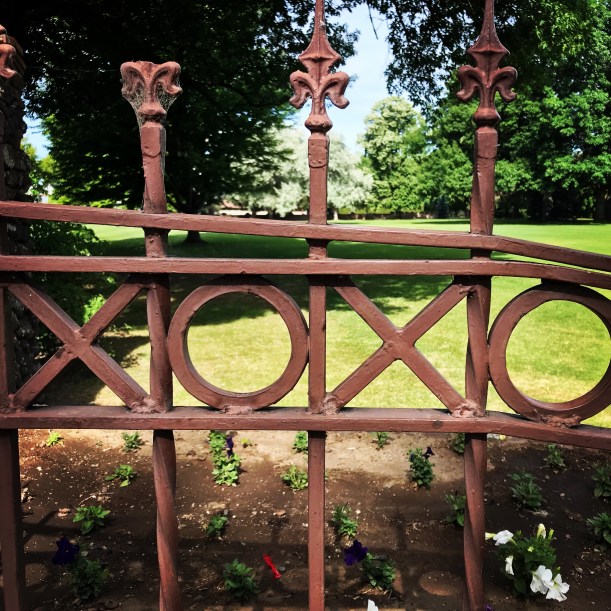
farewell gate
hugs and kisses, love
not bound by earth, I miss you
always in my heart
By Angie Quantrell
Photo taken at Terrace Heights Memorial Park in Yakima, Washington. I’ve gone through these gates so many times, and all it took was one glance in the right light to see the XOXO designs in the center of the gates. What a fitting tribute to the loved ones who have gone before us.
Happy Hump Day Haiku!
Haiku Challenge: Let’s play with words! Share a haiku with in the comments. I’d love to read your thoughts.
*Family friendly please.
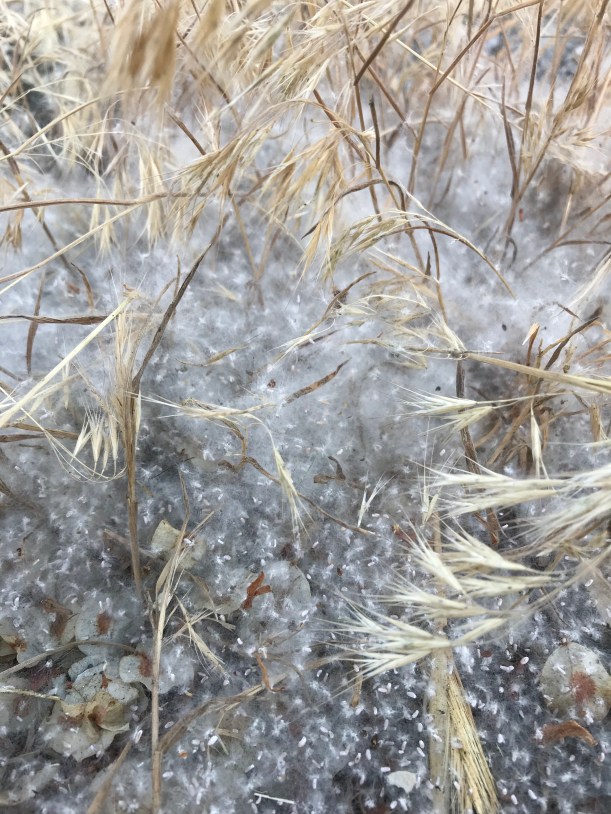
a blizzard in May,
cottonwoods are cottoning;
warm flakes unmelting
~ by Angie Quantrell
Welcome to May cottonwood season! No deep breaths, wide open mouths, or keeping fluffs away from your face. Still digging out!
Wednesday is the Happy Hump Day Haiku Challenge! I’d love to read your Haiku, especially if it revolves around nature, kids, or family.
Happy Hump Day!

goldfish
by Angie Quantrell
crunchy goldfish swim
wet mouthful of cheese and salt
disintegrating
*Inspired by certain grands who love goldfish crackers, despite the spewing of soggy bits as they graze through a bag.
Haiku Challenge:
Do you love to write Haiku? Join me! I’d love to read your poems. Silly, serious, sage…one and all.
***Family friendly, please!

H is For Haiku, A Treasury of Haiku From A to Z
By Sydell Rosenberg
Illustrated by Sawsan Chalabi
(Penny Candy Books, 2018)
H is For Haiku is the lovely result of the imaginative, creative, and lyrical work of Sydell Rosenberg, mother of Amy Losak.
In honor of her mother, Amy Losak pursued the publication of her mother’s Haiku. Syd, one of the first members of the Haiku Society of America, dreamed of publishing a book for children focused on Haiku.
Haiku, a form of poetry, originated in Japan. Most readers recognize Haiku for the strict syllable count used for each of the three lines (most often 5-7-5) in a Haiku poem. Haiku is way to recognize the small things of nature and life-wonderful, amazing, poetic, and awe-inspiring.
“What’s most important about writing haiku is to focus on those many small moments we may overlook and make them special.” -Amy Losak
Beautifully illustrated, H is For Haiku brought a smile to my face with every new alphabet letter and corresponding Haiku. I enjoyed clever phrases, rich language, and observations of the natural life around us.
Well done, Sydell Rosenberg! Great job, Sawsan Chalabi! Amy Losak, I’m so glad you stuck with it and had H is For Haiku published. This book is a gift for us, if we but take the time to read and ponder.
KID KANDY:
Write Your Own Haiku Poem
1. Read H is for Haiku. Notice the clever words and illustrations. Both help tell the story of the Haiku.
2. Take a notepad and pencil outside. Spend time observing the nature around you. Focus on the small things you see. As you look, write down words that come to your mind. A parent or older sibling can help with this part.
3. Do you know what a syllable is? Clap your name. For me, I clap twice: An gie. 2 syllables. Practice with some other words.
4. Haiku is a poem with 3 lines. Each line has a certain syllable count: 5-7-5
5. Some people are not very strict with keeping the exact syllable counts, but it’s good practice as you learn the format for a Haiku poem.
6. Choose something you observed to be the subject of your Haiku. What do you want to say? Write down the words you want to use. Play with the words. Count out syllables. You can write ANYTHING you want in your Haiku poem.
7. Print your Haiku poem on clean paper. Add an illustration! Share it with a friend or family member! OR ME!!!
Here’s a silly Haiku I just wrote:
Upside down spider
Climbing, webbing, catching food
Don’t drop on my head!


Scone
maple icing treat
warm from oven, coffee too
yearning for a taste
Welcome to Hump Day Haiku!
Everybody loves Hump Day – Wednesday! Otherwise known as half the week is gone, we’re over the hump, and we’re so close to the weekend we can taste it.
If you enjoy Haiku, join in by sharing a Happy Hump Day Haiku.

How many of you read for pleasure? (“Me, me!” she shouts while waving her hand crazily in the air.)
A paper book? An e-reader story? A tale that lets you escape to a new land, new people, new problems? (Yes, please!)
Oh, the books we can read! Too many books, not enough time, right?
Consider this poem I wrote for a course:
This pleasure,
While reading,
Gives me a poetic mind.
Gobbled, devoured,
Digested words and tale.
Spit out to be
Read again.
Again.
And again.
Dissected, applied to life,
Reassembled with
New understanding.
Reading for pleasure;
A necessity as is
Air, water, food.
I pick up again
The feast of words
To consume the story
Each book tells.
Tell me, tell me please!
What book are you reading right now? What’s your favorite book? What chores have you neglected to read just. one. more. page? (…dishes, laundry, vacuuming, dusting)
I’d love to hear the tale of the words that let you escape.
by Angie Quantrell

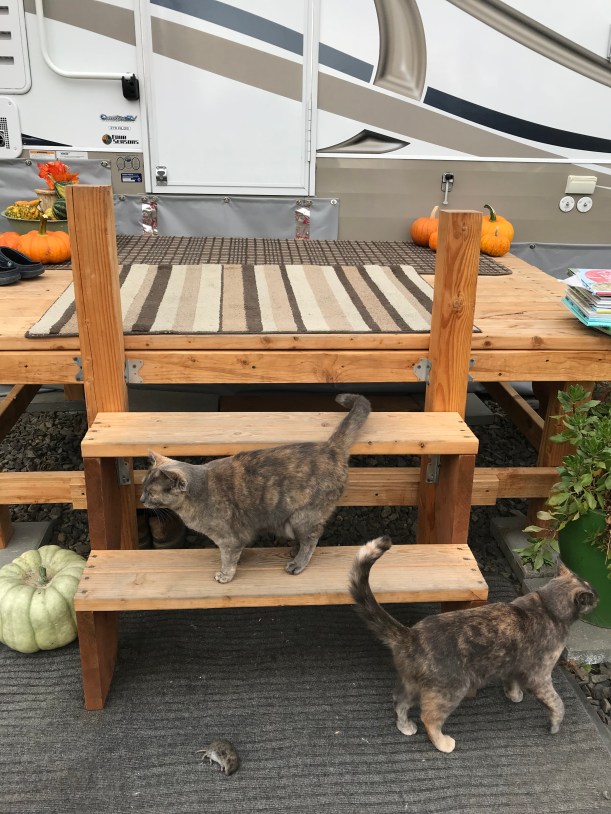
dead stuff
every. single. day.
dead stuff is delivered.
fur. teeth. tails. tiny feet.
feathers. skulls. wings asunder.
the odd beak.
legless bugs. drips of blood.
eerie green body parts.
dead stuff. in life. in dreams.
felines hard at work.
freeze. winter. come soon.
put to ground the endless corpses
delivered as gifts.
pause the need for caution
when opening the door or
placing feet along the body strewn gravel,
blending in, creating traps for thoughtless tread.
drop. temperature. ice-over.
to sleep. to fly south. to hibernate.
what happened to lumps of fur nested
in front of roaring fires?
rest, kitties, rest.

By Angie Quantrell
Caramel apples
Leaves poised to drift and rest
Golf course cowboy in full roping regalia
Kites of black crow
Squabbling magpies dropping nuts
Blaring country western music serenading golf athletes
Fruity wafts of fallen apples
Crisp air floating watchful hawks
Horseshoes traded for clubs and pixellated balls
Scrambling squirrels pursuing future feasts
V’s of noise and harsh wing beats
Cowboy hats capturing sun-touched heads
Hollow seed pods knocking one another
Waving grass kissing heat and drought good-bye
Wheeled-steeds rolling into the tees of sunset
Familiar autumn memories prance and greet
A lifetime of fall memories merging together welcomes interlopers
Cowboys and golf marry, valley mysteries


