
pause, observe, alert!
feline surveys her queendom
sentry on duty
sentry by Angie Quantrell
Monet in the Yakima Valley

pause, observe, alert!
feline surveys her queendom
sentry on duty
sentry by Angie Quantrell
Monet in the Yakima Valley

Look
Words by Gabi Snyder
Pictures by Samantha Cotterill
A Paula Wiseman Book, Simon & Schuster Books for Young Readers, 2024
Oh, this is the one to read today! This picture book is filled with hope and love, beauty and patterns. Beautiful!
Thanks to Kathy Temean and her blog, Writing and Illustrating, I won a copy of Gabi’s gorgeous book. Thank you both!
Each time I’ve read Look, I’ve been filled with the JOY of discovery and delight. There is so much to be found on each page, and the colors and words make the journey effortless and thoroughly engaging. With the detailed cut-paper illustrations, patterns pop from the page.
My Goodreads review:
This book is absolutely gorgeous! Filled with hope and love and a search for patterns, the poetic words by Gabi and the cut-paper illustrations by Samantha combine to make a beautiful journey for a young reader. A day in the life of a young child who goes out and about with his mother. LOOK helps the reader see the wonder of it all and allows them to take a peek at the grander picture of the whole world, but also at the tiniest of details. Ten thumbs up.
Happy reading!


creep and cling, burst forth
glorious beauty tumbles
splendor for the eye
splendor by Angie Quantrell
Siena, Italy
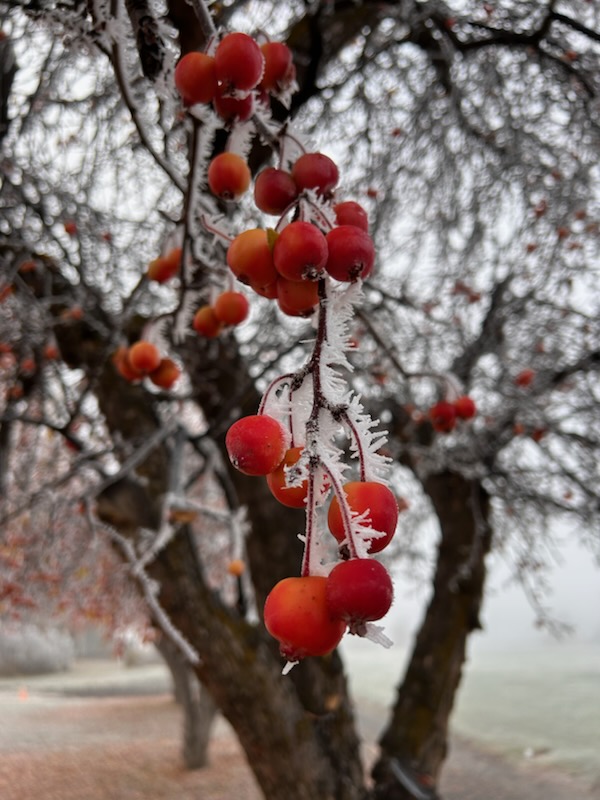
miniscule planets
avian winter treats drape,
walker’s eye candy
eye candy by Angie Quantrell
Yakima Valley
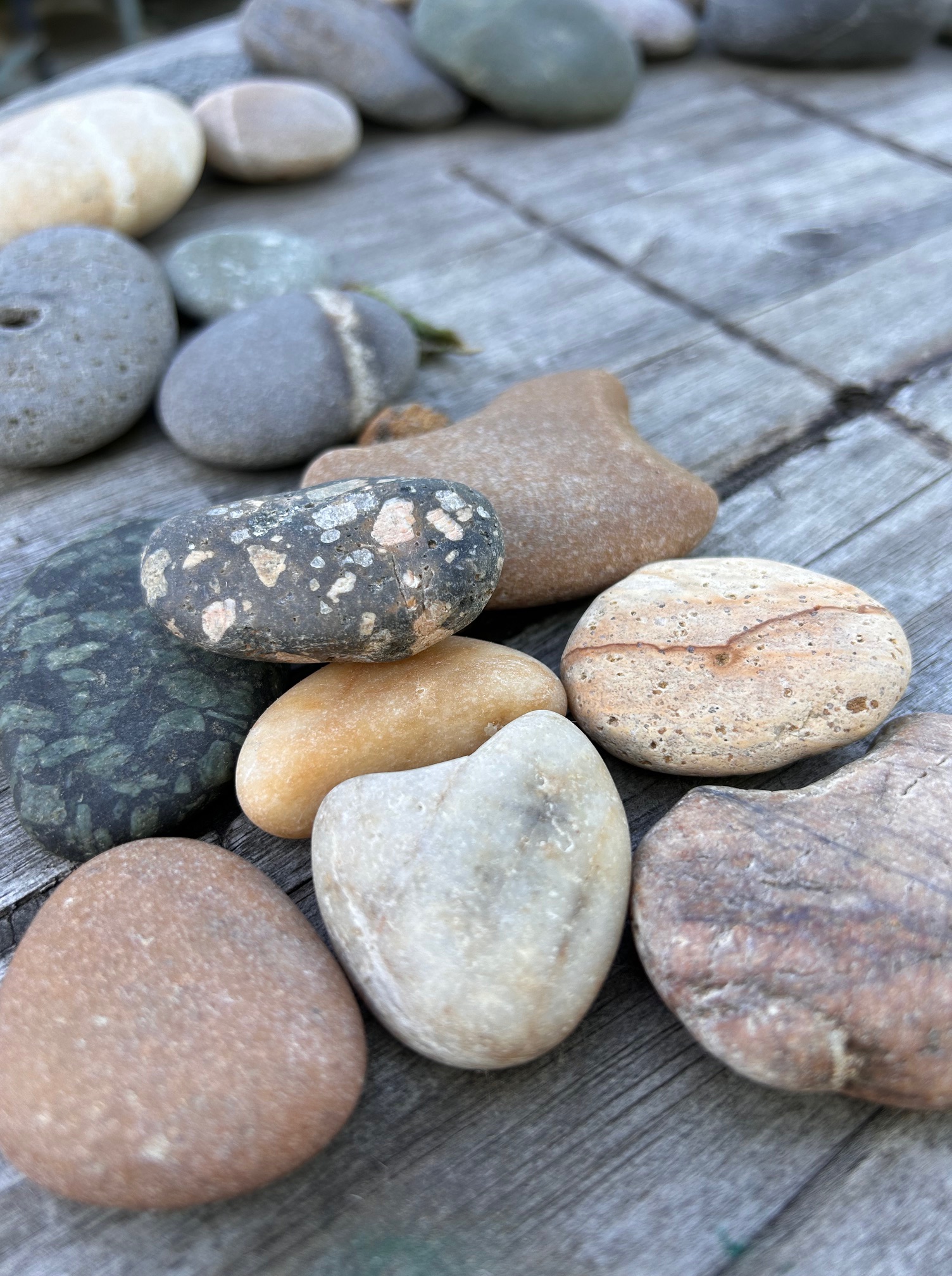
lines, zags, speckles, dots, holes
heart, tower, treasure, or picture
rocks can be anything
anything by Angie Quantrell
rocks from her enormous rock collection

Welcome to 2025! Over the years, I’ve changed the name of this type of post. Sunday Moments and Sunday Joy are just a few of the titles I’ve used. This feels like a good year to focus on Sunday Peace.
Whether rain, snow, ice, or sun, be brave and stand strong like this little pansy in one of my uncovered plant pots. Peace to you.

abundant marbles
cluster for birdy harvest
feathered bumper crop
bumper crop by Angie Quantrell
photo by Angie Quantrell
Fall in the Yakima Valley
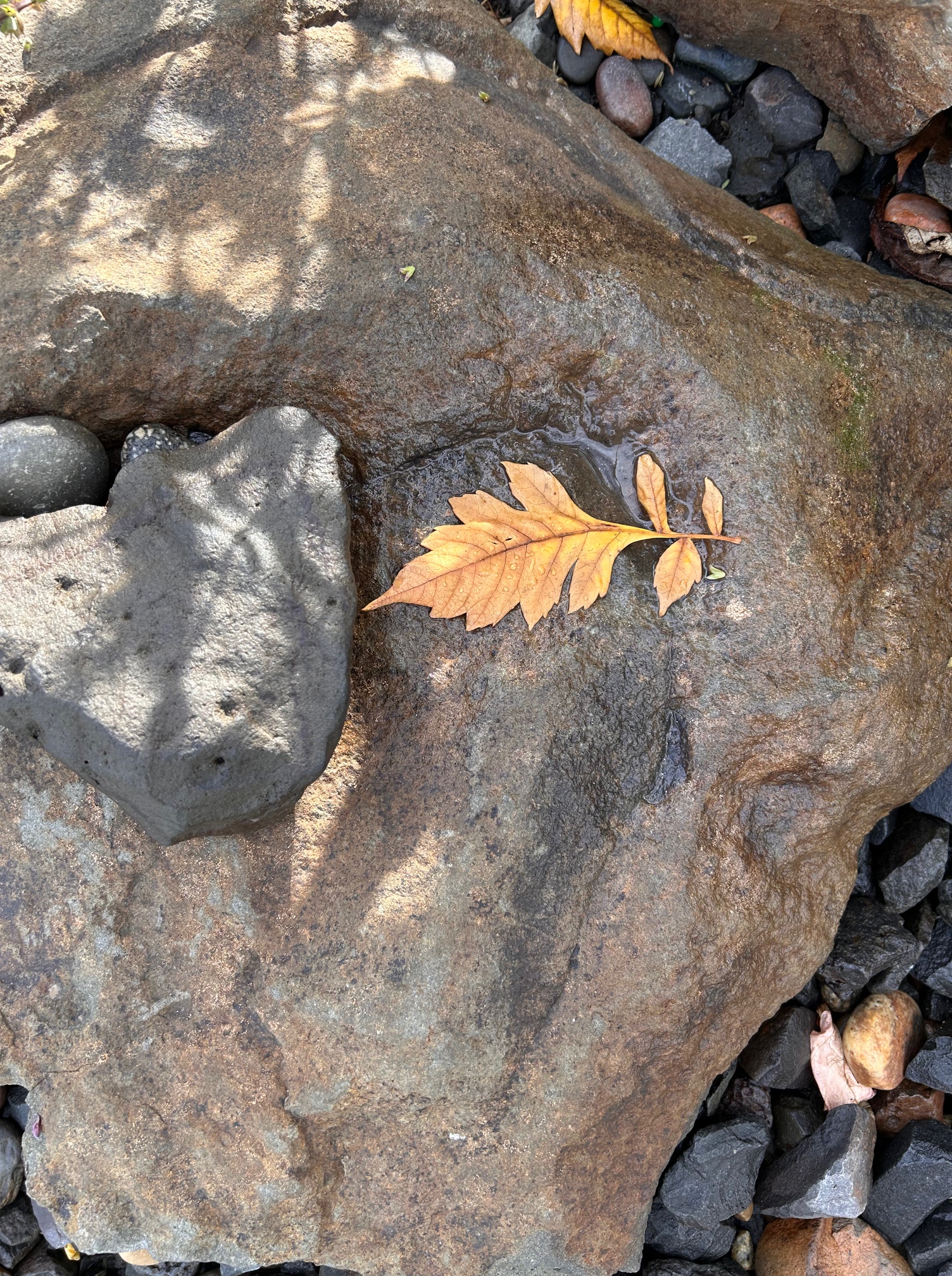
lounging alone on
glistening bed, to showcase
my excellent form
lounging alone by Angie Quantrell

It’s fun to go back and look at pictures to see how things have changed over time. Our garden area is constantly changing.
The garden started with three simple garden beds placed in the pasture, which used to be mostly dirt and weeds. As you can see, it was already looking good with “greens” growing.

Frequent feathered guests foraged in the pasture and wide-open garden beds. Which transitioned into even more visitors, of the furry and voracious garden eating variety. The chickens were fine with me, but when bunnies ate down all of my plants, something had to be done.
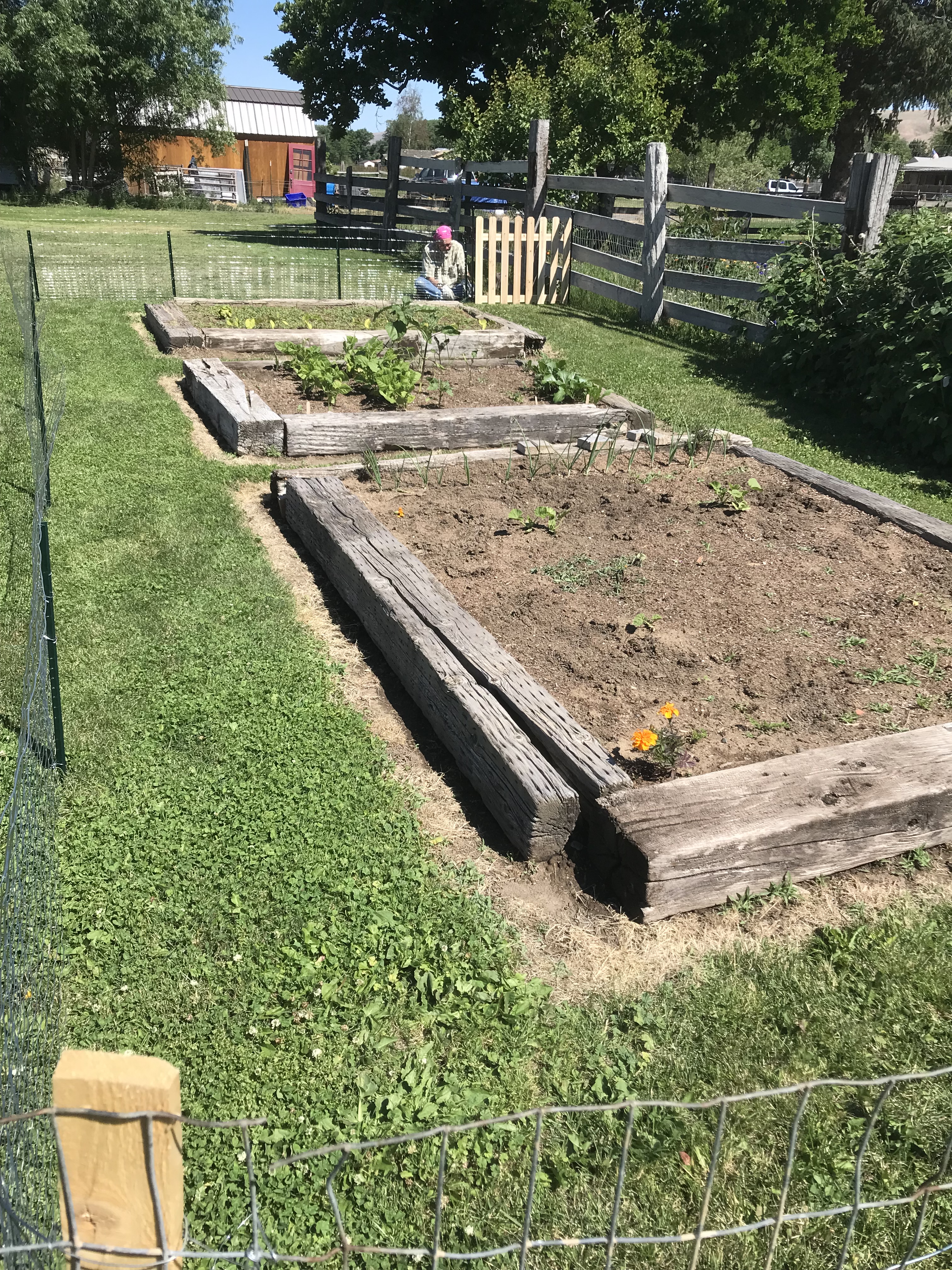
My honey put a low fence around the whole lot. The main purpose was to keep the bunnies out. It worked great! Actually, the fence is so short, most of us can easily step over it. But the bunnies were befuddled and my plants could grow free.

And then. I found one of those old metal chain-link fence gates while visiting my buddy in Seattle. One of those “free yard sale” treasures! Guaranteed to make my honey whisk his eyebrows up when I drove into the yard with my little Mazda packed to the gills. Gate included. So, we added an easy access gate. By we, I mean him. 😉

And then. I really wanted an arbor. Over that awesome gate. We had this other piece of metal junk hanging in our shaded car park area. Just an old rusted metal grate of some sort. I think it was left on the property from the previous owner. And ta-dah! Instant unique arbor! Instant for me. A bit of hard work for my honey and Taylor.
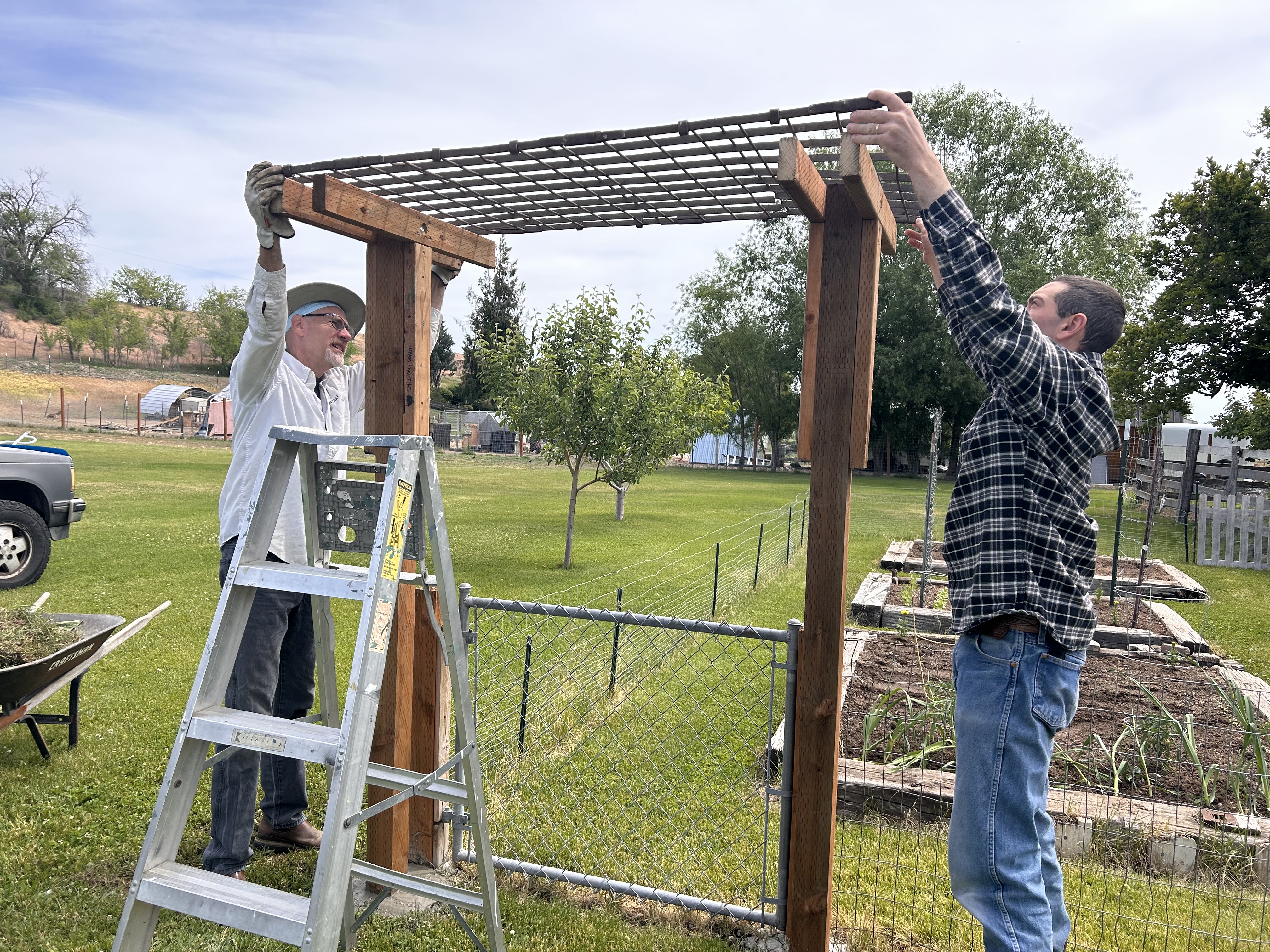
I might add how HEAVY that thing is! And I am blessed to have 2 strong guys to let me come up these wild ideas and they make it happen. Oh, and it’s rusty. One of my favorite garden colors and textures.

My honey bought me a honeysuckle plant for Mother’s Day. You can see it above just starting out. Below, you can see I’ve been working on training it up. It’s nearly reached the top!


And here we are today. I just took this picture. It smells so good! Last week I stood and watched a hummingbird feast on the fragrant blooms, for so long that I wandered off before it did. That is my kind of garden.
Ahhhh. The garden continues to grow and change.

What about you? Any big changes in your garden or yard over the years? Any cool rusty items??
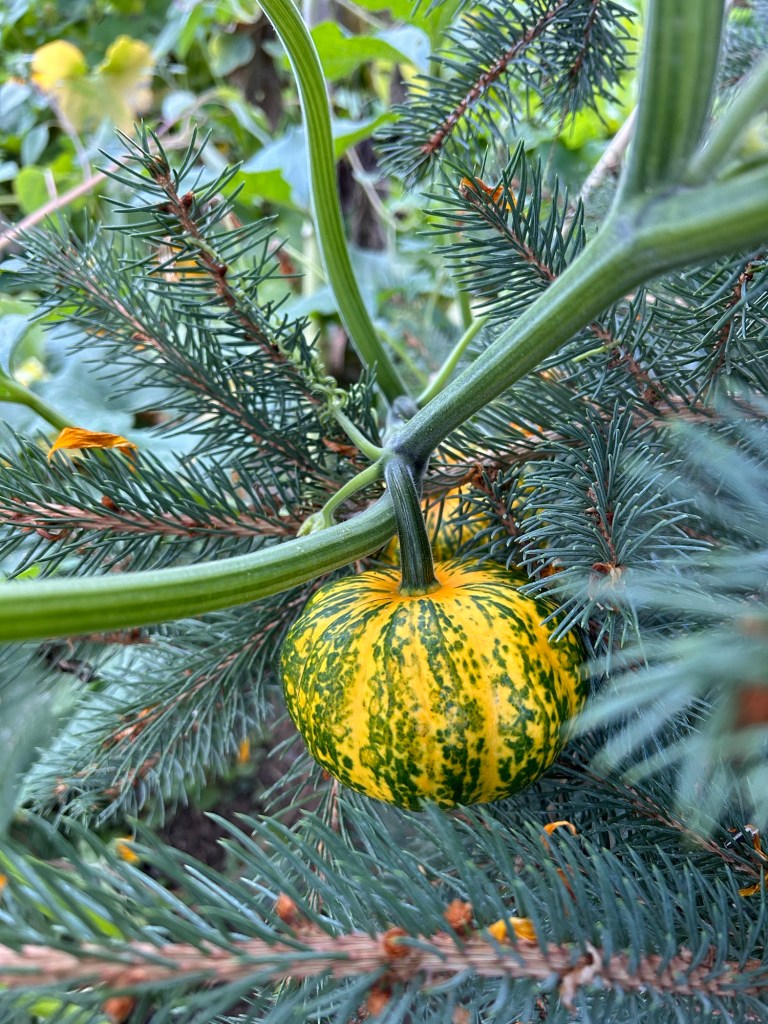
hide and seek pumpkin
twisting, vining, reaching out
autumn tree decor
autumn tree by Angie Quantrell


