Welcome to my Happy Hump Day Haiku Challenge! Have you ever applied for a job? Followed a help wanted sign? What would it be like if bees had to fill out applications before they got to work on our flowering plants?
Tiny little pens and papers. Background check. Chat with references.
This year, another garden experiment. Last season, giant birds (to the minions living below) messily (and carelessly) tossed seeds as they gobbled from sunflower trees. This season, let’s see what grows.
I won a copy of Lydia’s book, The Broken Bees’ Nest, through Kathy Temean and her blog, Writing and Illustrating. Thanks to Lydia for the delightful copy and to Kathy for introducing me to The Broken Bees’ Nest.
What I like about this book:
I love bees, so this picture book is perfect for me. My current dream is to capture a swarm and put a hive out in our pasture. Guess what The Broken Bees’ Nest is about? Capturing a swarm from a broken hive!
This book is about a beekeeper and how she helps two children rescue bees from a broken hive. It’s also about family and being outdoors and engaging in fun play while enjoying nature. I loved learning more about bees-from the story, the sidebars, and the back matter pages.
This book is easy to read, includes vibrant illustrations, and provides lots of bee information in a fun, engaging way. As my granddaughter said the first time we read it, “Again!”
We’ll keep reading The Broken Bees’ Nest! I think this will help her overcome her fear of bees.
Amazon Blurb:
Arun and Keya find the perfect tree for a tree house. Too bad it comes with a battered bees’ nest! These bees need a new home―right away! Tying into the popular Makers Movement, Makers Make It Work is a series of fun easy-to-read stories that focus on problem-solving and hands-on action. This charming story explores the Makers theme of Beekeeping and includes explanatory sidebars and an insect-related activity for young makers to try themselves!
Don’t these fern swirls look exactly like fuzzy lollipops? Of course, I don’t want to lick treats containing fuzz, but my imagination considers what interesting tastes live in forest lollipops.
I love this old earth. It’s the only one I’ve got, so I suppose I should help take care of it. Earth Day reminds me to do something, not just talk about it or ignore the problems I see.
For example:
~Yesterday and today, I planted thyme and basil, both edible yumminess for humans and flowering treats for bees.
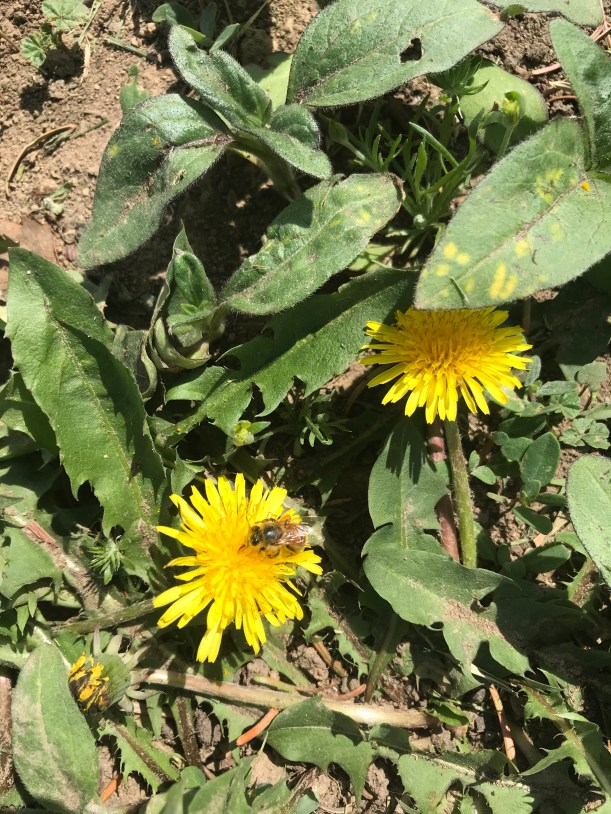
~I’m trying to convince my pasture mowers to leave the dandelions as is for bee food.
~We avoid spray unless absolutely necessary and spend more time hand weeding.
~I keep planting baby trees from the Arbor Society to create habitat for birds and small animals.
~I always have water out for the cats, but wildlife benefits from the source of hydration.
~I’ve been noticing lots of trash along roads and paths, so it’s time to carry along a trash bag and pick up as I go on walks.
~We pay extra in our valley to allow us to recycle trash items like cans, cardboard, and certain plastics.
I know there are many ways to help Planet Earth. These are only a few ideas to be good stewards of the beautiful environment God created for us to enjoy and care for. Spend some time outside today and pay special attention to how awesome our Earth is.
How about you? I’d love to hear what you do, especially if you have fresh ideas!
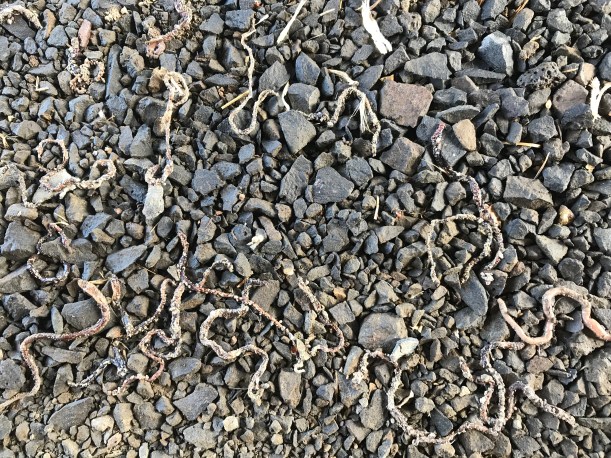
I hate walking outside after a rain, afraid of stepping on and squishing the lovely gardeners who struggle to escape overwhelming water in their aerating holes. I never have enough time to rescue all the big ones, tossing them into garden boxes and grassy resorts. Instead, when I return home, after the rain has headed east, I find piles of worm salad.
First we had February. Snowmageddon and all of that. The season of snow.
Next we had the melt. Flooding, slush, and slippery ice. The season of melt.
Now we have rainy April days and plentiful water. The season of mud.
Does mud bother my grands? Not in the slightest. Nearly all the kids I know love getting dirty, playing in the mud. From what I’ve observed, most of the problem with mud comes from the adults. The ones who have to do laundry, wipe mud trails off of floors, wash boots, and repair muddy landscapes.
Forget all of that worry. It’s time for the season of play!
Enter mud play. A fine mist was falling, water stood in the wagon and various items strewn about from building fairy houses, and mud was plentiful.
They dug, scooped, buried, and transported mud, rocks, and sticks. They gathered water, poured it around, and put a dead worm in the mud in case he wanted to wake up.
They painted small pieces of logs by using a stick as a paintbrush, using the stick to smear mud across the flat surfaces. And then they decorated the wagon and fairy gardens with mud-encrusted artwork.
I love it when I see preschoolers and children (and even adults) use their creativity and imagination. I love it even more when nature and messes are involved!
I’m not sure if the parents agree, but playing in mud is excellent for sensory engagement and exploration of nature.
So…put on some old clothes, just in case, plop on the wellies, and head out for some messy fun.
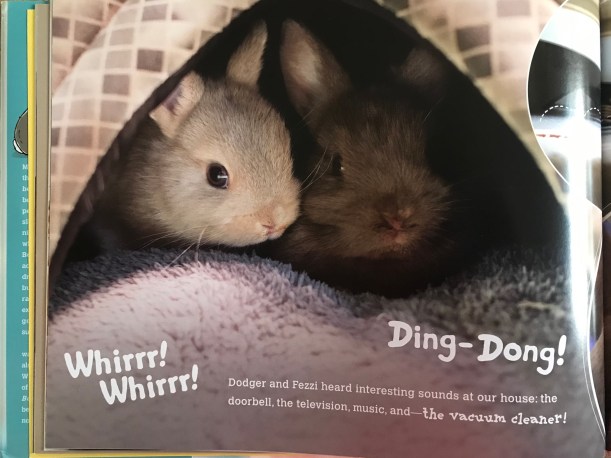
Borrowing Bunnies, A Surprising True Tale of Fostering Rabbits
Written by Cynthia Lord
Photographs by John Bald
Illustrations by Hazel Mitchell
Farrar Straus Giroux Books for Young Readers, 2019
“Come along on a surprising adventure with two very special bunnies as they find their forever families!” (back cover)
I send a special thanks hopping to Cynthia Lord, for gifting me with a beautiful copy of Borrowing Bunnies, complete with three autographs! Thank you for the bunny keepsake! Thanks also goes out to Kathy Halsey and Group Blog for offering the opportunity to win a copy of this adorable bunny tail. Tale. Hop on over to read about great books.
Amazon Blurb:
Newbery Honor author Cynthia Lord likes fostering rabbits—or, as she fondly calls it, “borrowing bunnies.” This is the heartwarming true story of the author’s own journey with two very special rabbits.
In the spring of 2016, Peggotty and Benjamin were saved by Maine’s Cottontail Cottage Rabbit Rescue after their previous owners had neglected them. But before the two Netherland Dwarf rabbits could be adopted, Cynthia had to help them learn to trust people and feel safe inside a home. The bunnies slowly settled in, enjoying their clean pens, nibbling new foods, and playing with fun toys, while Cindy’s husband, John Bald, photographed Benjamin and Peggotty’s every step toward adoption. At that time, hundreds of viewers were drawn to Cindy’s Facebook page to watch their progress. Now, she has adapted the rabbits’ true story into a picture book that explores love, responsibility, empathy, and letting go—along with fostering’s many surprises, both big and small.
Young readers will delight in watching these bunnies thrive while also learning a few fun animal facts. With Cindy’s pitch-perfect blend of warmth and real-life experience, Borrowing Bunnies is a new classic in narrative nonfiction.
Things I Like About Borrowing Bunnies:
1. BUNNIES! At once glance, I was in love and wanted to run out and foster (to keep-ok, that is called adoption) a baby bunny! Fortunately, I live in an RV and there is no room for in indoor bunny. Outdoors will not work, as we have a hunting pair of hawks who return each spring to nest, raise their young, and teach them to hunt-right in our pasture.
But read on, friends. Be prepared to spend time and resources to care for, love, train, and snuggle with these cuties.
2. New information. I learned so much about rabbits and their habits. Wonderful illustrations and photographs merge on colorful pages, telling the story of fostering bunnies. I’m still wondering how to potty train a bunny though. Is it like a kitten where you just keep putting it back in the kitty box until it potties and makes the connection? One of my junior high friends had an indoor pet rabbit and it left a trail of bunny pellets everywhere it traveled.
3. Narrative. Cynthia Lord writes in a clean and captivating way, engaging me and explaining along the way. Young readers will love the bunny story and not even notice how much they are learning!
4. Illustrations and photos. Perfect combination of information, character profiles (bunnies), and adorableness.
5. Overall package. This book is just right. Spring, when we tend to think of baby bunnies and other assorted baby animals, is the optimum time to read Borrowing Bunnies. This book would fit right into an Easter basket or collection of spring animal books.
6. Emotions. Some sections of this book will make you cry, laugh, love, and experience loss. Readers are exposed to the emotions connected with fostering and caring for animals. Discussing these emotions will help young readers understand their feelings.
I hope you are encouraged to purchase or check-out Borrowing Bunnies and read all about real life bunnies. Maybe one day you will foster baby animals!
KID KANDY:
Here are a few fun things you can do after reading Borrowing Bunnies:
~ hop and leap like a bunny
~ use blankets to make a soft bunny nest for stuffed animals or yourself
~ curl up in your nest and read Borrowing Bunnies!
~ visit a zoo or farm to see and pet live bunnies
~ eat a bunny salad for lunch (carrots, lettuce, radishes, peas)
~ pick dandelions to make bunny bouquets (bunnies love dandelions)
~ use paper, markers, glue stick, and cotton balls to make a bunny picture; draw the bunny with long ears and whiskers; glue a cotton ball on for a tail







 Love, Laughter, and Life