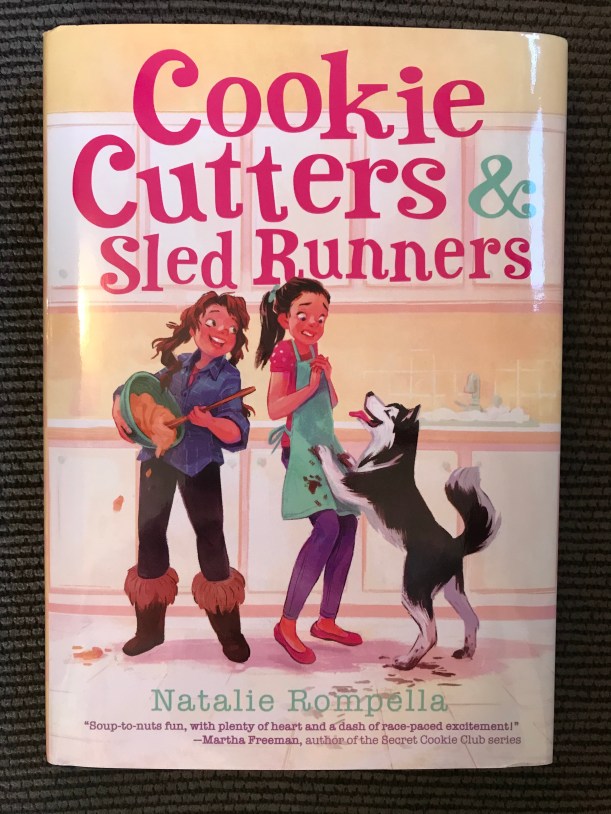
What’s a girl to do when she is suddenly placed in a class WITH the hard-nosed teacher and WITHOUT her best friend and co-chef? The project they have been planning for years is swept off the table and the friends are paired with new partners.
Ana is devastated to learn she must partner with Dasher, a new kid from Alaska. All the new girl talks about is sled dogs. Worse, she has no culinary skills! Even worse, best friend Lily is paired with Via, another non-cook but super cool girl.
AND only Lily knows the truth about Ana. OCD dogs her every waking minute, leading Ana to obsess over germs and wash her hands to the point of cracked, chapped skin.
There are so many great things about Cookie Cutters & Sled Runners! I loved the characters and the middle school angst. The finer details of friendship, making new friends, OCD, school, projects, hobbies, teamwork, trying something new – all of these important issues play together in this engaging chapter book.
I learned new information about obsessive compulsive disorder (OCD) and treatment for this disorder. I also learned many new things about racing sled dogs and creating unique recipes. Readers will find at least one thing to identify with through the characters in Cookie Cutters & Sled Runners. Readers looking for books about dogs, friends, cooking and creating, going to school, or OCD will love this book.
Two thumbs up for Cookie Cutters & Sled Runners by Natalie Rompella.
P.S. ACTUAL recipes are shared in this book, creations by the main characters.
I won a copy of Cookie Cutters & Sled Runners after reading an interview with Natalie Rompella and commenting about her new book at groggorg.blogspot.com. You can read the interview here.
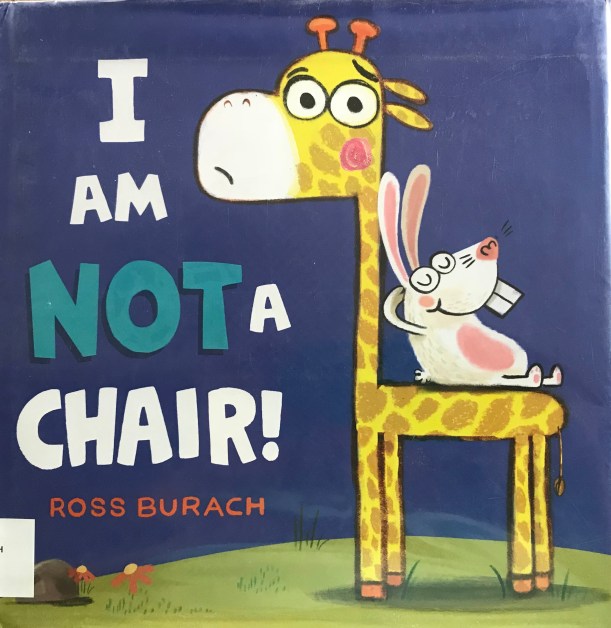
I love the simple but hilarious tale of a giraffe who is continuously mistaken for a chair by other jungle animals. He is extremely creative as he tries to educate others about their misdirected assumptions so he can stop being a chair.
Brilliantly colored illustrations add depth and life to the story and will attract young readers as they see life on the wild side (though recognizable as sort of like going to school). Well done, Ross Burach, in story telling through words and images.
This book is great for young and old readers.
KID KANDY
Make a Chair
Materials: whatever you find in your jungle environment
1. Search your jungle.
2. Find interesting items that look comfy and sturdy.
3. Make a chair. Does it look like Giraffe? Or a different jungle animal, like a pillow monster or box creature? Give your chair a name. Have someone take a picture of you sitting on your chair.
When did I begin writing for preschoolers? WAY back when.
I’m so glad my honey took this photo. This was my first trip to Birmingham, Alabama, to attend a writer’s conference and begin writing curriculum and products for Mission Friends (preschool missions education materials).
Chelsie was three, Taylor was five, and I had dark hair (and hair, period). Judging by how old they are now, I’ve been writing for Woman’s Missionary Union for about 28 years. Time flies when preschoolers are having fun and this writer is loving every minute of the journey.
What a blessing it is to remember this opportunity from the Lord! I so love preschoolers. You know, that age is one of the funnest ever! (I know, I know. There are other ages that are also super fun. Okay, you caught me. I adore them all.)
Sweet babies, fantastic supporting husband, and dreams for endless learning activities. Now my babies have given me five grands, with three going to school this fall and only two still at home.
Enjoy those moments, mama and daddy! Those babies are gonna grow up too fast and before you know it, you’ll have a lap full of your own grands.
How about sharing a Throwback Thursday moment of your own?
(Balzer + Bray, An Imprint of HarperCollins Publishers, 2018)
I recently received a free copy of The Bird and the Blade from Literary Rambles, Natalie Aguirre, and Megan Bannen.
I was interested in reading The Bird and The Blade because of the title. I like birds. The blade, I could only assume, was sword like and sharp. I was correct on one count. The blade was an actual blade, though I will not spoil the ending by telling you much more about it. The bird was not an actual bird, but the main character, Jinghua.
Without giving too much away, this story is about love, war, families, dynasties, refugees, stations in life, relationships, and courage. The tale begins with a young female slave, Jinghua. But that is not the whole of her.
Through careful revelation and continually going back in time while moving forward, readers learn about Jinghua and how her life has changed. I didn’t know before I read, but this tale was inspired by the opera Turandot and is a retelling of
“Prince Khalaf and the Princess of China.” Despite the ancient beginnings of the story, it is worth every century!
I enjoyed The Bird and the Blade. I loved how the story is organized, with flashbacks to share important details. As I read the “current” portions of the story, I eagerly anticipated the next travel back in time to find out more details. And there are some very juicy details!
Young adults and adults will enjoy this well-written tale, The Bird and the Blade. Thank you, Literary Rambles, for introducing me to this book and author.
If you know me from my teaching days, or kid-caring days, or church days, you know I’m all about books, language, and literacy. Not too long ago, a friend introduced me to Barefoot Books. My grands LOVE the little videos and songs that go with the different stories.
Barefoot Books is coming out with another great tool for story building, language, and literature: Build-a-Story Cards. I love these! Characters, settings, and objects cover wordless adorable colorful cards. Some characters show emotions to help create story conflict. Playing with these will be loads of fun!
Head on over to Tara Lazar’s blog to see photos and more explanation of these new literacy tools. The first set is a fairy tale theme. Fun times ahead!
Thanks, Tara, for giving us the heads-up on these Build-a-Story Cards!
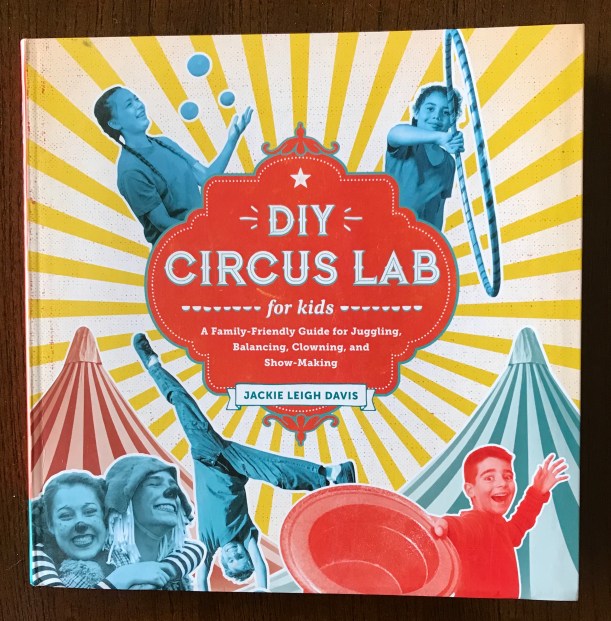
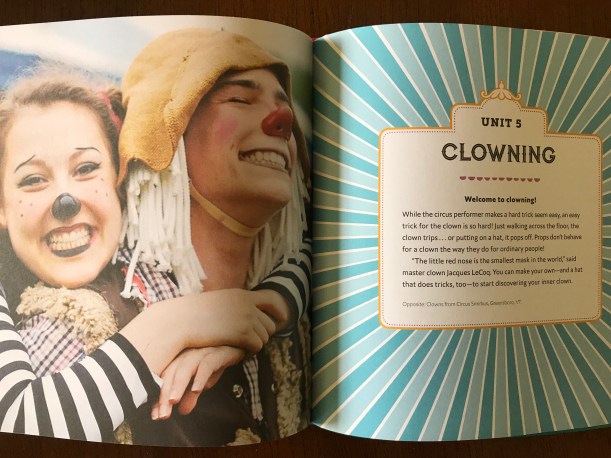
DIY Circus Lab for Kids, A Family-Friendly Guide for Juggling, Balancing, Clowning, and Show-Making
By Jackie Leigh Davis
Photography by Scot Langdon
(Quarto Publishing Group USA Inc., 2018)
Once upon a time, I did some clowning. Really! Just last week I ran across a picture from my “Bubbles” the clown days. A more thoughtful person would have grabbed it up and used it for this post, but I didn’t put two and two together. Now that photo is nearly 200 miles away lost in a box in a storage unit. Oops!
Circus fun – for kids! How cool is that? Jackie Leigh Davis has penned an informative, easy to read, step-by-step book that helps kids (and families) enjoy many circus activities. Great photographs demonstrate what she is describing and will help the visual learners. There is so much information about learning circus skills and putting together a show, DIY Circus Lab should be a resource – for any circus hobbyist or serious performer. Additional resources at the back of the book provides even more details.
Juggling sticks, hoops, poi, juggling scarves, armpit juggling (LOL), stilts, tight-rope walking, acrobatics, pyramids, clowning, and putting together a show: those are just a few of the various topics covered in DIY Circus Lab. This book makes me want to gather a group of kids and get circusing!
Well done, Jackie Leigh Davis and Scot Langdon.
P. S. Thanks, Vivian Kirkfield, for introducing me to this great circus book and sending a free copy. Excellent resource!
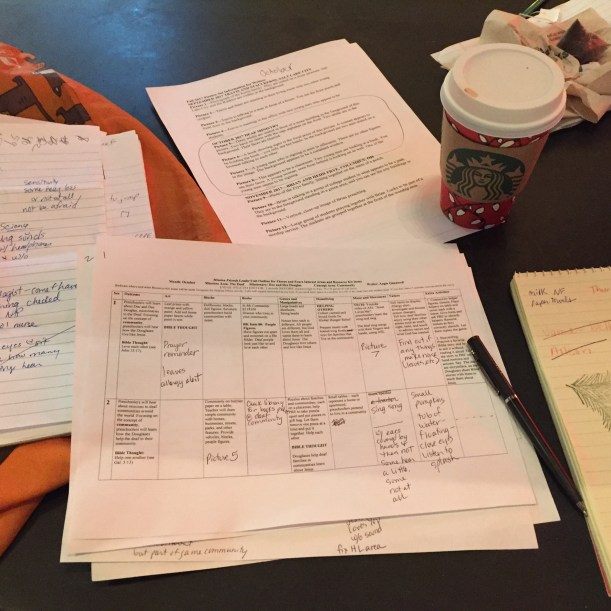
It seems I always have 3 things on hand: paper, something to write with, and a camera. Those ideas and great shots aren’t going to just record themselves!
While searching photos for images of my wonderful and recently passed mother-in-love (my second mom, mom to my honey), I found this little nugget. My photo habits might just predate the need I have to write (and write and write).
What habits or hobbies do you have from waayyyy back? I’d love to hear!
Update: After messaging with Natalie (see comments), I realized I nearly always have 4 things on hand: paper, writing tools, camera, AND a book (or multiple books-one I’m reading and several on standby in case I finish reading a book and need the next read).
Reading, writing, and taking photos, those are my lifelong loves in the categories of hobbies and habits. WE go waayyyy back!
This is a repost from Literary Rambles. To see the complete post, go here.
Happy Thursday Everyone! Today I’m excited to be participating in the Beach Reads Giveaway Hop hosted by StuckInBooks. There’s a lot of new books that have recently released or will be published soon, and I’m excited to share them with you. I’m hoping to read more this summer and hope you’re planning to as well.
Can You Help Me Help a Friend Who Has Suffered a Tragic Loss? It’s Easy!
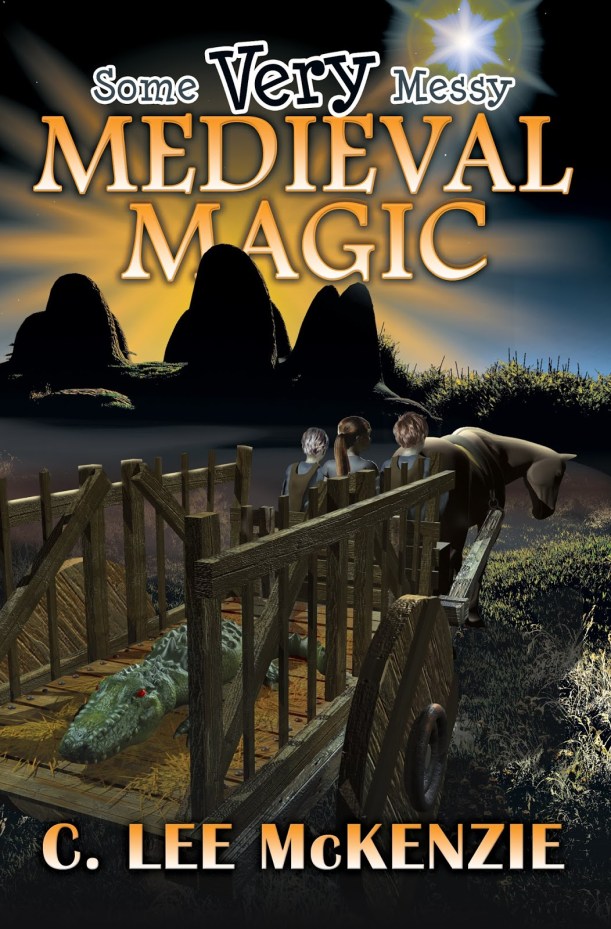
But before I get to the book selections, I need you to ask you to help me help an author friend who just suffered a tragic loss. Lee McKenzie has been a good friend of mine for years who I met through my blog. Her newest MG fantasy, SOME VERY MESSY MEDIEVAL MAGIC, released on May 15, 2018. Two days later, Lee suffered the tragic loss of her husband due to a sudden heart attack. I also suffered the sudden loss of my own husband a little over four years ago and know firsthand how heartbreaking this loss is.
While we cannot take away Lee’s grief, we could show her kindness and friendship by helping her promote her book. I know you all are book lovers and many have your own blogs. I’m hoping that you can do all or some of these easy things to help Lee:
Buy Lee’s book. An e-book is only $3.99. I just did that.
Post about Lee’s book on your blog and other social media sites. Ask your friends to help do by shouting out about her book and buying it
Here’s a blurb about what the book is about:
Pete’s stuck in medieval England! Pete and his friend Weasel thought they’d closed the Timelock.
But a young page from medieval times, Peter of Bramwell, goes missing. His absence during a critical moment will forever alter history unless he’s found. There’s only one solution—fledgling wizard Pete must take the page’s place. He travels to 1173 England accompanied by Weasel and Fanon, Pete’s alligator familiar. But what if the page remains lost? Will Pete know what to do when the critical moment arrives? Toss in a grumpy Fanon, the dukes’s curious niece, a talking horse, and the Circle of Stones, and Pete quickly realizes he’s in over his young wizard head yet again.