This post by Beth Anderson gives excellent organizational tips for researching and writing for children. I’ve found myself stuck and constantly searching for that ONE piece of paper hosting important story information, so I definitely could use organization tips. Spiral notebooks just might be the trick.
Thanks, Beth!
*Beth’s book is pictured above. Can’t wait to read it!
When I discover a blog post that I know will be very helpful, now or in the future, and need to keep the information, I often repost it to my blog. I’m not always good recalling which blog posted the article I want to revisit, especially when I only remember the gist. But when I repost to my blog and tag it for my categories, I can refer back to it as needed.
Plus, unlike a printout of the post, the live post gives me access to the live links. Instant gratification!
Thanks so much, Writers Rumpus!
Does you have any tips for organizing online resources?
Happy book birthday, Laura and Jennie! What an adorable picture book! I know I can’t wait to get my hands on it and read about Porcupine and friends. And I hear there is a great pie recipe at the end, so let me at it!
Congratulations!
Note to writers: This interview is chock full of information about the Laura’s publishing journey. I loved learning more about the process.
This excellent post provides great questions to consider if you are writing a picture book that just won’t come together or lends itself to longer text (chapter book). I hope this helps you as much as it helped me!
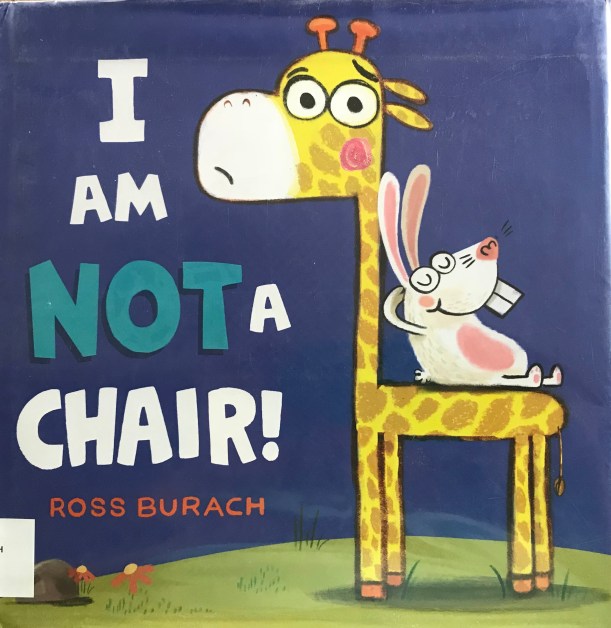
I love the simple but hilarious tale of a giraffe who is continuously mistaken for a chair by other jungle animals. He is extremely creative as he tries to educate others about their misdirected assumptions so he can stop being a chair.
Brilliantly colored illustrations add depth and life to the story and will attract young readers as they see life on the wild side (though recognizable as sort of like going to school). Well done, Ross Burach, in story telling through words and images.
This book is great for young and old readers.
KID KANDY
Make a Chair
Materials: whatever you find in your jungle environment
1. Search your jungle.
2. Find interesting items that look comfy and sturdy.
3. Make a chair. Does it look like Giraffe? Or a different jungle animal, like a pillow monster or box creature? Give your chair a name. Have someone take a picture of you sitting on your chair.
H is For Haiku is the lovely result of the imaginative, creative, and lyrical work of Sydell Rosenberg, mother of Amy Losak.
In honor of her mother, Amy Losak pursued the publication of her mother’s Haiku. Syd, one of the first members of the Haiku Society of America, dreamed of publishing a book for children focused on Haiku.
Haiku, a form of poetry, originated in Japan. Most readers recognize Haiku for the strict syllable count used for each of the three lines (most often 5-7-5) in a Haiku poem. Haiku is way to recognize the small things of nature and life-wonderful, amazing, poetic, and awe-inspiring.
“What’s most important about writing haiku is to focus on those many small moments we may overlook and make them special.” -Amy Losak
Beautifully illustrated, H is For Haiku brought a smile to my face with every new alphabet letter and corresponding Haiku. I enjoyed clever phrases, rich language, and observations of the natural life around us.
Well done, Sydell Rosenberg! Great job, Sawsan Chalabi! Amy Losak, I’m so glad you stuck with it and had H is For Haiku published. This book is a gift for us, if we but take the time to read and ponder.
KID KANDY:
Write Your Own Haiku Poem
1. Read H is for Haiku. Notice the clever words and illustrations. Both help tell the story of the Haiku.
2. Take a notepad and pencil outside. Spend time observing the nature around you. Focus on the small things you see. As you look, write down words that come to your mind. A parent or older sibling can help with this part.
3. Do you know what a syllable is? Clap your name. For me, I clap twice: An gie. 2 syllables. Practice with some other words.
4. Haiku is a poem with 3 lines. Each line has a certain syllable count: 5-7-5
5. Some people are not very strict with keeping the exact syllable counts, but it’s good practice as you learn the format for a Haiku poem.
6. Choose something you observed to be the subject of your Haiku. What do you want to say? Write down the words you want to use. Play with the words. Count out syllables. You can write ANYTHING you want in your Haiku poem.
7. Print your Haiku poem on clean paper. Add an illustration! Share it with a friend or family member! OR ME!!!
I won a copy of Nature’s Lullaby Fills the Night from KIDLIT411. Thanks, Sylvia and Elaine!
Nature’s Lullaby Fills the Night is the perfect bedtime – or anytime – read aloud! Peaceful rhyme tells the story of nature getting ready to go to sleep. Animals, plants, and other beauties prepare and nestle in for a good nights’ sleep. The illustrations, set in gorgeous deep blues and purples highlighted by nighttime light, perfectly match the winding down of the day.
I’ve totally enjoyed reading Nature’s Lullaby Fills the Night. Now, on to share it with the littles in my life. Thanks for the beautiful book, Dee and Bali!
KID KANDY:
Nighttime Painting
Materials: watercolor paints, brushes, water, crayons, heavy paper
1. Read Nature’s Lullaby Fills the Night. Notice the colors used in the illustrations. What’s your favorite page (animal, plant, setting)?
2. Use crayons to draw a nature picture. Include the moon and stars.
3. Paint over the drawing with darker colors like purple, blue, and black.
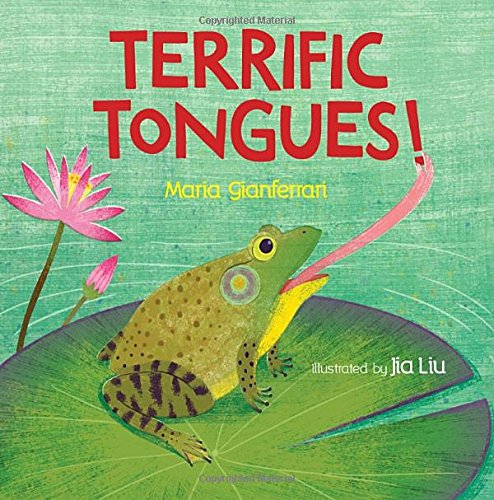
Vivian Kirkfield recently shared a great post about this wonderful book, TerrificTongues! Written by Maria Gianferrari and illustrated by Jia Liu, Terrific Tongues! is sure to engage, amuse, and educate young readers.
I mean, really, what child do you know who doesn’t love playing with or sticking out his or her tongue? I can’t wait get my hands on this one. Thanks, Vivian, Maria, and Jia! Congratulations!
Click here to visit Vivian Kirkfield’s blog and read more about Terrific Tongues!
I just read this blog post over at Vivian Kirkfield’s place. Click here.
Tara’s post is on April 7 (I’m a bit behind in my emails and blogs due to spring break). I loved reading about her writing story and new books. I may have slightly drooled a bit when reading her no-bake cookie recipe. I think we will be trying that soon!





 Love, Laughter, and Life