I have so many wonderful memories of the guinea pigs we loved during my years of teaching preschool. Our mama gave us hours of delight as we watched her lead her trail of babies around the room. Rustling plastic bags brought squeals demanding whichever “greens” we had brought. Both preschoolers and my family members loved snuggling and playing with these cuties.
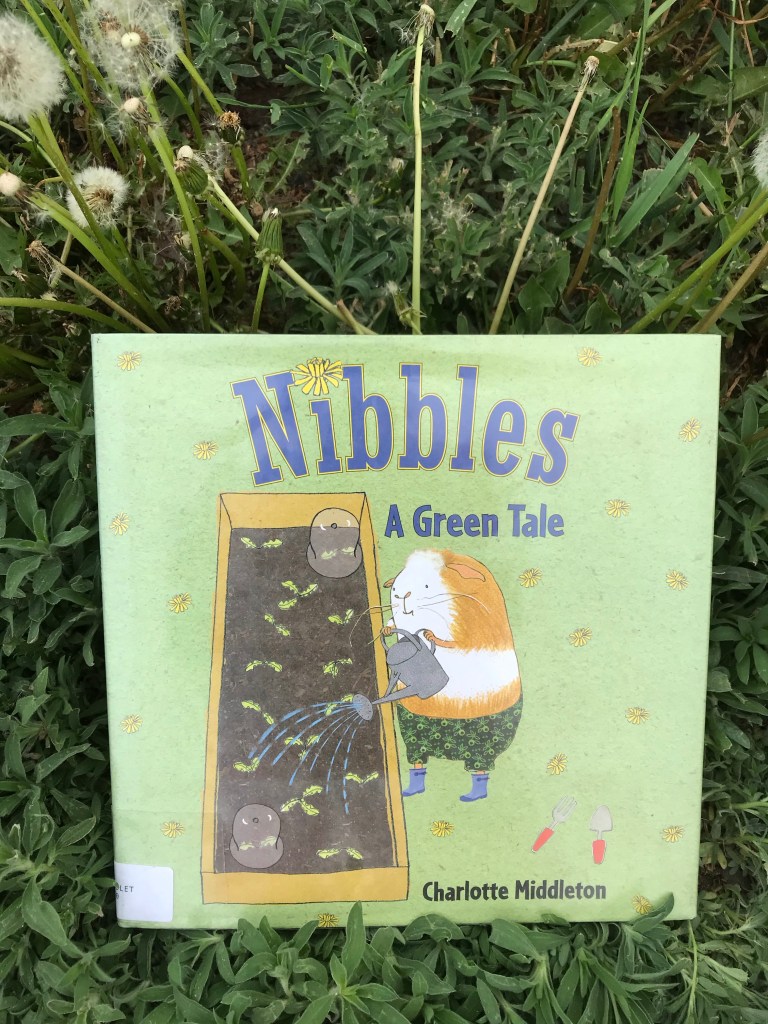
Imagine my delight when I saw Nibbles, A Green Tale at the library! Nibbles is obviously a guinea pig, one who loves dandelions. With our current pasture-wide crop of dandelions, I couldn’t wait to read this picture book. If only I could borrow a city of dandelion-loving guinea pigs and let them camp out in the pasture for a week or two. That would take care of the clouds of white seeds.
Why I LOVE this book:
~ guinea pigs! Wheet, wheet!
~ guinea pigs who eat dandelions
~ guinea pigs wearing clothes!
~ a fun story of how one guinea pig rescued dandelions from becoming extinct
~ a green strategy to solve dandelion problems (though the sheer number of them needed to clear a pasture…)
~ adorable illustrations
~ wonderful story and characters
There is a sequel to this book, Nibbles: Another Green Tale. I can’t wait to track down a copy.
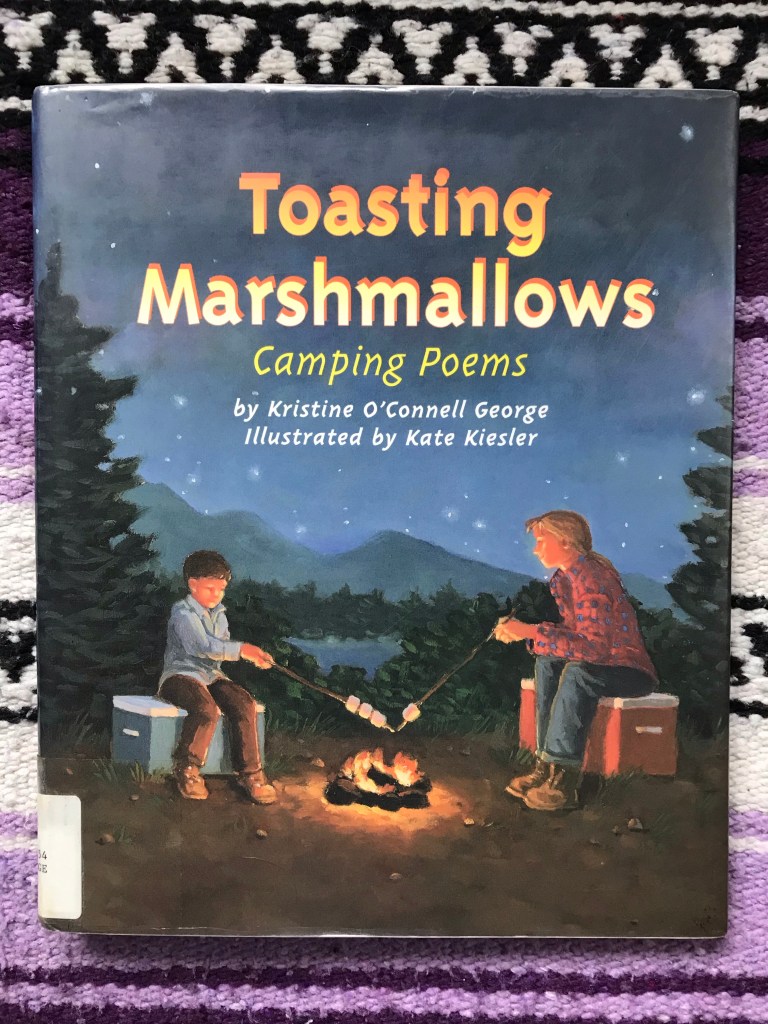
Happy April National Poetry Month! My interest in poetry (reading and writing) has increased over the past several years. Loving the outdoors and camping as much as I do, I was delighted to find Kristine O’Connell George’s poetry book about camping at my local library. Now I really want my own copy.
What I LOVE about this book:
the language is rich and perfect for camping and nature
I feel like I am camping as I read the poems
the poems are written from the viewpoint of a child and the experiences she had while on a family camping trip
the perfectly chosen words bring me right into the camping adventures and remind me of the fun I’ve had camping and spending time in the mountains
the illustrations are wonderful
When I was a young child, my family of six (plus assorted pets) often went exploring and camping in the Arizona wilderness. Back then, much of the state was untouched desert. Or at least it seemed so to me. We had a camper that Dad put on the back of the truck and off we went. My sister and I were the lucky ones, getting to sleep in the bed over the top of the cab. Mom and dad got the table bed. I’m guessing my older brother slept on the floor and the baby slept with Mom and Dad. So many fun adventures!
How about you? Are you a camping nut? Or like my cousin when asked if she likes to camp, “Why??? Why Patrick? Why would I do that???” Which means no. Hahahah. What was your favorite camping experience?
Hello, dear readers! Welcome to a very important blog post featuring a special book birthday for The Vanishing Lake by Paddy Donnelly!
Be sure to read to the bottom to learn how you can get your name in the hat to win a free copy of The Vanishing Lake, compliments of Yeehoo Press (US only). Thank you, Yeehoo Press and Helen Wu, for this opportunity!
Let’s get right to it.
1. Welcome, Paddy! Tell us a little about yourself.
I’m a picture book illustrator and author, originally from Ireland and now living in Belgium. I’ve had seven picture books published so far, with my debut author illustrated one, The Vanishing Lake, being my 8th. I also illustrate covers for middle grade novels, as well as a bunch of other things. My background is in web design and I did that for a number of years following university, then I transitioned into doing kids’ apps for the iPhone. That introduced me to illustrating for kids and I really enjoyed it. For the last two or three years I’ve been focusing on children’s publishing and I really love it.
You have had a very a fascinating career path!
2. Congratulations on your new book! What was your inspiration for The Vanishing Lake?
Thank you! Well, it’s actually based on a real vanishing lake close to my hometown! It’s called Loughareema and it actually does disappear and reappear every few days. While my book contains a few more magical elements like mermaids, giants and narwhals, Ireland is a place full of mythical stories, so I was always surrounded by that growing up. When I was coming up with a few picture book stories a couple of years ago, the real vanishing lake from back home popped into my head and I thought it’d be an interesting premise for a picture book.
It certainly is interesting! I thoroughly enjoyed reading The Vanishing Lake! It’s such a fun, imaginative story!
3. What was the writing and illustrating journey you took as you wrote this book? As both author-illustrator, how did that impact your creative process?
I started first with the basic idea – a lake that would mysteriously vanish and reappear and vanish and reappear. Then I needed a main character – a child for the reader to identify with. I wanted the character to be searching for the reason for the mystery and ended up with a Grandad character who would tell fantastic stories. Having the main character, Meara, refuse to believe the stories allowed me to keep pushing them to be bigger and more unbelievable. That was the premise and then I started sketching out the roughs, knowing that I had a certain number of pages to work with and that I wanted a few different beats to happen through the book – the lake gone, then flip the page and it was back, then gone again, and then a double page spread for each story, and conclusion. Once I had all of that lined out, I started to write the actual words. Then it was a real back and forth process, with the words informing the illustration and vice versa. This is certainly different to the usual process when I’m illustrating someone else’s story, and I really loved the creative freedom it gave me to have full control over both aspects.
I’m fascinated by the process you used for The Vanishing Lake. How fun to be able to switch back and forth between writing and illustrating, and to have total control over the whole project.
4. Everything is different right now with COVID-19, but how will you celebrate the book birthday of The Vanishing Lake on April 20?
I actually have a few virtual events lined up with bookshops in the book’s birthday week, so that’s going to be lots of fun! I guess one of the silver linings of the pandemic is the emergence of virtual author events, so I’m looking forward to doing a few storytimes, drawalongs and Q&A sessions with bookshops and their customers. I would of course absolutely love to be doing something in-person in a bookshop, so hopefully when the world goes back to normal I’ll get the opportunity to do that for a future book. I have been trying to take the time to celebrate the good moments more and more this past year though, so I may have to raise a glass at home on publication day.
Sounds like the perfect combination of events to make the week very special! We have learned some new tricks and skills in the days of the pandemic, haven’t we?
5. I love the joyful imagination that is such a huge part of The Vanishing Lake. How do imagination and your childhood experiences impact your creativity?
I definitely had (and still do I think) a vivid imagination as a child and used to draw my own stories so much. Growing up with natural wonders like Loughareema and the Giant’s Causeway on my doorstep maybe made me take them for granted, but I think I’ve now got a renewed appreciation for them now. And definitely the rugged cliffs, mountains and magical greens of the Irish landscape have an influence on my illustration style. As imagination is the centre of this story, it allowed me to keep pushing to come up with more extravagant stories for Grandad to tell.
Ooh, perhaps there will be a future picture book about the Giant’s Causeway! 😉 One of my bucket list items is visiting Ireland.
6. What are you working on now?
I’m working on a lot of picture books at the moment. I’ve got a few more coming out later this year and next year. And I’ve got a few middle grade covers on the go too. Lots of different projects happening at once, but that’s the way I like it. I like to hop between projects as it helps keep my imagination going and I don’t get too bogged down in one set of illustrations for months on end. I think I need that variation for my creativity.
So, you also work as a professional project juggler? LOL. I like to juggle writing projects as well. Like you said, it helps keep my imagination and creativity fresh.
7. Surprise us! What else would you like to share?
Perhaps the most exciting project I’m working on is my second author illustrated picture book, Dodos Aren’t Extinct, which I’m illustrating right now. That’ll be coming out in Spring 2022. Very exciting!
Congratulations! That is exciting! It sounds like another captivating story!
Thanks so much for stopping by to visit, Paddy! Best wishes on The Vanishing Lake and all of your other projects.
Readers, you can purchase your own copy of The Vanishing Lake by clicking the following links.
Here are 3 ways to get your name in the hat to win a copy of The Vanishing Lake (US only). A winner will be randomly chosen in one week on Tuesday, April 27.
1. Like and comment on this blog post. Please make sure I have your email address so I can notify you if you win.
2. Follow this blog and tell me how you follow. Please make sure I have your email address so I can notify you if you win.
3. Visit my Twitter page @AngieQuantrell for more chances to win a copy of The Vanishing Lake.
CONGRATULATIONS TO Janet Frenck Sheets! You won a copy of The Vanishing Lake!
(OOPS! In my picture, I have the hash tag incorrect! Sorry! Should read #Haikufromtwo!)
look! by Angie Quantrell, photo by Angie Quantrell
How fun! I love writing haiku, though I usually pair it with one of my photos. I had so much fun writing the first #Haikufromtwo, I had to do it again! Thanks, Amanda (https://www.instagram.com/amandadavis_art/)!
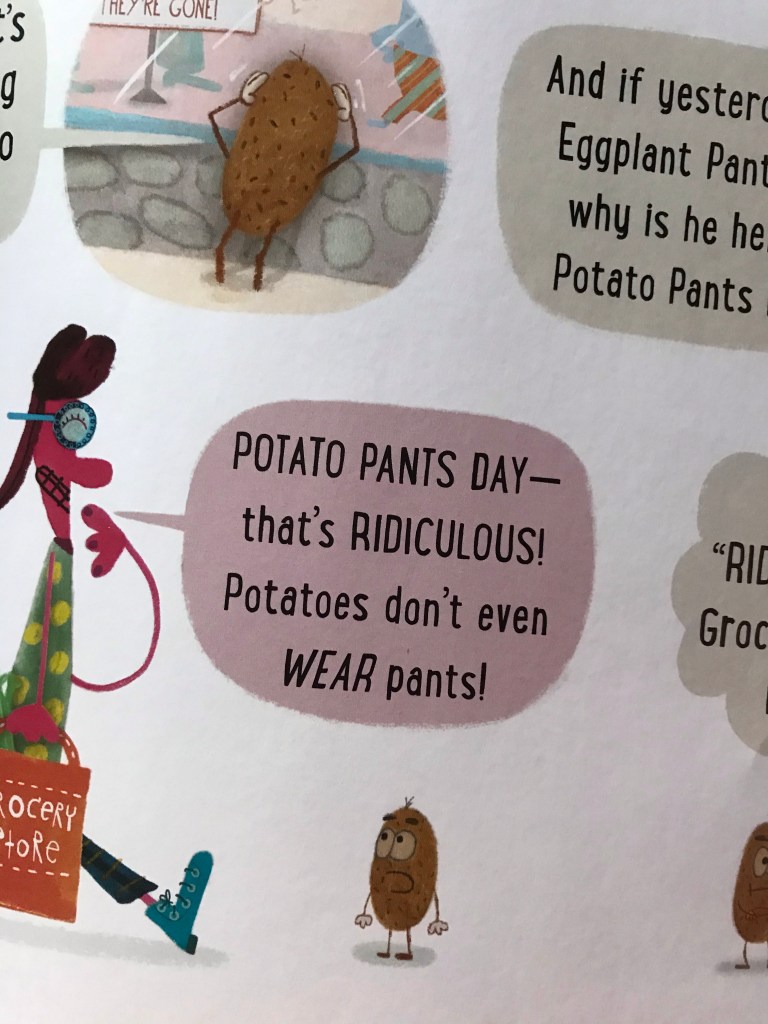
ridiculous + flower
first word: ridiculous
Taken from Potato Pants! by Laurie Keller (Henry Holt and Company, 2018)
second word: flower
Taken from Jonesy Flux and the Gray Legion by James Pray (Sterling Children’s Books, 2020)
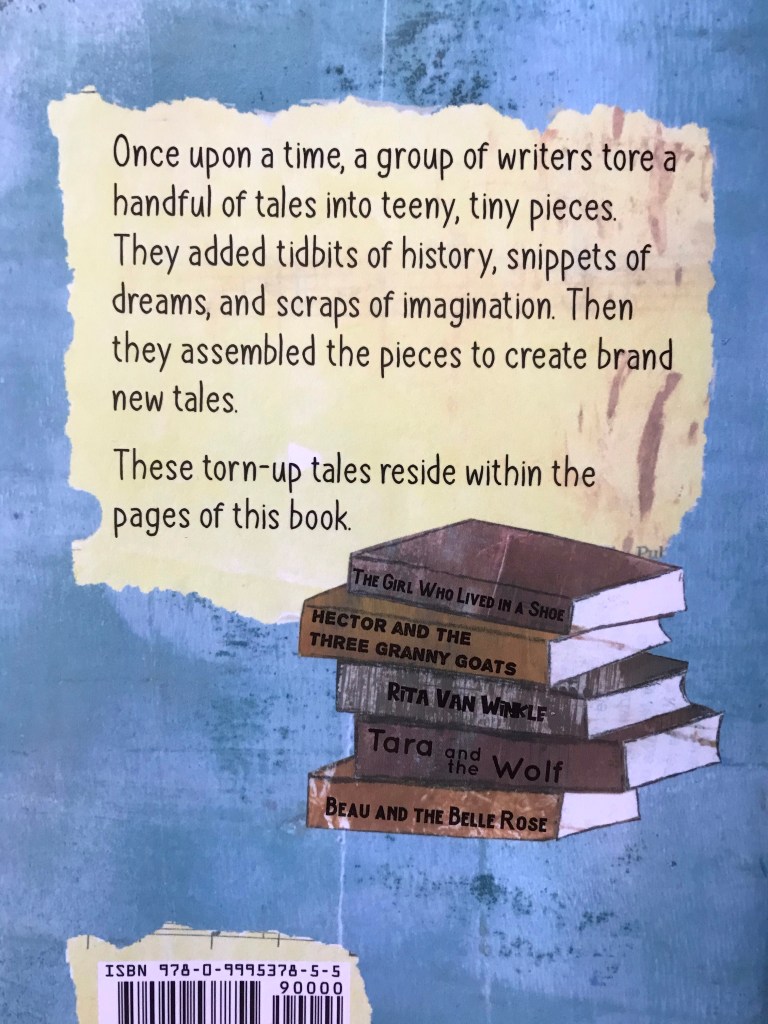
The Girl Who Lived in a Shoe and other Torn-Up Tales
Compiled by Bernice Seward
Seward Media, 2020
Hello, friends! I would like to introduce you to a fun new book of fairy tales. But these fairy tales are not what you would think. They have been torn-up, re-imagined, and fractured from the original stories we’ve heard all our lives. How exciting to read these “new” fairy tales in this delightful compilation of 5. One of my critique group partners, Beverly Warren, wrote one of the torn-up tales in The Girl Who Lived in a Shoe and other Torn-Up Tales. Congratulations to all of the talented authors and illustrators.
Scroll down to meet the authors and read their individual answers to the questions I asked. Enjoy!
MEET THE AUTHORS
Bernice Seward compiled this collection of fairy tales. She wrote The Girl Who Lived in a Shoe
How do you know each other and how did this book come together?
Loreley: Most of us only know each other virtually as we live in different cities. We are members of SCBWI Inland Northwest and had all expressed an interest in creating an online critique group before COVID even began. Here we are! Bernice suggested we try a collaboration as we were all struggling with the COVID slump last summer.
Beverly: I met both Bernice and Michele at the SCBWI conference in September 2019. Apparently Loreley and Jess were there as well. We had the opportunity to sign up to join a critique group. Later we were contacted by the coordinator and put in a group of nine, I believe, which was then split in two. Personally, I had been thinking that I would like to write a fractured fairy tale and purchased Jane Yolen’s book on the subject. About two weeks later Bernice suggested that we do this project.
Michele: I’m the odd author out here The other four were members of an established critique group before this project came about. I am in a different critique group with Bernice and she invited me to join in on the collaboration. I know Bernice because I took a community education class on writing children’s picture books from her about 3 years ago. I happened to meet Beverly at the SCBWI Fall 2019 conference. She and I are in an online critique group. We are all members of The Society of Children’s Book Writers and Illustrators. (I have been asked to join with their critique group and I couldn’t be happier!) Bernice came up with the collaboration idea after listening to an SCBWI interview at the Summer Spectacular (over Zoom of course.)
Michele Rietz wrote Hector and the Three Granny Goats
What was your inspiration for your torn-up tale?
Loreley: Several years ago, I had traveled to Europe to live, work, and heal my wounds from my divorce. I was only gone just over three years, but when I returned to The States, I felt like Rip Van Winkle who had fallen asleep and woken up in the future. There were (at that time) Blackberries, Bluetooths, and Blogs! I didn’t know what these things were. HDTVs were in everyone’s living room. The Bon Marche was gone! It was all very disorienting. So this experience inspired my story “Rita Van Winkle”.
Beverly: Beauty and the Beast has been one of my favorite fairy tales for years. I loved the idea that a beasty person can be transformed through the love of another and that within an unattractive personality there are traits that can be found to love if one has the eyes to see. Also, years ago I was interested in learning about herbs, common herbs that can be used for various purposes including healing.
Jessie: Recently I read Invisible Women Data Bias in a World Designed for Men by Caroline Criado-Perez and Believe Me: How Trusting Women Can Change the World edited by Jaclyn Friedman and Jessica Valenti. The concepts in these two books as well as ideas about the invisible biases we absorb from society were whirling around in my head when Bernice invited me to collaborate on this project. As I contemplated fairy tales, I thought of The Boy Who Cried Wolf and wondered, what if it was a girl, and what if she was telling the truth? Tara and the Wolf was born of that simple thought experiment.
Michele: As a child, I loved the Three Billy Goats Gruff. I think it was the rhythmic “Trip, trap” that I liked the most. (Definitely not the gruesome ending. LOL!). I started my version with three nanny goats, but they evolved into three granny goats. I am a grandma of 10 myself, so I can totally get behind that change! 🙂 I also wanted a gentler troll in my story, and since dads often get a bad rap in media and society these days, I wanted him to be a strong (as in involved in his kids’ lives) father figure. Each of the grannies represents something I myself am known to do. I am ALWAYS happy to have an excuse to make cookies, I grow a garden every year and I love to do yoga and recently became a teacher at the studio I’ve attended for several years.
Bernice: The idea of designing a shoe house drew me to The Little Old Woman Who Lived in a Shoe. And the fact that the original story included a giant clinched it. Then, as I was brainstorming for my torn-up tale, I thought it’d be fun to create a sort of “origin story” for a certain legendary cloud-dwelling giant.
Loreley Smith wrote Rita Van Winkle
Tell me about the illustrations.
Loreley: I am not an illustrator, so when Bernice suggested we each create our own illustrations, I was very apprehensive. I’ve become inspired to work with collage art more and improve my skills 🙂
Beverly: Art has always come naturally to me. I’ve created a few collage pieces before, but mostly I work in other mediums.
Jessie: I come from a family of artistic people and assumed from the time I was a child that fine art was not one of my talents. It was something other people in my family were good at. I have tried to express creativity with sewing, baking and most often with writing. As I experimented with paint, shape and collage, I realized that the only thing stopping me from developing an illustrative talent was lack of belief in myself. It was incredibly empowering to make a physical picture from something that existed before only in my mind. While my illustration skills are still very rudimentary, the use of collage simplifies the process, allowing simple shapes to convey the image and the textures created by painted papers to elevate them and give further interest.
Michele: First of all, I have NEVER considered myself an artist, so this was a HUGE stretch for me. Bernice has taught me a lot over the years, so I felt I owed her a good effort. Learning to draw simple outlines (just google something like “Easy Goat Drawing”) was the start. She had me over to paint some papers for the collage illustrations and from there I took it one illustration at a time. Bernice also provided us with how-to videos she created. Those were very helpful and easy to follow. I am thrilled with how my illustrations turned out and I now consider myself a “Collage artist”.
My inspiration for my troll came from a wooden sculpture in Breckenridge, Colorado. My college freshman roommates and I get together every two years or so and on our last reunion, I talked them into finding it. It was amazing.
Jessie Quist wrote Tara and the Wolf
What surprises did you discover in the process of creating this book?
Loreley: I was surprised at how much I enjoyed the process of creating the illustrations. While it was a bit nerve racking, I found myself getting lost in the process.
Beverly: We created the book quickly so the process was intensive, but it was enjoyable for us to do this project together. Also, I discovered as I did some research on the history of Beauty and the Beast that there lived a true Beauty who married a Beast in the 16th Century, in France. The beast was a man who had a condition called Hypertrichosis (werewolf syndrome). His body was covered with long dark hair all over. It is rare and is due to an abnormal 8th chromosome. The man was the property of the king of France. When the king died the Queen decided he should marry. She interviewed many young women and chose one with great beauty. The girl didn’t know about her groom’s appearance until their wedding day. Imagine her shock, but she grew to love him because of his winning personality. Together they had seven children.
Michele: I don’t think it was a surprise as much as confirmation of the importance of critique groups. We each read each other’s stories many times to help work out rough spots, kinks, etc. When I was being resistant to changing something in my story, one of the group called me to help me realize I really needed to “kill my darling”. My story is stronger for it and I’m glad she took initiative to do that. My illustrations coming together were definitely a surprise for me. (See question 3. 🙂 I also discovered that I like writing fractured fairy tales. I had dabbled in that genre a bit, but diving in and completing one was really fun.
Bernice: As a picture book writer (who strives to tell stories in 550 words or less), the thought of writing thousands of words is daunting for me. I was surprised that my first draft of The Girl Who Lived in a Shoe topped 1900 words. This gives me hope that fleshing out stories for chapter books will be a smoother transition than I’ve been anticipating.
Beverly Love Warren wrote Beau and the Belle Rose
What plans do you have for the future? Are there any other book projects in the making?
Loreley: I’m currently working on a picture book where my protagonist learns the importance of “leaving only footprints and taking only photos” when exploring nature.
Beverly: We are continuing to meet as a group. We’ve only discussed briefly doing another project in the future and no plans have been formed yet. Currently I am illustrating a picture book for Clear Fork/Spork Publishing which should come out in the fall. Also, I’m revising a picture book and writing a middle grade novel.
Jessie: I have two board books in the works as well as an illustration project commissioned by a friend. We haven’t formalized any plans for another joint publication, but I hope we will be creating more torn up tales together in the future.
Michele: Personally, I have a pet project in the works which involves using my grandchildren’s names in the illustrations. I have an illustrator working on it and we hope to be finished in the next month or so. I will self-publish that book. I also have countless manuscripts in various stages of completion. For the group, there really isn’t anything in the near future, but I have expressed a hope we’ll do another collaboration with this group. They are a wonderfully generous and creative group, and I have learned so much from them. We do plan to meet in person once the pandemic is past. We don’t know what that will look like, but we have all expressed a desire to do that.
Bernice: Currently, I’m working on a picture book about a bear who loses his hair after trying shampoo from a traveling salesman (fox).
Thank you, ladies, for sharing more about your lives and your process for writing The Girl Who Lived in a Shoe and other Torn-Up Tales.
You can read more about the authors and this fun fairy tale book at:
One of my favorite “substitute teacher” activities I loved to do with older students was a word game that ties right into this poetry form. I only realized this after I had difficulty coming up with a poem, and then went back to my old sub/word play game to give me a list of words from which to work.
The word play game consisted of me writing a very long word on the (back then) chalk board. Usually “supercalifragilisticexpealidocious.” I would then set a timer and instruct students to play with the word and come up with a list of words they could make using only the letters of the word on the board. True, this is a giant word, so the possibilities were nearly endless. But that made it easier for the students. If only I had gone on to use our word lists to make up fun poems!
I discovered this fun method in a poetry book I picked up at the library. It just looked enjoyable. And it is. Check out or purchase this book and play with some words yourself.
Lemonade and Other Poems Squeezed from a Single Word
Hello, book friends! Today I’d like to introduce you to the author of Scromlette the Omelet Chef, Zach Christensen. I was sent a copy of Scomlette the Omelet Chef by Mascot Books. You can learn more about Mascot Books here: https://mascotbooks.com/ .
I featured Scromlette the Omelet Chef back in December with three other newly released picture books. Today, let’s take a closer look at a book about food – one of my favorite subjects. On a side note, during a critique group meeting, one of my critique partners mentioned that many of my books have a theme about food, or some type of food connection. Lo and behold, now that she said that, I’ve noticed MOST of my books have some sort of link to food. You can imagine a book about omelets would catch my eye. Er. Stomach? On to Zach’s book.
My Short Blurb:
This book has a great message. Scrom goes from being a bullied child to an adult who shares his love of making omelets with those on the streets. I enjoyed reading how Scrom survived the bullies of his childhood by hanging on to what he loved: making omelettes. The closure of what the bullies did and seeing them later in life as adults-in-need helps Scrom understand why they did what they did, and offers him a chance to help even more. The colorful illustrations help tell the story. Scromlette the Omelet Chef makes me hungry for an omelet!
Meet the Author
Welcome, Zach! Tell us a little about yourself.
Hi Angie, and to any readers out there, thank you for listening in. I’m from Nebraska, I’ve worked in social services for six years, and I have always loved a good story. I have a master of arts in theology, so I had suspected for years that my first book would be something quite dense in the realm of philosophy or religious history. Instead, I came to find that a true test of your creativity and material is to distill ideas into simple and accessible stories for children. There is something magnificently compelling about a story that inspires you, give you hope, helps you reframe your state of mind, and reorient how you interact with the world around you. I have always enjoyed helping people find stories that illuminate their lives in new ways.
Zach, I just read what you said in a craft book about writing for children: A writer has to know and research much information about a subject in order to distill it down to create simple, engaging stories for children. I love how we both are thinking about this.
What was your inspiration for SCROMLETTE THE OMELET CHEF?
My primary inspiration was having seen such a resilience and fortitude in my peers and contemporaries around me for my entire life. Growing up, there is a great deal of bullying that children are susceptible to experience. Childhood is already a turbulent time, and it is when we are our most vulnerable that we are most susceptible to endure the worst trauma. Naturally, the book has strong anti-bullying themes. My aim is to tell children that there is something on the other side of the disorienting journey of growing up, and you’ll be able to see it more clearly if you can find something that you love.
With that, I wanted to likewise encourage children to find things that they love giving their time and energy to, while also finding ways to serve people around you. If you can find things that overlap in these two domains, then you have found something that is life-giving for yourself and the world.
What was the writing journey you took as you wrote this book?
Believe it or not, I actually wrote the entire story in a parking lot while I was waiting for an AWOLNation concert to start. It was as if the story already had existed and I had it in my imagination for years, but the rhymes and stanzas just came to me in that two-hour window of time. The writing of the story really was a materialization of ideas that I had felt children (and really people all of walks of life) needed to hear for some time. I think that is actually central to the craft of writing a story – it is taking what you have encountered in your life, the good and bad, and synthesizing them together in a way that people can look at what you’ve created, and they feel a sense of shared experience with you. When people hear a story and think “me too,” I believe this what is empowering and compelling for people.
All this to say, if you have some life experience that left a lasting impression on you, whether it was characterized by pain, joy, a convergence of the two, or something else, I’d submit to you that you could transform that into a story, and there are people out there who need to hear it.
That’s pretty amazing – two hours! In a car. While waiting for something else. Writers out there? Keep those notebooks handy.Zach, I love this.
Everything is different right now with COVID-19, but how did you celebrate the book birthday (book release day) of SCROMLETTE THE OMELET CHEF?
Unfortunately, I was not able to have a conventional release party due to the pandemic, but I have been networking with a number of different teachers and educators to help circulate Scromlette to the general public and to get it into classrooms. Likewise, many people among whom I have promoted Scromlette were able to get their copies before Christmas.
Surprise us! What else would you like to share?
I have more stories in the works and some manuscripts are completed and ready for submission! So keep an eye out for new books of mine!
Zach, that’s great news! I look forward to hearing more about future books. Thank you for visiting my blog today, Zach. And thank you for writing such an encouraging picture book.
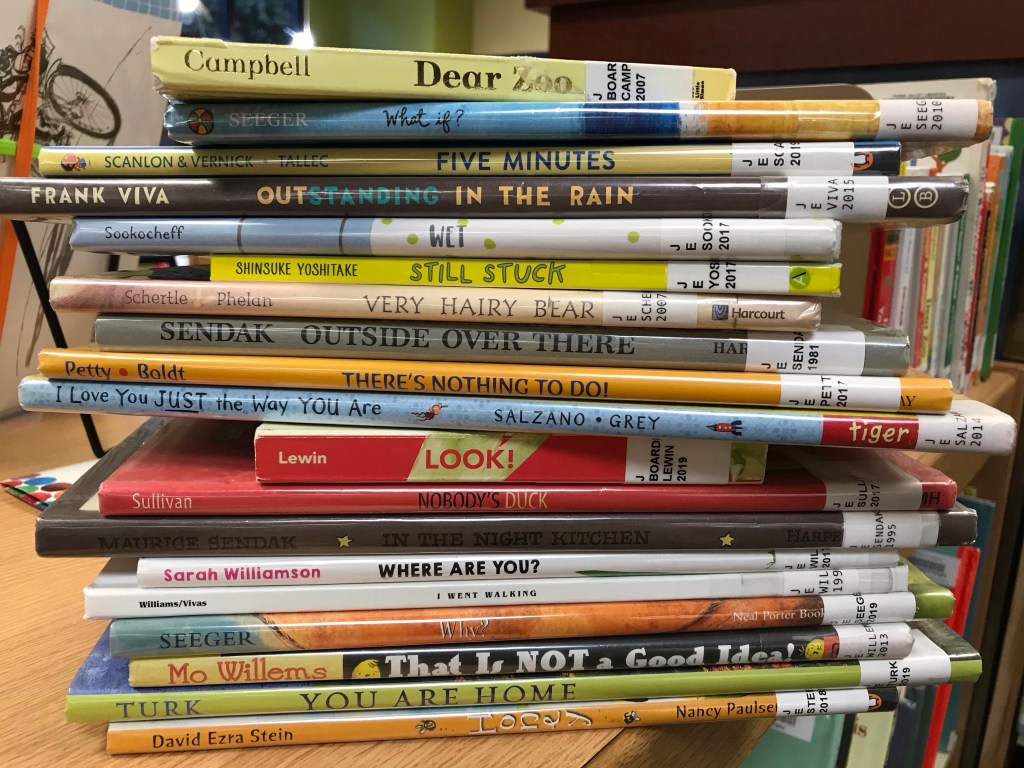
Outstanding in the Rain: A Book Title Poem (on the day before the library closed [again] for COVID-19)
Dear Zoo
What If?
Five Minutes
Outstanding in the Rain
Wet
Still Stuck
Very Hairy Bear
Outside Over There
There’s Nothing to Do!
I Love You JUST the Way YOU Are
Look!
Nobody’s Duck
In the Night Kitchen
Where Are You?
I Went Walking
Why?
That Is NOT a Good Idea!
You Are Home
Honey
For fun, on the very last day of the library being open for limited in-person visits (again), I decided to use my 30 minutes to write a book title poem. I was limited only by time, hearing the clock tick away in my head, but I quickly scanned and grabbed titles. Poor library workers. To avoid leaving a mess, I checked out the entire stack!
Go ahead. Try it. What book title poem can you write? I’d love to read it!
On Day 29 of Storystorm (https://taralazar.com/2021/01/29/storystorm-2021-day-29/), Amanda Davis shares a fun way to get your creative juices flowing. In the post “Amanda Davis Keeps Creative Juices Flowing with Haiku from Two,” she tells how she started a process of using two books she is currently reading, choosing one word from each, and then creating a haiku from those two words. The resulting haiku sometimes leads to new writing projects.
How fun! I love writing haiku, though I usually pair it with one of my photos. I was immediately on board with trying this creative idea. Thanks, Amanda (https://www.instagram.com/amandadavis_art/)!
First word: solitude
Book: The Powerful Purpose of Introverts, Why the World Needs YOU to BE YOU by Holley Gerth (Revell, 2020)
Second word: moonlight
Book: Lemonade Lemonade and Other Poems Squeezed from a Single Word by Bob Raczka (Roaring Book Press, 2011)
What a fun creative writing exercise! Let me know if you decide to try this one. I’d love to read your haiku!










 Love, Laughter, and Life