Astronaut-Aquanaut: How Space Science and Sea Science Interact
Written by Jennifer Swanson
Published by National Geographic Partners, LLC; 2018
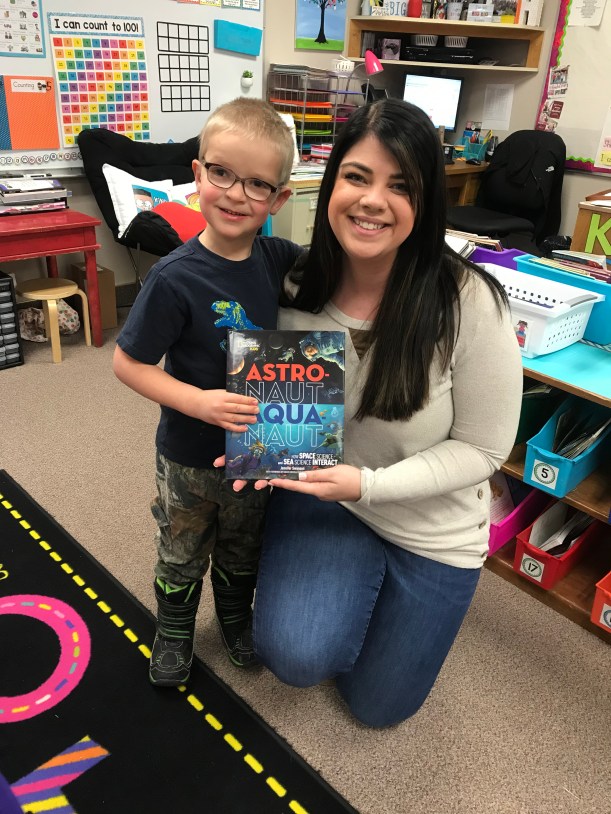
I received two copies of Astronaut-Aquanaut by Jennifer Swanson, one to keep and one to give to my grandson’s school. We made the delivery in January, giving the book to his teacher. Thanks so much to Jennifer!
You can learn more about Jennifer and her books by visiting her web site.
AMAZON BLURB:
Journey from the deepest trenches in the oceans to the farthest humans have ventured into space and learn what it takes to explore the extremes. You might just be surprised by how similar the domains of ASTRONAUTS and AQUANAUTS really are.
Space and the ocean. If you don’t think they go together, think again! Both deep-sea and space explorers have to worry about pressure, temperature, climate, and most importantly, how to survive in a remote and hostile environment. Join us on an amazing journey as we go up in space with astronauts and dive deep down in the ocean with aquanauts to explore the far-off places of our planet and the solar system.
With a strong tie into STEM topics–such as making connections, making comparisons, and recognizing patterns across content areas–readers will discover the amazing science and incredible innovations that allow humans (and sometimes only machines) to survive in these harsh environments.
WHAT I LIKE ABOUT THIS BOOK:
Astronaut-Aquanaut is a gorgeous book! Colorful illustrations, photos, graphs, and detailed information fill the pages. Despite ample pictures to look at, the text is skillfully written and explains so many space and ocean concepts! I learned many new ideas and information. I had no idea how similar deep sea science and deep space science are to each other.
This book really is an excellent resource for anyone who wants to learn about becoming an astronaut or an aquanaut. The pages are filled with so many cool tidbits, factoids, and real life experiences of those individuals who have pursued careers in both fields.
STEM based, Astronaut-Aquanaut is primed for leading young explorers to delve far and wide and learn more about both areas.
This nonfiction picture book, geared for older readers, is an excellent example of a text that instructs, entertains and informs.
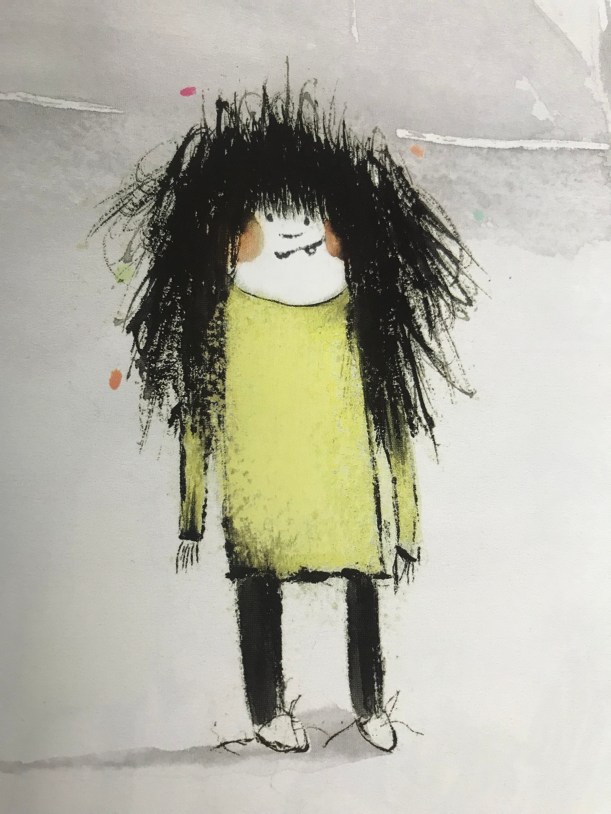
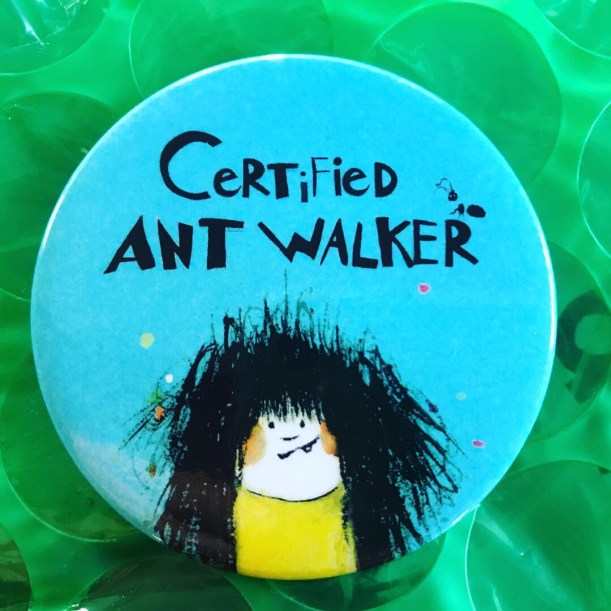
There are nine steps to becoming an ant walker, and Amariyah, the expert ant walker, is here to show you how it’s done.
This irreverent and quirky picture book, How to Walk an Ant, follows a young girl as she goes through the process of walking ants, from polite introductions to tragic leash entanglements.
In the end, this unique book from author-illustrator Cindy Derby shows that as long as you’re doing what you’re best at, you may find a like-minded friend to tag along.
*Zero ants were harmed in the making of this book.
**Oops, 7 ants were harmed in the making of this book.
Why I Like This Book:
Quirky and irreverent is correct! I loved reading about Amariyah and her efforts to educate me in the best ways to walk ants (always carry plenty of thread, …). The illustrations perfectly match the story and I had to laugh loud and giggle to myself several times as I read. Seriously, which picture book do you know where FUNERAL plans are a part of the appendix?
The writing is clear and entertaining. Amariyah has a unique voice and I love her personality and adventures. A limited palette for the illustrations allows images to pop into life. Add diagrams and insets, and anyone who reads How to Walk an Ant will quickly reach expert level. This book is a fun read.
Spring is here, the best time to practice walking newly emerged ants. Read How to Walk an Ant and then head outside to practice walking ants.
KID KANDY:
Ants on a Log
Ingredients: celery, peanut butter (or other nut butter if you can’t eat peanuts), raisins
4 Steps to Eating Ants
1. With an adult, wash and cut celery sticks into 3-4 inch pieces
2. Spread peanut butter in the celery (log) trough.
3. Plop ants (raisins) on the peanut butter.
4. Eat ants on a log. Now you are an expert eater of ants.
Borrowing Bunnies, A Surprising True Tale of Fostering Rabbits
Written by Cynthia Lord
Photographs by John Bald
Illustrations by Hazel Mitchell
Farrar Straus Giroux Books for Young Readers, 2019
“Come along on a surprising adventure with two very special bunnies as they find their forever families!” (back cover)
I send a special thanks hopping to Cynthia Lord, for gifting me with a beautiful copy of Borrowing Bunnies, complete with three autographs! Thank you for the bunny keepsake! Thanks also goes out to Kathy Halsey and Group Blog for offering the opportunity to win a copy of this adorable bunny tail. Tale. Hop on over to read about great books.
Amazon Blurb:
Newbery Honor author Cynthia Lord likes fostering rabbits—or, as she fondly calls it, “borrowing bunnies.” This is the heartwarming true story of the author’s own journey with two very special rabbits.
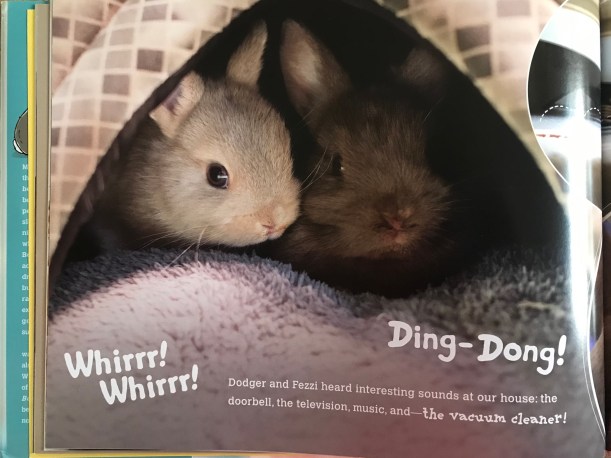
In the spring of 2016, Peggotty and Benjamin were saved by Maine’s Cottontail Cottage Rabbit Rescue after their previous owners had neglected them. But before the two Netherland Dwarf rabbits could be adopted, Cynthia had to help them learn to trust people and feel safe inside a home. The bunnies slowly settled in, enjoying their clean pens, nibbling new foods, and playing with fun toys, while Cindy’s husband, John Bald, photographed Benjamin and Peggotty’s every step toward adoption. At that time, hundreds of viewers were drawn to Cindy’s Facebook page to watch their progress. Now, she has adapted the rabbits’ true story into a picture book that explores love, responsibility, empathy, and letting go—along with fostering’s many surprises, both big and small.
Young readers will delight in watching these bunnies thrive while also learning a few fun animal facts. With Cindy’s pitch-perfect blend of warmth and real-life experience, Borrowing Bunnies is a new classic in narrative nonfiction.
Things I Like About Borrowing Bunnies:
1. BUNNIES! At once glance, I was in love and wanted to run out and foster (to keep-ok, that is called adoption) a baby bunny! Fortunately, I live in an RV and there is no room for in indoor bunny. Outdoors will not work, as we have a hunting pair of hawks who return each spring to nest, raise their young, and teach them to hunt-right in our pasture.
But read on, friends. Be prepared to spend time and resources to care for, love, train, and snuggle with these cuties.
2. New information. I learned so much about rabbits and their habits. Wonderful illustrations and photographs merge on colorful pages, telling the story of fostering bunnies. I’m still wondering how to potty train a bunny though. Is it like a kitten where you just keep putting it back in the kitty box until it potties and makes the connection? One of my junior high friends had an indoor pet rabbit and it left a trail of bunny pellets everywhere it traveled.
3. Narrative. Cynthia Lord writes in a clean and captivating way, engaging me and explaining along the way. Young readers will love the bunny story and not even notice how much they are learning!
4. Illustrations and photos. Perfect combination of information, character profiles (bunnies), and adorableness.
5. Overall package. This book is just right. Spring, when we tend to think of baby bunnies and other assorted baby animals, is the optimum time to read Borrowing Bunnies. This book would fit right into an Easter basket or collection of spring animal books.
6. Emotions. Some sections of this book will make you cry, laugh, love, and experience loss. Readers are exposed to the emotions connected with fostering and caring for animals. Discussing these emotions will help young readers understand their feelings.
I hope you are encouraged to purchase or check-out Borrowing Bunnies and read all about real life bunnies. Maybe one day you will foster baby animals!
KID KANDY:
Here are a few fun things you can do after reading Borrowing Bunnies:
~ hop and leap like a bunny
~ use blankets to make a soft bunny nest for stuffed animals or yourself
~ curl up in your nest and read Borrowing Bunnies!
~ visit a zoo or farm to see and pet live bunnies
~ eat a bunny salad for lunch (carrots, lettuce, radishes, peas)
~ pick dandelions to make bunny bouquets (bunnies love dandelions)
~ use paper, markers, glue stick, and cotton balls to make a bunny picture; draw the bunny with long ears and whiskers; glue a cotton ball on for a tail
Everyone who is anyone has read about the dangers of sitting long hours. Not that a numb backside, crinkled shoulders, and achy knees will kill you, but sitting and being sedentary just might steal your health and shorten the days you expect to be around to do anything.
As a writer, well, sitting at a computer desk, coffee table, work table, research desk, or any other writerly space is sort of a job requirement.
The challenge is how to stand and write but also be able to access (ergonomically) the keyboard or laptop, mouse, and assorted resources and supplies.
Living in an RV adds additional space challenges. Where would I store a standing desk? How could I use the tiny dining table if a portable standing desk were in place? What about the bump between the slide and the RV floor? Do I need to stand on the hump to work at a standing desk?
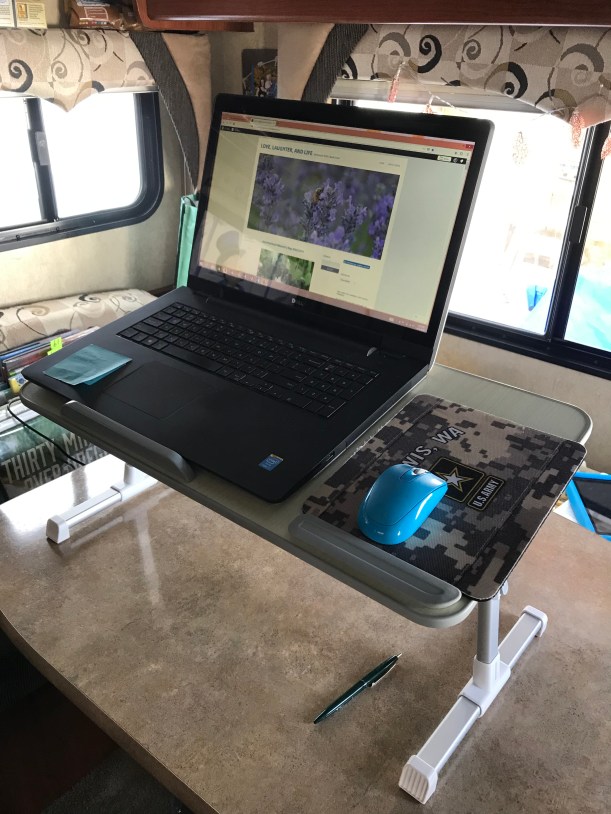
After literally spending years contemplating, researching, and giving up the idea of a table top desk, I finally threw up my hands after a particularly long (sitting) writing day. I did a quick Amazon search, found the perfect portable standing desk, checked for size for my 17″ laptop, and ordered it. All within 5 minutes.
I should have done that ages ago!
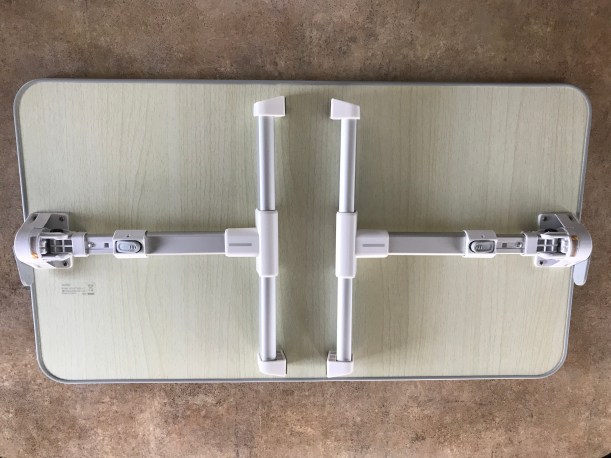
This wonderful office accessory arrived a few days after placing my order. It took me a few minutes to figure out the legs, but after that, I realized what a treat it will be to use my new standing desk.
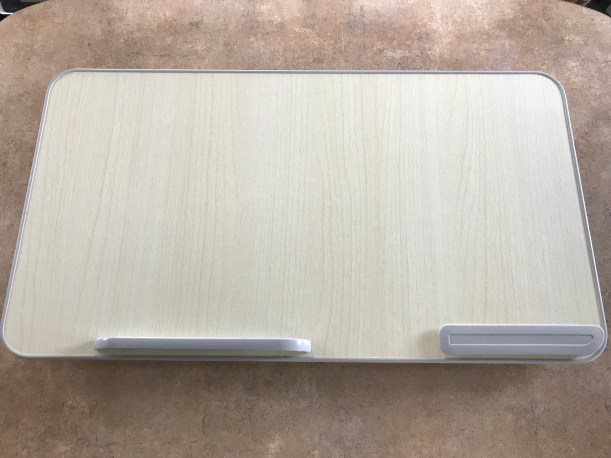
My 17″ laptop fits securely on top of the adjustable angle table, held in place by a shelf. My mouse and pad rest to the right of my laptop and are also held in place by a softened shelf. If you are looking for one for yourself, this is definitely for a right-handed person. Look to see if a left-handed version is available. Coloring is pretty nondescript, but I’m not in it for looks. Purpose is my main goal. It is neutral in color and is sturdy enough that I don’t worry for the safety of my laptop. It does wiggle as I type, but not the kind of wiggle that tells me it’s going to crash down. I love being able to angle the top of the tray, and my wrists appreciate the easy angle when working.
Storage is not an issue either. This tray folds flat. The two shelves that hold up the computer and mouse are a bit raised on one side, while the folded legs are raised on the back. But I found a perfect spot to rest my new work buddy.
I now have the option to stand and work or sit and work. Hurray!
What took me so long???
Details of my portable standing desk: [Large Size] Neetto TB101L Adjustable Laptop Bed Table, Portable Standing Desk, Foldable Sofa Breakfast Tray, Notebook Stand Reading Holder for Couch [Personal Computers]
She glanced his way, insect eyes missing no detail.
“What are you thinking of, my love?”
“Appearances.”
“You look ferociously fit.”
She flexed her legs, wiggled her wings. Let him move close.
“How are you feeling, gorgeous?”
“Hungry.”
Poser by Angie Quantrell
I wrote this story in response to Vivian Kirkfield’s #50PreciousWords Writing Contest (50 words total) and a Twitter conversation with @Realistic Poetry about favorite insects. Hop on over to Vivian’s site to read more short stories.
Hey, friends! If you are a writer of picture books and stories for young readers, this writing contest is for you! 50 words to tell a story (beginning, middle, end)? You can do it! Visit Vivian Kirkfield at her blog for details. Best wishes!
Reading for Research Month is here! March Madness of the Picture Book World, here we come!
This is my 4th or 5th year participating in ReFoReMo. Happy 5 years to #ReFoReMo! Focused blog posts guide researchers (us) to read picture books that illustrate the information found in blog posts. I look forward to this month as an opportunity to read lots of picture books and study their techniques, formats, and picture book elements. If you love picture books, this month of reading is for you.
Is it a coincidence that Reading for Research Month occurs the same month as Read Aloud Day on March 2? I think not (or maybe so, but it is a cool coincidence.)
Read, friends. Read.
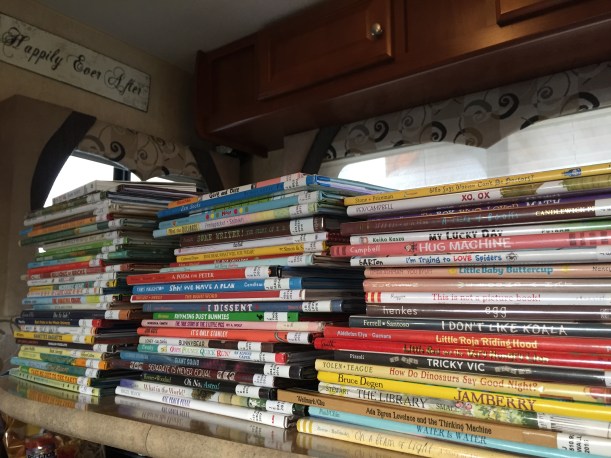
Book stacks from previous ReFoReMo! Be prepared for the time AND space commitment! LOL
Great things happen during ReFoReMo:
– picture books are read, studied, dissected
– blog posts are shared by professionals in the kidlit field
– the kidlit community gives support to one another
– interaction between fellow writers, authors, bloggers, and kidlit enthusiasts is invigorating and addicting
– learning about picture books, in oh so many ways, grows in direct correlation to the amount of time spent reading and studying PB texts
– libraries are flooded with requests for picture books (which, as we all know, trickles back to authors – yay!)
– so much fun to be had!
REGISTRATION opens today! Visit ReFoReMo to register.
And start requesting those books! Find the book list here.
I’ve printed the book list and registered for ReFoReMo. Who’s with me?
Love, Z is a great example of a robot tale about the meaning of love. I grabbed Love, Z from a library display and checked it out. Simplicity, good story, nice interactions, clean and beautiful illustrations, and great examples of love help Z (and young readers) understand love. I fell in love with the adventures of Love, Z.
Love, Z is the perfect book to springboard conversations about love and how it looks to different people, even robots.
Blurb from Amazon:
When a small robot named Z discovers a message in a bottle signed “Love, Beatrice,” they decide to find out what “love” means. Unable to get an answer from the other robots, they leave to embark on an adventure that will lead them to Beatrice—and back home again, where love was hiding all along.
KID KANDY
Build a Love Robot
Materials: construction paper, scissors, glue sticks, markers
1. Cut shapes from construction paper-hearts, circles, rectangles, triangles.
2. Arrange shapes on a table until you find the perfect design for a love robot. Use glue stick to glue edges together. Don’t forget to add arms, legs, and faces (eyes, nose, mouth, ears).
3. Use a marker to add details to your robot. Give him or her a name! As you create, think about what love means to you. Tell your mom or dad your thoughts and let them tell you what they think about love.
4. Find a nice spot to hang your robot where you can see him or her. May I see? Ask for help and take a picture and add it to the comments. We’d love to meet your new friend.
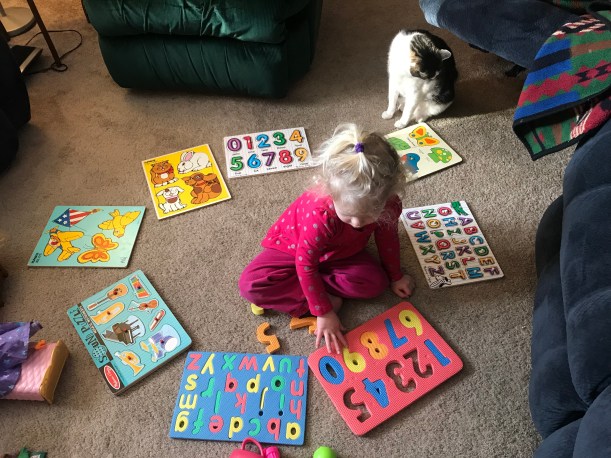
Make a puzzle circle! Miss Autumn (2) was quite content to sit inside the puzzle circle and work puzzles. Simone was happy to supervise. A cozy nearby fireplace added ambiance and warmth for this cold winter day activity.
There is something about the NEST format of play. Are you a nest person? I am. I’ve always loved playing inside a circle formed by things-toys, books, supplies, whatever I’m working on-spread in a circle which surrounds me.
I really need to research this nest phenomenon. Does it point to a specific need, like security? Is nesting organizational in nature? Am I completely OCD and this is how it manifested itself when I was a child? Am I a circle person? Is this a form of marking my territory, albeit the creation of play boundaries and personal space instead of doggy pee trails? What does that mean?
Not nesting, as in I’m pregnant and preparing for the imminent birth of my child, though I also experienced that type of nesting. I clearly remember nesting the entire Memorial Day weekend. I thought I was just making things tidy, cleaning house, and putting baby things away. Lo and behold, our first baby came 3 weeks early and arrived before lunch on the Tuesday after Memorial Day. Surprise! I was baby nesting.
There is also the type of nesting performed by birds. I am not a bird. But I am amazed at the intricate, sturdy, vastly creative and unique types of nests these little bird brains build. With that in mind, I’m sure bird brain is a complement.
Back to play nesting. I have memories of Barbie nests, toy box nests (where the toy box is empty and I am surrounded by the toys), and fabric nests. The fabric nests lets you know this nesting trait carried over to my adult years. I remember a specific photo of my two preschoolers, complete with a circle of toys and nearly empty toy box. Donavyn and Autumn (grands) love sitting inside blanket nests. Is nesting hereditary?
Any ideas? Do you nest? Have you seen young children exhibit nesting? I’d love to know more about the nesting syndrome.










![Love, Z by [Sima, Jessie]](https://images-na.ssl-images-amazon.com/images/I/51aleJEXxDL.jpg)

 Love, Laughter, and Life