Love, Laughter, and Life

Adventures With a Book Lover


6 Comments

Meet Joye Smith, Author of Meet Lottie and Annie

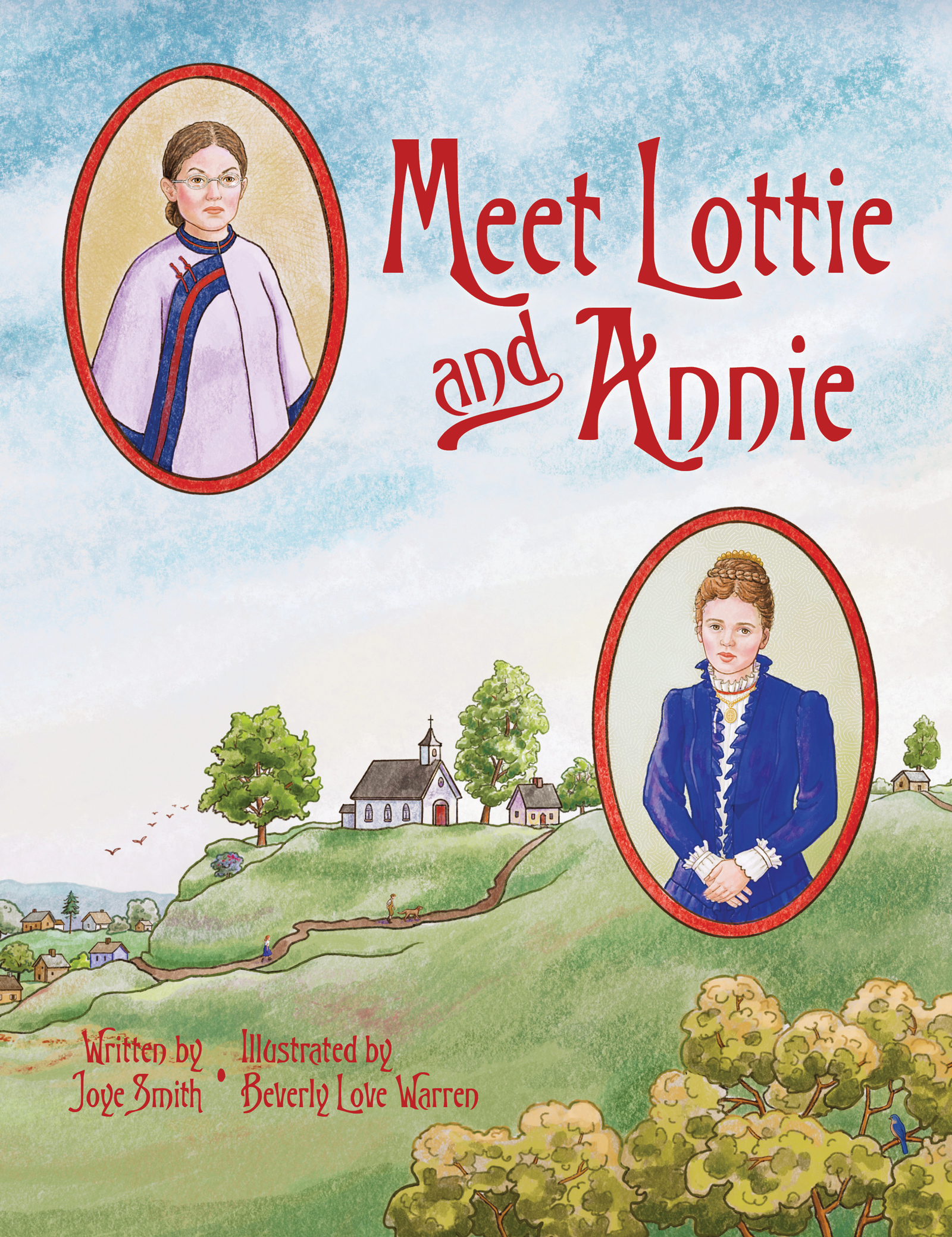
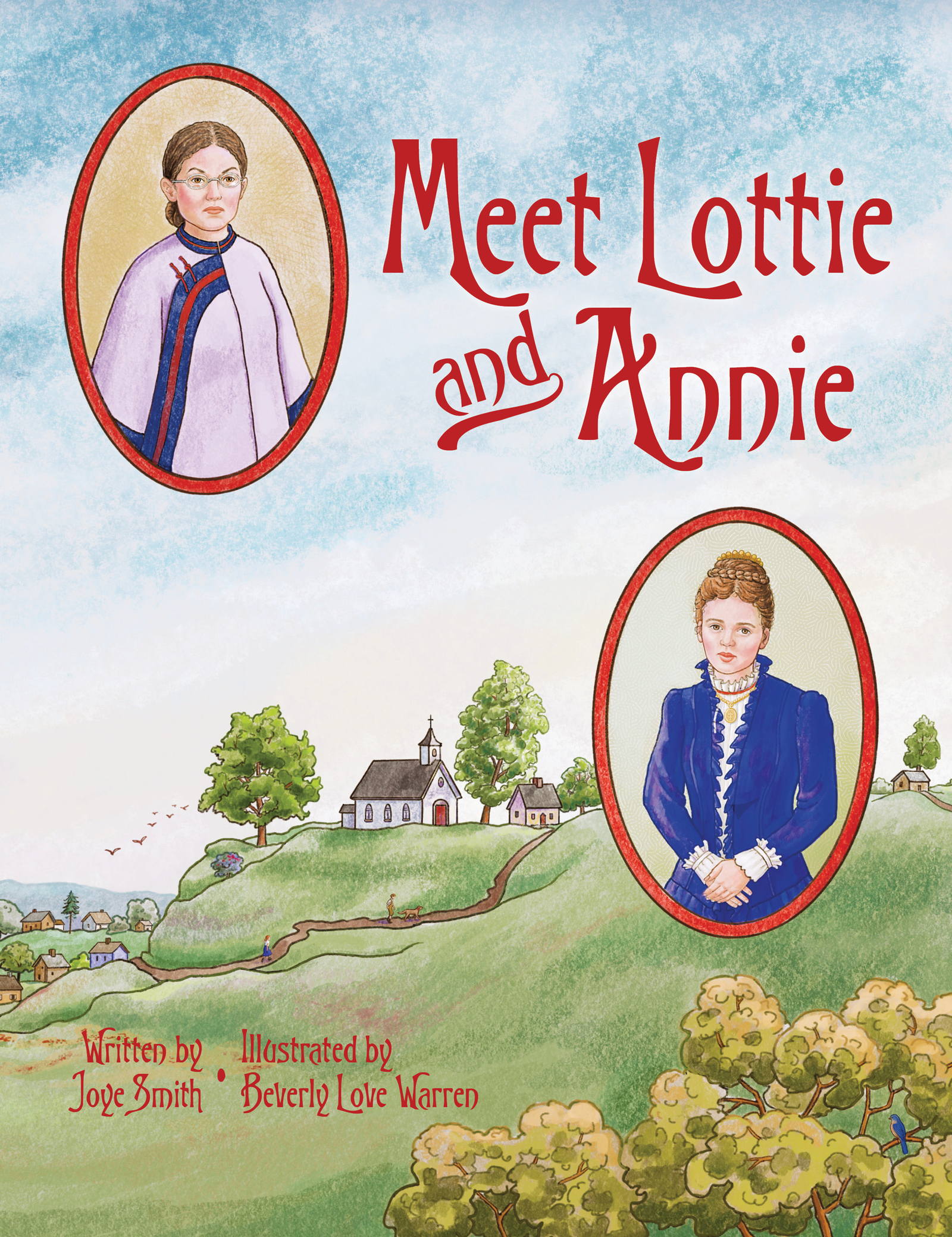
Meet Lottie and Annie

Written by Joye Smith

Illustrated by Beverly Love Warren

Woman’s Missionary Union, 2025

Welcome, Joye! I’m so happy to have you here today so we can learn more about your newest picture book, Meet Lottie and Annie! This beautiful picture book is about two historical and inspirational women who led women and families to pray for and support missionaries around the world who tell others about Jesus.

Let’s get started!

Where did the idea of this book come from?

Thank you, Angie! I felt so honored to write this book about these two women who have left such an impact on missions. The idea for the book really came from the preschool leaders who are teaching missions in their churches. The state Woman’s Missionary Union (WMU) preschool consultants let national WMU know that leaders were asking for a book they could use with their preschoolers to help them learn who Lottie Moon and Annie Armstrong were. There was a preschool picture book in the past about Lottie and Annie, but it has long been out of print. A new book was overdue!

I was at that meeting! It’s wonderful to hear a need or idea from preschool leaders and then supply that needed resource.

In case someone is unfamiliar with Lottie and Annie, can you give us a quick description of both women?

Lottie Moon
Lottie Moon

Lottie Moon was a missionary to China for 39 years, from 1873 to 1912. Lottie learned the Chinese language fluently, took on the Chinese way of dressing, and lived among the Chinese people. She traveled from village to village to teach people about Jesus from the Bible. In her time in China, she taught and directed several schools for Chinese children, both girls and boys. She even taught reading to adults. Lottie loved the Chinese people, and wanted them to hear about Christ and His love for them. She wrote to Annie Armstrong and the women in Southern Baptist churches in the United States, urging them to collect an annual offering at Christmas time to send more missionaries so the Chinese people would hear about Jesus’ love. The Lottie Moon Christmas Offering is named after her, and the offering goes to the work of missionaries with the International Mission Board (IMB).

Annie Armstrong

Annie Armstrong was a woman who could really get things done! As the first corresponding secretary (now known as executive director) of Woman’s Missionary Union (WMU) from 1888 to 1906, Annie led the women of her time to support missions through praying and giving. She thought it important to develop missions education materials so all ages could learn about missionaries and missions work. Annie is known for the many projects in which she led WMU to be involved. A few of these projects included raising money for more missionaries to be sent out, providing “frontier boxes” with supplies for missionaries here in the United States, and raising money for a church building in Cuba. Now the Annie Armstrong Easter Offering is named for her, and supports missionaries with the North American Mission Board (NAMB).

This is fascinating history!

What made you want to write this book? What inspired you?

The stories of Annie Armstrong and Lottie Moon have always been an inspiration to me. What amazing women they were! But in teaching preschoolers in the church for many years, I know what a challenge it is to make historical figures of the past relevant to preschoolers today. I wanted to write a book that tells the stories of Lottie and Annie in a way that would capture the attention of preschoolers.

You did an excellent job of writing a compelling book for the preschool audience. Though, I (an adult) enjoy reading and learning from Meet Lottie and Annie, so I guess you could say many age levels will enjoy this book.

How did you research these two historical missions heroes before writing Meet Lottie and Annie?

The two main sources I used are the books, The New Lottie Moon Story, Second Edition, by Catherine B. Allen, and Annie Armstrong: Dreamer in Action, by Bobbie Sorrill. As I read these biographies, I took many notes about the stories and information I thought would be important to include. I went back to those books many times during the writing process.

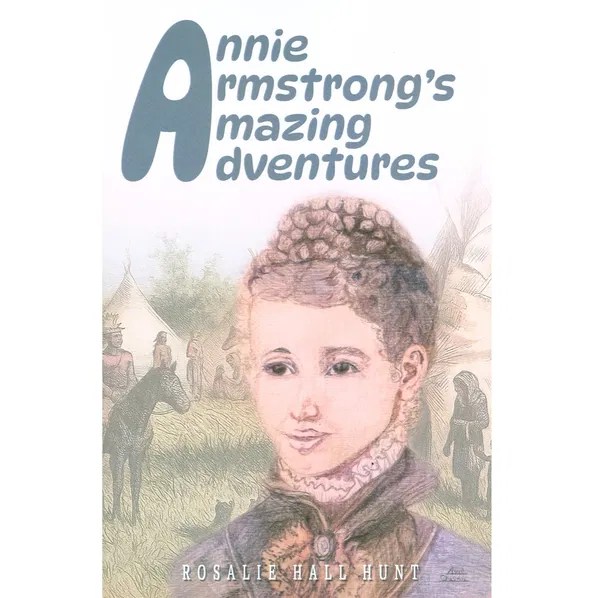
I also read Lottie Moon and the Silent Bell, by Rosalie Hall Hunt. Rosalie is such a great storyteller! Rosalie was in the process of writing Annie Armstrong’s Amazing Adventures (which is now available), and she even sent me a chapter to preview. Wow! My conversations with Rosalie about both Lottie Moon and Annie Armstrong taught me so much. I am so grateful to Rosalie for sharing with me.
It sounds like your research was in depth and very productive. I love knowing about these additional resources for learning more about Lottie and Annie.

While I was writing Meet Lottie and Annie, it so happened that the archivist at national WMU, Cindy Goodwin, was going through some of the journals of Annie Armstrong. What a treasure it was for me when I could head up to the library on the second floor of the WMU building and there was Cindy Goodwin with white gloves on, reading some of the journal entries. Seeing the journals in Annie Armstrong’s own handwriting made her become more personable to me. She sometimes included recipes and even household tips!

That’s so cool! I bet the recipes and household tips were fascinating!

What was your writing process? How long did it take you to write the words for Meet Lottie and Annie?

It took me about 6 months to write the words. I started by reading the biographies and taking many notes. I used the notes to pull out the stories to include for preschoolers. Angie, you were a great editor to work with me. I knew that we wanted half of the book to be about Lottie and half about Annie. That gave me a division of the book, and page count for each of the ladies. Then I had to make decisions about which stories to include.

I knew that Lottie Moon wrote letters to Annie Armstrong, urging the women in WMU to give financially so more missionaries could be sent to China. I felt that would be a good segue between the two parts of the book.

Once the text was written, it was a blessing to work with Angie as editor and Beverly Love Warren as illustrator of the book. What a wonderful job Beverly did with the beautiful illustrations! I am thrilled!

It was an amazing experience to work with both of you on this project. And then I handed it over to Gayle West, the WMU preschool team’s graphic designer. She pulled all the pieces together, and then off to the printer it went! Meet Lottie and Annie was released on June 1, 2025.

What was your favorite part of helping this book come to life?

I wanted to include an interactive element for preschoolers, so it was fun to come up with the word sounds (onomatopoeia) on each page spread.

That is a very fun way to engage preschoolers!

What do you hope preschoolers, families, and preschool leaders take from this book?

I hope the book is a help to families and preschool leaders in helping our young ones learn who Annie Armstrong and Lottie Moon were, and why we give today to the offerings in their names. I hope leaders will engage their preschoolers in giving to the two offerings. I hope preschoolers enjoy the book!

Joye, I know you teach Mission Friends, a missions discipleship group for preschoolers. What is your favorite way to use Meet Lottie and Annie with your preschoolers?

I read the Lottie section of the book to our preschoolers at church, and it was fun to have the preschoolers repeat the word sounds on each page spread. I think it made the preschoolers more attentive!

Is there anything else you would like to share with our readers?

I hope you have fun learning about the missions legacies of these 2 women, and enjoy sharing about them with your preschoolers!

Thank you so much, Joye, for sharing about your part in creating Meet Lottie and Annie! This picture book is a wonderful resource for parents and leaders alike, and is especially great for preschoolers. Thank you for joining us today on the blog.

Joye Smith stands by a life-sized cutout of Annie Armstrong!

Readers, if you would like your own copy of Meet Lottie and Annie, you can find it here.

If you would like to learn more about the creation of Meet Lottie and Annie, read Beverly Love Warren’s blog interview here. Beverly was the illustrator for this beautiful book.

Thank you for stopping by. What is your favorite historical picture book?

Happy Reading!

10 Comments

Meet Beverly Love Warren, Illustrator of Meet Lottie and Annie

Meet Lottie and Annie

Written by Joye Smith

Illustrated by Beverly Love Warren

Woman’s Missionary Union, 2025

Welcome to the blog, Beverly! Thanks for taking the time to fill us in on what’s happening in your life, especially with the recent June 2025 release of Meet Lottie and Annie. This beautiful picture book is about two historical and inspirational women who led women and families to pray for and support missionaries around the world who tell others about Jesus.

Let’s get started!

Tell us what drew you to illustrate Meet Lottie and Annie. What made you decide to accept the assignment?

Hi Angie,

Thank you for this opportunity to share my part in this wonderful book. As my friend and critique partner you began talking about this book months ahead of your need to find an illustrator. Time passed and at some point I became aware of the fact that you didn’t yet have an illustrator, but Woman’s Missionary Union (WMU) was looking for one, so I prayed that the right illustrator would be found. Later, I got the idea that I would like to be considered, but I kept that to myself. About 2 or 3 months more passed and I heard nothing more from you regarding the book, so I concluded that you had found your illustrator. I was content with that, but shortly thereafter you surprised me and asked if I would be interested in the job. That was an easy answer. I have been interested in missionary work for decades and spent several months serving in England and in Israel. I’ve also had long term correspondence with missionaries for many years. Therefore, being drawn to illustrating a book about two missionaries was of great interest.

I’m so glad you were able to be a part of Meet Lottie and Annie. As in all publishing, it goes slow-until suddenly it goes super-fast (especially regarding deadlines). It was a blessing to work with a critique partner and sister in Christ.

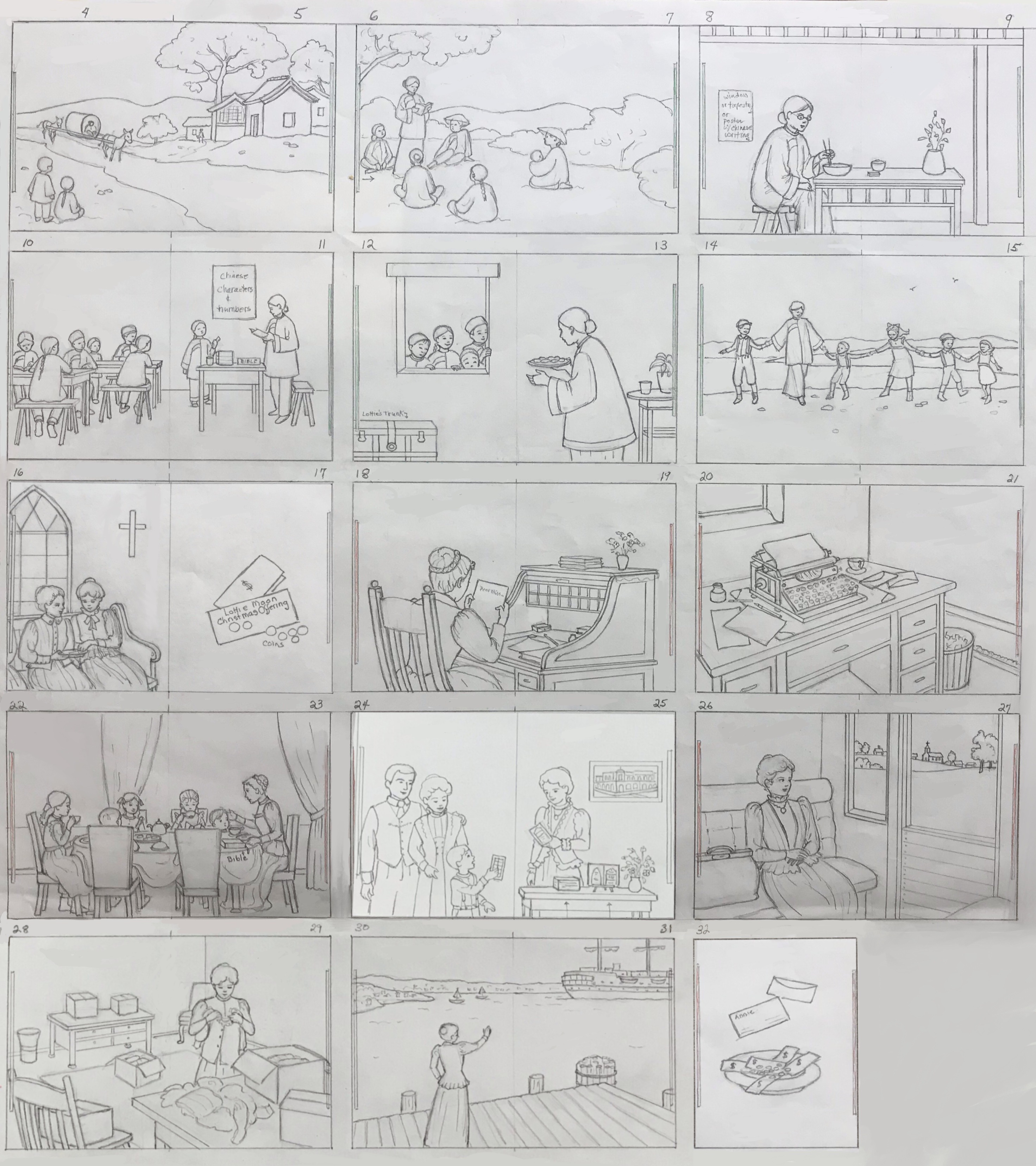
Beverly's storyboard sketches for Meet Lottie and Annie

What was your process as you illustrated this picture book? How much research did you need to do?

One of the first things I did was to gather images of clothing and room décor for the sketches for Annie’s part. She would be easier to illustrate since I was already somewhat familiar historically with those items. Afterwards I began to research clothing, homes, furnishings, and villages in China, circa 1900. I located a photo of Tengchow, where Lottie spent much of her time. I used this photo for the outdoor illustration of Lottie and the missionary children. However, I didn’t include the buildings in the photo because I didn’t want them to compete visually with Lottie and the children.

Once I had the information I needed, including some photos of Lottie and Annie, I began my storyboard. Normally I would do character sketches but since I was trying to make Lottie and Annie look like themselves I did not need to design characters. The storyboard was then sent to you, Angie, for approval. Once approved, I then created the full-sized sketches which I entered into Procreate in my iPad. From these, I completed the final art.

Let me tell you, it was amazing to see the storyboard! I shared it with my team, and everyone loved it. We had a few tweaks as the process went on, but the final book is stunning!

From beginning to end, how long did it take you to complete illustrations for Meet Lottie and Annie?

It took me about 4 months. I began the art in November and finished the final art in mid-March.

We did a lot of back and forth, but really 4 months went fast.

Are there any special Easter eggs included in the illustrations? By that, I mean any fascinating special facts or tidbits that readers would love to hear about?

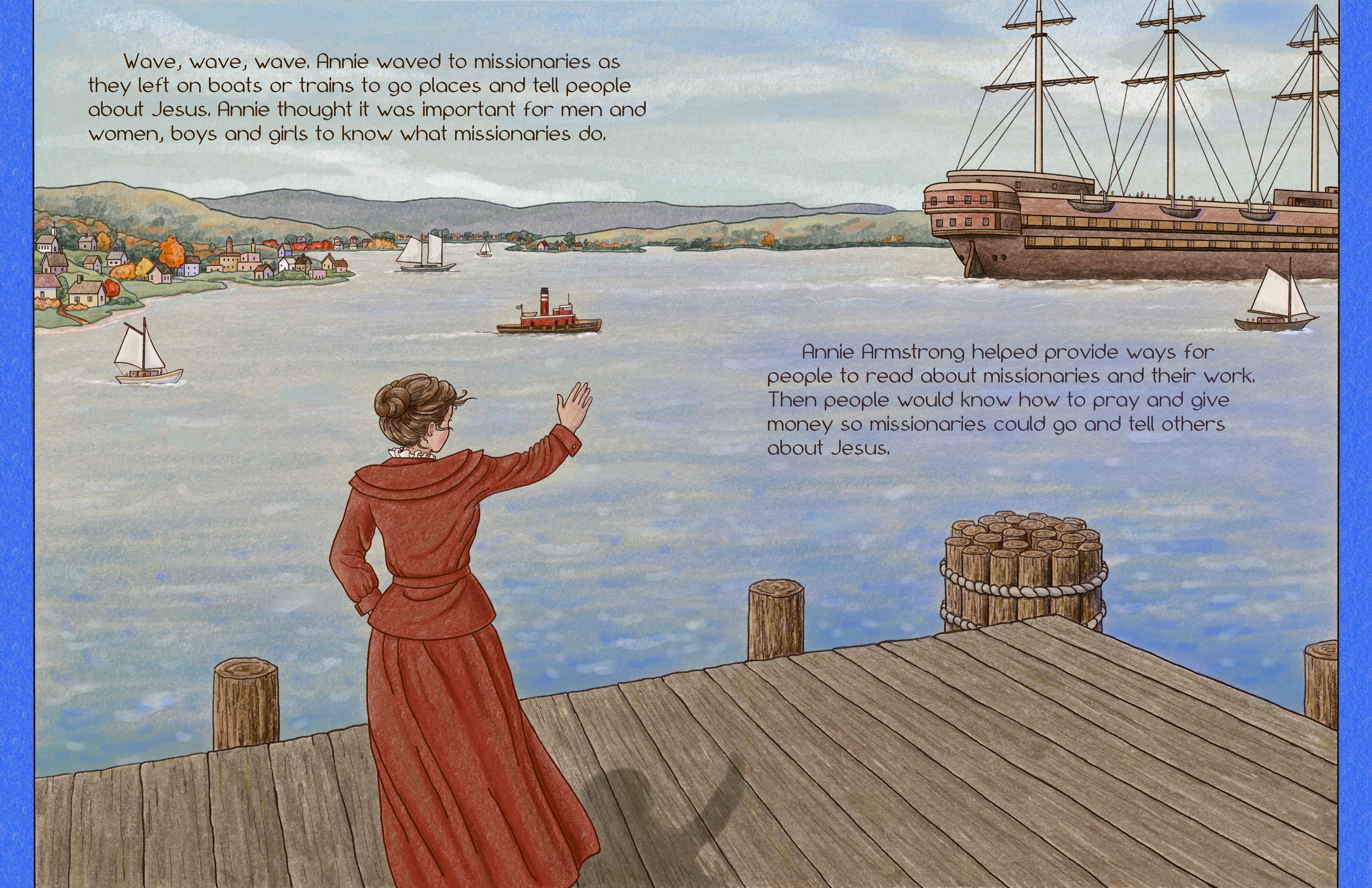
Yes, there are several tidbits. Many of the illustrations in Meet Lottie and Annie had some collaged pieces added to them. The letter that Annie is reading on page 18 is a clipped area of an actual letter written by Lottie. The painting on page 20 is a portion of an oil painting which I created from a trip my husband and I took to southern Spain. The rug on the floor of page 20-21 is of a rug that belonged to my husband’s grandparents, which makes the rug about 100 years old. The painting on page 29 is a pastel I created years ago of some tulips in my yard. Lastly, page 30 contains a small tugboat in the illustration. It is a McAllister tug. The McAllister tugs at that time in history were mostly located in the northeastern part of the United States. I specifically chose that tugboat company because my grandmother is a McAllister. Her family owned these tugboats. In very tiny writing on the side of the tug is the name Isabel McAllister which is my grandmother’s name. It is not legible to the naked eye, but nevertheless it is there. When I was very young, I rode on the tug that bears my grandmother’s name.

I remember seeing your grandmother’s name as I zoomed in to study the illustration. All of these are very cool fun facts!

Beverly's art for pages 30-31 (text is sample text to give layout).

You have illustrated several other books. What makes the illustrations for Meet Lottie and Annie unique and different from your other projects?

Most of my books have been illustrated in traditional watercolor. This book, as mentioned above, was digitally colored with some pieces of collage taken from fabric or other items.

Another thing that is unique about this book is that it is two books in one picture book. The front half of the book is about Lottie Moon who served in China and the second half tells of Annie Armstrong and her service in the United States. Although I have illustrated many Bible stories, this is my first time illustrating a book about missionaries. In a small way I feel connected to both women because I have written my share of letters to overseas missionaries and on November 14, 2025, my 18-year-old granddaughter flies to China to serve as a nanny for six months.

Wow! What an inspiring experience for your granddaughter to have! And the details in the illustrations are so interesting to dig into-the collage, fabrics, patterns, designs. The different aspects came together to make one fascinating picture book!

What’s next for you in the writing and illustrating world?

Just before I began Meet Lottie and Annie I finished up my second book as an author and illustrator, Tinker, where Are You?, which is about a young girl struggling to keep a promise she made to her best friend. For this holiday season I just completed a Christmas story coloring book. This is my first time creating a coloring book. It is about two small sparrows who build a nest for baby Jesus as a gift to him and his mother. I also have a picture book out on submission to some publishers and I’m working on another picture book and an illustrated chapter book.

I can’t wait to see the coloring book! As one of your critique partners, I’ve seen this work-in-progress many times!

Thank you, Angie for pairing me up with WMU to create this book. It was a joy to work with you on this project.

I totally agree! A pleasant fellowship!

As an illustrator, when I am illustrating a biography, I always feel like I get to know the characters that I illustrate in a unique way. As they live in my mind for the months that I attempt to portray them visually, I wonder about what it would be like to meet them in person. I wonder how they endured the great challenges on their chosen paths, and with Lottie and Annie, I wondered about the steps that God used to lead them into their call.

Thank you so much for sharing inside information about your process of illustrating Meet Lottie and Annie. A labor of love!

If you would like your own copy of Meet Lottie and Annie, you can find it here.

Read more about Beverly’s books here:

Beverly Love Warren

Book Share and Author Illustrator Interview: Tinker, Where Are You? by Beverly Love Warren

Happy Book Birthday to FISHING WITH GRANDPA AND SKYE! Written by Candace Spizzirri, Art by Beverly Love Warren #bookbirthday

Happy Book Birthday to HAVE YOU SEEN MOUSE?! Interview with Author-Illustrator Beverly Love Warren

Meet the Authors: The Girl Who Lived in a Shoe and other Torn-Up Tales

Beverly Love Warren
Beverly Love Warren


3 Comments

Book Share and Author Illustrator Interview: Tinker, Where Are You? by Beverly Love Warren

Tinker, Where Are You?

Tinker, Where Are You?

Written and illustrated by Beverly Love Warren

(April 16, 2025)

Welcome to Book Share! Today I’d like to share about one of my critique partner’s new books, Tinker, Where Are You? by Beverly Love Warren. It’s always thrilling to see a new book come out in the world, but when I was a part of reading and critiquing the book along its journey to publication, that makes it much sweeter!

Beverly has stopped by my blog today to share more about her new book. Hi, Beverly! Let’s hear more about Tinker!

What was the inspiration for your book?

My desire was to write a story with a message that I believed in. When I was little, I wanted a pet, but a family member was allergic to cats and dogs, so I bought a hamster and a turtle. Fast forward to now, and I knew the turtle would be featured in the story and the clever escape of my hamster would figure into the plot.

While revising the story I discovered that too many turtle picture books existed on the market, so Tinker became a lizard. Although it was horrible to have lost my hamster, it would have been a disaster if I had lost my friend’s pet while it was under my care. As the main character, what would I do and how would this effect my relationship with my friend? Of course, I wanted the story to have a good ending, so Tinker is found in the end, but what if the main character concluded she must give up her dream of owning a fish to keep from disappointing her friend?

Initially the inspiration for this tale was my pets, but it also came from Luke 6:38 (found in the Bible) which essentially says, “Give and it will be given back to you.” My heart’s message in writing Tinker is to encourage children to think creatively as they try to solve their problems, but even more importantly, it is that they would see the reward in being a good friend.

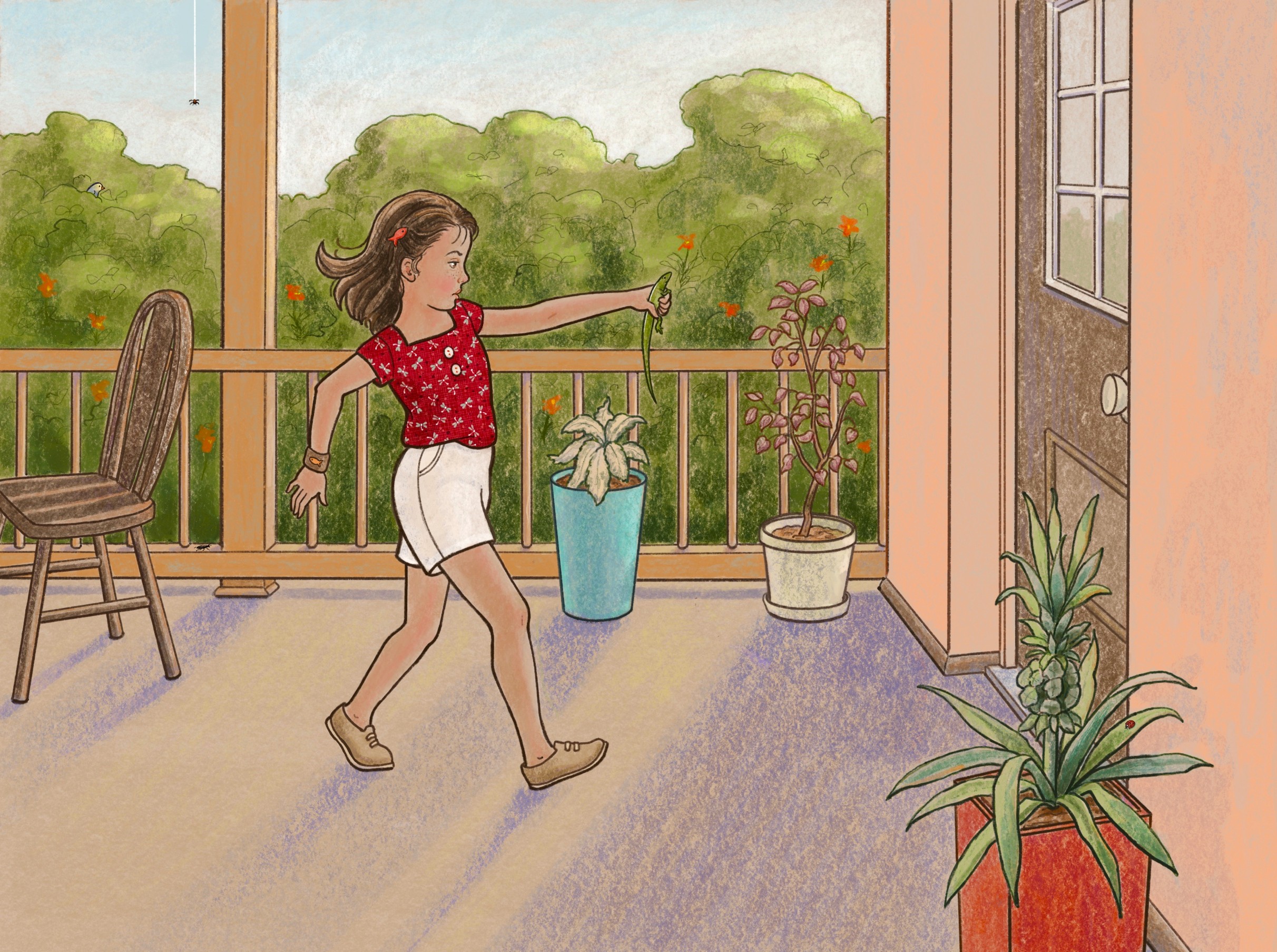
Being from the Pacific Northwest, I am unfamiliar with anoles other than as pets, so I enjoyed the warm tropical environment in this book. I must say that Tinker is adorable, and I liked reading about the responsibility Hannah shows while she cares for Tinker and performs her other chores.

Hannah

Tell us about your writing and illustrating process.

Generally, the story comes first. It is written and revised until my critique partners and I agree that it is finished. But while I am in the revising process, I will begin the character sketches and will decide what medium and style I would like to use for the final art. Once I’ve made my choices, I will begin the storyboard or dummy book. Sometimes the text may get altered slightly as I am working on the sketches, so it fits the illustrations better. After I finish the final storyboard, I enlarge those sketches, trace and tweak them, and then get them scanned. From there I will add the color using Procreate in my iPad to complete the illustrations.

Tinker, Where Are You? is a part of a collaborative publishing process with one of my critique groups. We each wrote and illustrated our own books and helped one another with both the refining of the stories and the illustrations. Each of us has different strengths to give to the group to help in the creative and publishing process.

That’s a pretty neat way to create a picture book!

What is your favorite part of the creative process and why?

All of it. I am more of an artist by natural abilities, so I might say that illustrating is my favorite part, but honestly, I really enjoy creative writing—both in coming up with the story idea and the revising as well. Telling a tale is fun, but watching a character come to life under my pencil and paint is the icing on a cake.

You do a fantastic job creating both story and illustrations!

What other projects have you illustrated or written?

Back in the dark ages when I began illustrating (LOL), I created a boat load of art for the secular and faith-based educational markets. During that time, and since then, I’ve also illustrated a few books. Tinker is my eighth book. Among the other books are My Child My Princess by Beth Moore, Fishing with Grandpa and Skye by Candace Spizzirri, and Have You Seen Mouse? by me.

I’ve read several of these. Lots of fun!

What is next for you, Beverly?

When I completed the illustrations for Tinker, I immediately began working on the illustrations for Meet Lottie and Annie written by Joye Smith. Meet Lottie and Annie is a picture book for preschoolers. This book tells the story about two women missionaries from the late 1800s to the early 1900s. Lottie served in China and Annie served in the US. This was a fun project because I enjoy doing research on historical characters, and I found the lives of these two women to be inspirational. The book is due to be released on June 1, 2025.

As editor for Meet Lottie and Annie, I can say that I cannot wait to hold a copy in my hands. The history and engaging illustrations are wonderful!

Today I am working on marketing Tinker. But I am also thinking about my next book. I have four manuscripts with semi-completed storyboards. It is a matter of deciding which one is the best for me to publish currently. A good thing about being a self-publishing author and illustrator is that I can work at my own pace, which leaves room for me to illustrate other projects as they arrive.

Thanks so much, Angie, for featuring Tinker, Where Are You? on your blog.

You are very welcome, Beverly. It’s always a joy to find out what is going on in your world. Congratulations on Tinker!!

Sad Hannah

Friends, you can learn more about Beverly here and find her books:

Beverly Love Warren Look for the QR code to get $3 off!

Amazon

Barnes & Noble

Bookshop

Walmart or anywhere books can be ordered.


3 Comments

Happy Book Birthday to FISHING WITH GRANDPA AND SKYE! Written by Candace Spizzirri, Art by Beverly Love Warren #bookbirthday

Fishing with Grandpa and Skye

Written by Candace Spizzirri

Illustrated by Beverly Love Warren

Spork, April 19, 2022

Congratulations, Candace and Beverly! Welcome to the world, Fishing with Grandpa and Skye!

I’m so happy for my critique partner, Beverly Love Warren! She did the art for Candace’s new picture book, and through Beverly, I connected with Candace. Have a wonderful day celebrating the arrival of Fishing with Grandpa and Skye!

About the Book:

Days on the lake are a Skye and Grandpa thing. They load up their tackle box, hop aboard their skiff, and chug out to their favorite fishing spot. Today, the sun is shining, the fish are jumping, but will Skye hook a big one? 

FISHING WITH GRANDPA AND SKYE explores the rewards of patience and celebrates the love between generations.

Candace Spizzirri

Children’s Author

FISHING WITH GRANDPA AND SKYE, April 19, 2022
FINLEY: A MOOSE ON THE CABOOSE, Spring 2023

Beverly Love Warren

Children’s Book Author and Illustrator

FISHING WITH GRANDPA AND SKYE, April 19, 2022

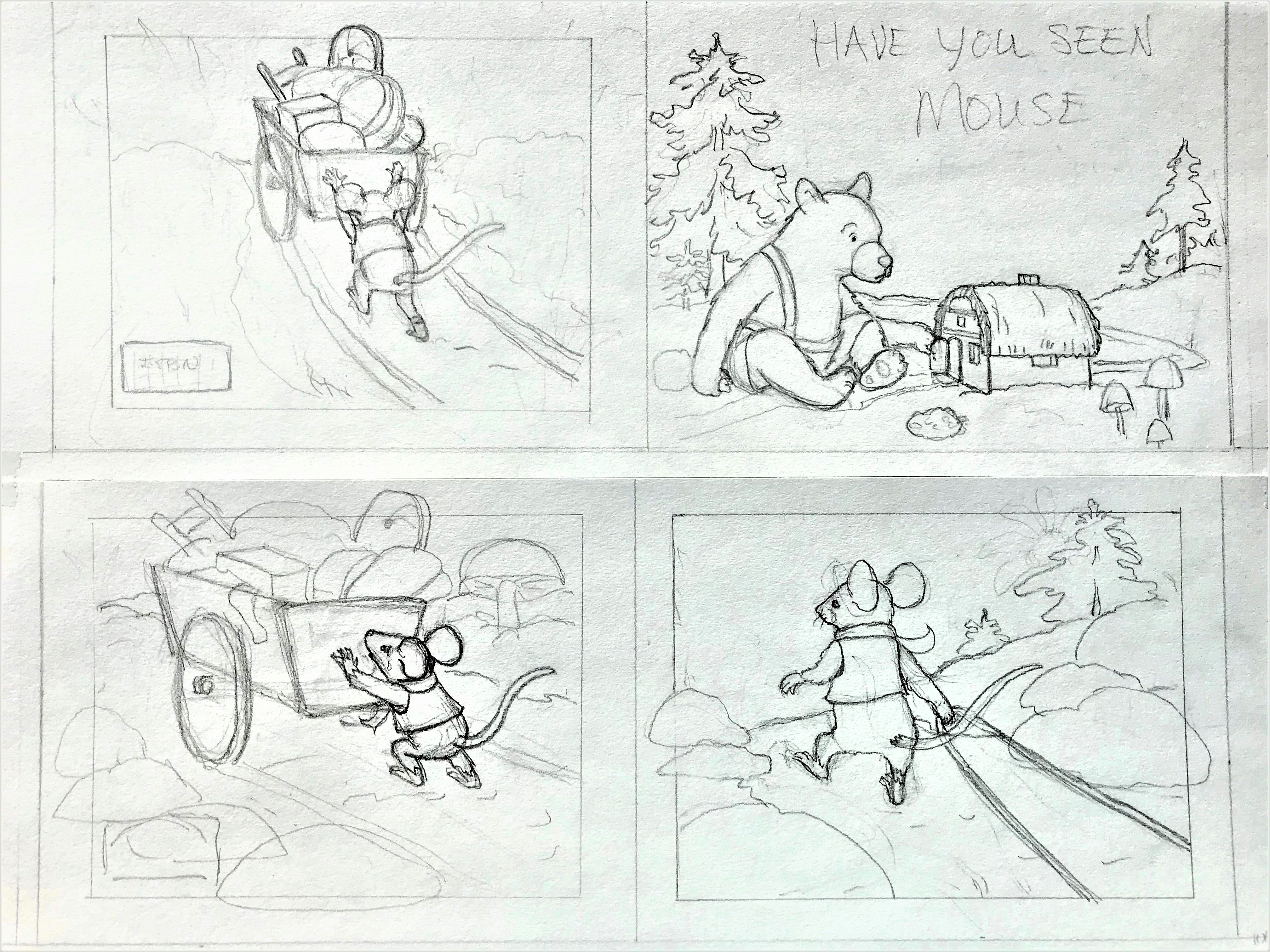
Have You Seen Mouse? (Spork, 2022)


4 Comments

Happy Book Birthday to HAVE YOU SEEN MOUSE?! Interview with Author-Illustrator Beverly Love Warren

Hello, dear readers! Welcome to a very important blog post featuring a special book birthday for Have You Seen Mouse? by author-illustrator Beverly Love Warren! Beverly is one of my critique partners, and I am pleased as punch (can punch be pleased?) to feature her Happy Book Birthday for her new picture book! Be sure to download and print Beverly’s free coloring page!

Let’s get right to it.

Welcome, Beverly! Tell us a little about yourself.

Thank you, for the interview, Angie.

I live with my husband in the Pacific Northwest surrounded by forested mountains, valleys with rivers, and lots of wildlife. This setting, my faith, my family, and aspects of my childhood have been the main sources of inspiration for what I write and illustrate. When I was young, I wanted to be a fashion illustrator and therefore I chose to attend The Fashion Institute of Technology in New York City where I got a degree in illustration and design.

Shortly thereafter I married, and we settled in the Seattle area where I taught art at a private school that my children attended. During that time, a mother of one of my students invited me to an SCBWI* meeting. Later I became a member myself, and through SCBWI I got my first job illustrating children’s educational literature. Due to the many books I had read to my children and the material I was reading for illustration purposes, a desire to also write for children began to grow.

Then in 2016 my husband and I took a trip to New Zealand where we visited the Weta Workshop in Wellington. This is where the props for the Lord of the Rings movies were made. That trip cemented my desire. After returning home I began my first writing course, Susanna Hill’s Making Picture Book Magic.

*SCBWI – Society of Children’s Book Writers and Illustrators

Beverly, I have thoroughly enjoyed being a critique partner with you! It was so much fun to be a part of the process and to see your book come to life! And New Zealand is on my bucket list!

Happy Book Birthday! What was your inspiration for HAVE YOU SEEN MOUSE?

My husband and I like to take road trips when time permits. In October 2019 we were traveling through northern Idaho when I gazed into the forest at a fallen tree. In my imagination I saw a bear sitting on the tree weeping. I wondered why and concluded that he lost his best friend and couldn’t find him. I happened to have my notebook with me and I immediately wrote the draft. The bear became the protagonist, but I needed to know who his friend would be. I thought back to my childhood and remembered all the mice I had as pets and decided that a little mouse would make a perfect best friend.

That’s a fun way to begin a story! I’ve jotted down ideas for several stories doing the same thing, sitting in the passenger seat while my husband drives us around on road trips.

What was your journey for this book?

In February 2019 I joined Julie Hedlund’s 12×12 Picture Book Writing Challenge. Her challenge was to write a new picture book draft each month for 12 months. HAVE YOU SEEN MOUSE? was November’s draft. I went through the revision process both in the 12×12 forum and with my critique groups. (Thank you, Angie!)

In January 2020 I took Mira Reisberg’s Children’s Book Academy Illustration course. At the end of this 6-week course, the completed art of each student would be viewed by selected editors and agents. I had hoped and prayed there would be interest in my illustrations, but I needed to leave the class during the fifth week because my mother became ill. Mira entered my art in the viewing anyway and about a month later Callie Metler, publisher of Clear Fork/Spork, contacted me. She was interested in having me illustrate a picture book. After reading the manuscript she sent, I signed the contract. While working with Callie on that book, she said she liked the palette I used in Mira’s class. I told her there was a story that went with the art and asked if she would like to read it. Graciously, she agreed. Later she said the story was precious and then we signed the contract for HAVE YOU SEEN MOUSE?.

How exciting! 12×12 is a wonderful resource and community for picture book writers and it’s fun to run into you when we are at webinars or online for something.

What special plans do you have to celebrate the book birthday of HAVE YOU SEEN MOUSE?

My husband may take me out to dinner, but he may surprise me instead.

Oh, I hope he surprises you! Surprises are fun!

I love the heart in HAVE YOU SEEN MOUSE?. How do imagination and your childhood experiences impact your creativity as you work on picture books?

As an example, and as I mentioned above–I remembered my mice, but I also had many hamsters. Once one of them got lose in the house. I looked everywhere, but I could not find him and concluded that he got outside. I remembered my sorrow and drew upon that for Humphry’s [the bear] feelings in MOUSE, and his search for his friend.

That’s the perfect way to build emotion into a story! I remember sitting at the dining room table with my family one day when I was in grade school. Suddenly my mom screamed. And we all jumped up to help her chase down the cat, who had our Teddy bear hamster in her mouth! Childhood memories are great ways to get picture book ideas.

As an author-illustrator, how do you both write and illustrate a picture book story?

I am primarily an illustrator, but when I begin a story I start with the text, not the illustrations. I see the main character in my mind, and I know the general premise or theme of what I want the story to be about. With pen in hand, I watch the main character in my mind move through the events toward the goal. Along the way I ask myself the “who, what, when, where, why, how, and what if” questions. This gets my rough draft on paper. Then the revisions happen with the help of my critique partners.

When the story is close to being completed, I will draw up a few character sketches and a simple dummy to see if everything is working. Once I am satisfied, I will illustrate one or two samples of full color art with watercolor and color pencils This is all done with the anticipation that I will be submitting them somewhere.

I am in awe of you as an illustrator! I draw excellent stick figures. At least my kindergarten students never complained!

Download and print this free coloring page from Beverly!

What are you working on now?

I am currently working on a middle grade novel about a boy who is fearful of growing family responsibility and goes searching for his father who has broken a promise and seems to have disappeared. I also have four picture book manuscripts I have finished or that are close to being finished along with some thumbnails and one or two pieces of final art.

Best wishes on all of your new projects!

What tip would you give to a new picture book author or illustrator?

Feedback is so important to story development. Others can see holes in a story that the author may be blind to or knows are there but cannot figure out how to fix. Feedback for illustrations is also helpful. Sometimes a page would be better illustrated with a distinct perspective, or the colors are not working, or a character needs more expression in the face or body movement. In other words, critique partners are necessary to help make stories as strong as possible before submission. Also, both authors and illustrators run into many rejections. A strong desire, perseverance and encouragement are important to overcome the rejections. Lastly, do not compare your journey as a writer or artist with others unless the comparison can make you stronger. If comparison tends to defeat you, then ignore it. We are all unique and our paths will be different. And if the story of your path to publication is strewn with obstacles and setbacks it may be the exact story that someone else needs to hear.

Thanks so much for the encouragement. Excellent tips!

Beverly, thanks so much for stopping by on your busy book birthday! Congratulations and best wishes with Have You Seen Mouse?! I can’t wait to get my own copy to read and enjoy!

Readers, remember the best way to support picture book writers and illustrators is to share the good news, purchase their books, and leave reviews. Thank you!

Find Beverly at her website.

Amazon

Amazon Blurb: When Humphry, a bear, discovers his best friend has moved away, he searches the forest to find him, only to return home alone. It is then that he discovers how much his friend loves him. Have You Seen Mouse? shows the young reader the devotion and perseverance of a true friendshi


1 Comment

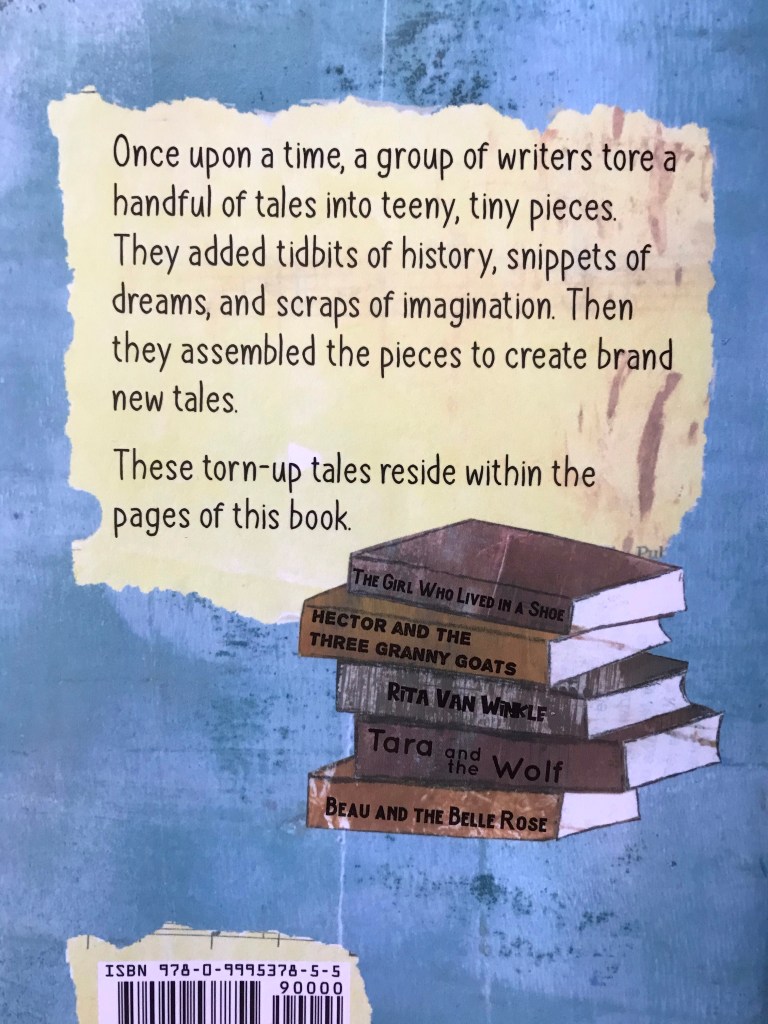
Meet the Authors: The Girl Who Lived in a Shoe and other Torn-Up Tales

The Girl Who Lived in a Shoe and other Torn-Up Tales

Compiled by Bernice Seward

Seward Media, 2020

Hello, friends! I would like to introduce you to a fun new book of fairy tales. But these fairy tales are not what you would think. They have been torn-up, re-imagined, and fractured from the original stories we’ve heard all our lives. How exciting to read these “new” fairy tales in this delightful compilation of 5. One of my critique group partners, Beverly Warren, wrote one of the torn-up tales in The Girl Who Lived in a Shoe and other Torn-Up Tales. Congratulations to all of the talented authors and illustrators.

Scroll down to meet the authors and read their individual answers to the questions I asked. Enjoy!

MEET THE AUTHORS

Bernice Seward compiled this collection of fairy tales. She wrote The Girl Who Lived in a Shoe

How do you know each other and how did this book come together?

Loreley: Most of us only know each other virtually as we live in different cities. We are members of SCBWI Inland Northwest and had all expressed an interest in creating an online critique group before COVID even began. Here we are! Bernice suggested we try a collaboration as we were all struggling with the COVID slump last summer.

Beverly: I met both Bernice and Michele at the SCBWI conference in September 2019. Apparently Loreley and Jess were there as well. We had the opportunity to sign up to join a critique group. Later we were contacted by the coordinator and put in a group of nine, I believe, which was then split in two. Personally, I had been thinking that I would like to write a fractured fairy tale and purchased Jane Yolen’s book on the subject. About two weeks later Bernice suggested that we do this project. 

Michele: I’m the odd author out here  The other four were members of an established critique group before this project came about. I am in a different critique group with Bernice and she invited me to join in on the collaboration. I know Bernice because I took a community education class on writing children’s picture books from her about 3 years ago. I happened to meet Beverly at the SCBWI Fall 2019 conference. She and I are in an online critique group. We are all members of The Society of Children’s Book Writers and Illustrators. (I have been asked to join with their critique group and I couldn’t be happier!) Bernice came up with the collaboration idea after listening to an SCBWI interview at the Summer Spectacular (over Zoom of course.) 

Michele Rietz wrote Hector and the Three Granny Goats

What was your inspiration for your torn-up tale?

Loreley: Several years ago, I had traveled to Europe to live, work, and heal my wounds from my divorce. I was only gone just over three years, but when I returned to The States, I felt like Rip Van Winkle who had fallen asleep and woken up in the future. There were (at that time) Blackberries, Bluetooths, and Blogs! I didn’t know what these things were. HDTVs were in everyone’s living room. The Bon Marche was gone! It was all very disorienting. So this experience inspired my story “Rita Van Winkle”. 

Beverly: Beauty and the Beast has been one of my favorite fairy tales for years. I loved the idea that a beasty person can be transformed through the love of another and that within an unattractive personality there are traits that can be found to love if one has the eyes to see. Also, years ago I was interested in learning about herbs, common herbs that can be used for various purposes including healing. 

Jessie: Recently I read Invisible Women Data Bias in a World Designed for Men by Caroline Criado-Perez and Believe Me: How Trusting Women Can Change the World edited by Jaclyn Friedman and Jessica Valenti. The concepts in these two books as well as ideas about the invisible biases we absorb from society were whirling around in my head when Bernice invited me to collaborate on this project. As I contemplated fairy tales, I thought of The Boy Who Cried Wolf and wondered, what if it was a girl, and what if she was telling the truth? Tara and the Wolf was born of that simple thought experiment.

Michele: As a child, I loved the Three Billy Goats Gruff.  I think it was the rhythmic “Trip, trap” that I liked the most.  (Definitely not the gruesome ending.  LOL!).  I started my version with three nanny goats, but they evolved into three granny goats.  I am a grandma of 10 myself, so I can totally get behind that change!  🙂  I also wanted a gentler troll in my story, and since dads often get a bad rap in media and society these days, I wanted him to be a strong (as in involved in his kids’ lives) father figure.  Each of the grannies represents something I myself am known to do.  I am ALWAYS happy to have an excuse to make cookies, I grow a garden every year and I love to do yoga and recently became a teacher at the studio I’ve attended for several years.

Bernice: The idea of designing a shoe house drew me to The Little Old Woman Who Lived in a Shoe. And the fact that the original story included a giant clinched it. Then, as I was brainstorming for my torn-up tale, I thought it’d be fun to create a sort of “origin story” for a certain legendary cloud-dwelling giant.

Loreley Smith wrote Rita Van Winkle

Tell me about the illustrations.

Loreley: I am not an illustrator, so when Bernice suggested we each create our own illustrations, I was very apprehensive. I’ve become inspired to work with collage art more and improve my skills 🙂 

Beverly: Art has always come naturally to me. I’ve created a few collage pieces before, but mostly I work in other mediums.

Jessie: I come from a family of artistic people and assumed from the time I was a child that fine art was not one of my talents. It was something other people in my family were good at. I have tried to express creativity with sewing, baking and most often with writing. As I experimented with paint, shape and collage, I realized that the only thing stopping me from developing an illustrative talent was lack of belief in myself. It was incredibly empowering to make a physical picture from something that existed before only in my mind. While my illustration skills are still very rudimentary, the use of collage simplifies the process, allowing simple shapes to convey the image and the textures created by painted papers to elevate them and give further interest.

Michele: First of all, I have NEVER considered myself an artist, so this was a HUGE stretch for me. Bernice has taught me a lot over the years, so I felt I owed her a good effort. Learning to draw simple outlines (just google something like “Easy Goat Drawing”) was the start. She had me over to paint some papers for the collage illustrations and from there I took it one illustration at a time. Bernice also provided us with how-to videos she created. Those were very helpful and easy to follow. I am thrilled with how my illustrations turned out and I now consider myself a “Collage artist”.

My inspiration for my troll came from a wooden sculpture in Breckenridge, Colorado. My college freshman roommates and I get together every two years or so and on our last reunion, I talked them into finding it. It was amazing.

Jessie Quist wrote Tara and the Wolf

What surprises did you discover in the process of creating this book?

Loreley: I was surprised at how much I enjoyed the process of creating the illustrations. While it was a bit nerve racking, I found myself getting lost in the process. 

Beverly: We created the book quickly so the process was intensive, but it was enjoyable for us to do this project together. Also, I discovered as I did some research on the history of Beauty and the Beast that there lived a true Beauty who married a Beast in the 16th Century, in France. The beast was a man who had a condition called Hypertrichosis (werewolf syndrome). His body was covered with long dark hair all over. It is rare and is due to an abnormal 8th chromosome. The man was the property of the king of France. When the king died the Queen decided he should marry. She interviewed many young women and chose one with great beauty. The girl didn’t know about her groom’s appearance until their wedding day. Imagine her shock, but she grew to love him because of his winning personality. Together they had seven children.

Michele: I don’t think it was a surprise as much as confirmation of the importance of critique groups. We each read each other’s stories many times to help work out rough spots, kinks, etc. When I was being resistant to changing something in my story, one of the group called me to help me realize I really needed to “kill my darling”. My story is stronger for it and I’m glad she took initiative to do that. My illustrations coming together were definitely a surprise for me. (See question 3. 🙂 I also discovered that I like writing fractured fairy tales. I had dabbled in that genre a bit, but diving in and completing one was really fun.

Bernice: As a picture book writer (who strives to tell stories in 550 words or less), the thought of writing thousands of words is daunting for me. I was surprised that my first draft of The Girl Who Lived in a Shoe topped 1900 words. This gives me hope that fleshing out stories for chapter books will be a smoother transition than I’ve been anticipating.

Beverly Love Warren wrote Beau and the Belle Rose

What plans do you have for the future? Are there any other book projects in the making?

Loreley: I’m currently working on a picture book where my protagonist learns the importance of “leaving only footprints and taking only photos” when exploring nature. 

Beverly: We are continuing to meet as a group. We’ve only discussed briefly doing another project in the future and no plans have been formed yet. Currently I am illustrating a picture book for Clear Fork/Spork Publishing which should come out in the fall. Also, I’m revising a picture book and writing a middle grade novel. 

Jessie: I have two board books in the works as well as an illustration project commissioned by a friend. We haven’t formalized any plans for another joint publication, but I hope we will be creating more torn up tales together in the future.

Michele: Personally, I have a pet project in the works which involves using my grandchildren’s names in the illustrations. I have an illustrator working on it and we hope to be finished in the next month or so. I will self-publish that book. I also have countless manuscripts in various stages of completion. For the group, there really isn’t anything in the near future, but I have expressed a hope we’ll do another collaboration with this group. They are a wonderfully generous and creative group, and I have learned so much from them. We do plan to meet in person once the pandemic is past. We don’t know what that will look like, but we have all expressed a desire to do that.

Bernice: Currently, I’m working on a picture book about a bear who loses his hair after trying shampoo from a traveling salesman (fox).

Thank you, ladies, for sharing more about your lives and your process for writing The Girl Who Lived in a Shoe and other Torn-Up Tales.

You can read more about the authors and this fun fairy tale book at:

http://www.berniceseward.com/books/the-girl-who-lived-in-a-shoe-and-other-torn-up-tales/