 |
|
This is my daddy and I’m keeping him. |
By Angie Quantrell Angie Quantrell
startled gasp for breath
mama’s trimphant labor
wrapping up daddy
Haiku by Angie Quantrell
Welcome, Autumn Nahara.
Born April 26 at 10:08 AM.
Another piece of Nana’s heart…

|
|
This is my daddy and I’m keeping him. |
By Angie Quantrell Angie Quantrell
startled gasp for breath
mama’s trimphant labor
wrapping up daddy
Haiku by Angie Quantrell
Welcome, Autumn Nahara.
Born April 26 at 10:08 AM.
Another piece of Nana’s heart…
 |
|
A garden that is curious? |
By Angie Quantrell @AngieQuantrell
The Curious Garden
By Peter Brown
(Little, Brown and Company; 2009)
The Curious Garden is a picture book that was inspired by the Manhattan Highline Railway.
I’ve read articles about the Highline that tell how the lonely stretch of railway has been transformed into beautiful public gardens. But this is the first picture book I’ve found on the topic.
The Curious Garden tells the tale of Liam, a young boy who explores the empty spaces to find railways breaking down and nature taking over. Liam decides to help. Together, Liam and the garden grow and explore the empty spaces.
“The garden was especially curious about old, forgotten things.”
I love that sentence. The garden is not just a thing in this book, but one of the main characters!
The Curious Garden (doesn’t the title take on a new personna after you’ve read the above sentence?) will delight explorers and nature lovers.
KID KANDY:
Nature Walk
I walk almost every day through my neighborhood. When I walk tomorrow, I am going to look for places that nature is acting curious and spreading in unexpected places.
How about you?
Ask a parent or sibling to walk with you.
Look for:
– weeds growing in sidewalk cracks
– flowers springing up in odd spots
– old rusted things covered in grasses or vines
– moss creeping along damp, shady areas
– nature that is being mysterious and curious as it expands to new areas
What did you see?
 |
|
Nonfiction picture book that delights and informs! |
By Angie Quantrell @AngieQuantrell
Woodpecker Wham!
By April Pulley Sayre
Illustrated by Steve Jenkins
(Henry Holt and Company, 2015)
Woodpecker Wham! is a delightful book told in rhyme. Readers will enjoy wonderful, bright illustrations about the life cycle and habits of woodpeckers that fill the pages of this picture book. Text written with descriptive words and words of sounds made by woodpeckers imparts information in a simple and clean way.
I loved reading the end notes that gave interesting facts and explanations about woodpecker habits. Why do woodpeckers ‘ant’? Where do woodpeckers nest? How do they secure their homes? Fascinating.
Learning about birds? Woodpecker Wham! is the perfect book to read with children.
KID KANDY:
Bird Hunt
1. Look at the illustrations of Woodpecker Wham! Remember the colors, shapes, and habits so you can use them to help you locate woodpeckers.
2. Find a pair of binoculars and put on sturdy shoes.
3. Ask a parent or older sibling to go with you.
4. Walk around your yard, neighborhood, or in a wooded area and scout for woodpeckers. You may need to listen for their calls or ‘pecking,’ check tree trunks for nesting cavities, or watch for their particular flight patterns. Once you see them, you will figure out how to easily spot them in the future.
5. Take photos with your mind! When you get home, check out the book again and see if you saw one of the featured woodpeckers. Or look in a bird identification book to find the bird you saw.
6. Draw a picture of the bird you saw and where you spotted it. If you didn’t find any, don’t give up. Draw a picture of the birds you want to find.
7. Keep looking.
Birds are amazing! I can always tell when woodpeckers (we have flickers in our neighborhood) are racing around. Both woodpeckers and jays are loud!
Happy bird hunting.
 |
|
Water Is Water |
By Angie Quantrell @AngieQuantrell
Water Is Water, A Book About the Water Cycle
By Miranda Paul
Illustrations by Jason Chin
(Roaring Book Press, 2015)
Water Is Water, A Book About the Water Cycle, is a beautifully illustrated picture book featuring poetic text that invites readers to live the life of water.
I discovered this book during March Madness for picture books, ReFoReMo (Read For Research Month) and fell in love. Water is the main topic, but the storyline is about children playing throughout the seasons in the different forms water takes.
Fog, rain, snow, hail, water, steam, clouds, puddles, ice. Don’t fear, this book does not read as educational but is engaging and full of rich language. Fun water facts and more about water features at the end of the book add drops of trivia about water for interested readers.
Water Is Water is the perfect book for easy reading and fun learning at home or in a classroom.
KID KANDY:
Take a Bath
Really. Take a bubble bath. Play for a bit with plastic scoops, cups, and funnels.
~ Observe the water. How does it move? What does it smell like? How does it feel? Taste a little bit from the faucet.
~ Look for different forms of water. Do you have drips falling from your hair (like rain), fog on your mirrors (steam), and puddles on the floor? You probably won’t find ice or snow, but that’s ok.
~ Hang your towel after you dry off. How does it feel? Come back the next day. How does it feel now? Where did the water go?
~ List the different forms of water you see around your house.
Water is pretty amazing, isn’t it?
What is your favorite form of water? Why?
I’d love to hear your answers.
 |
|
Beautiful, nonfiction book about birds we see each day. |
By Angie Quantrell @AngieQuantrell
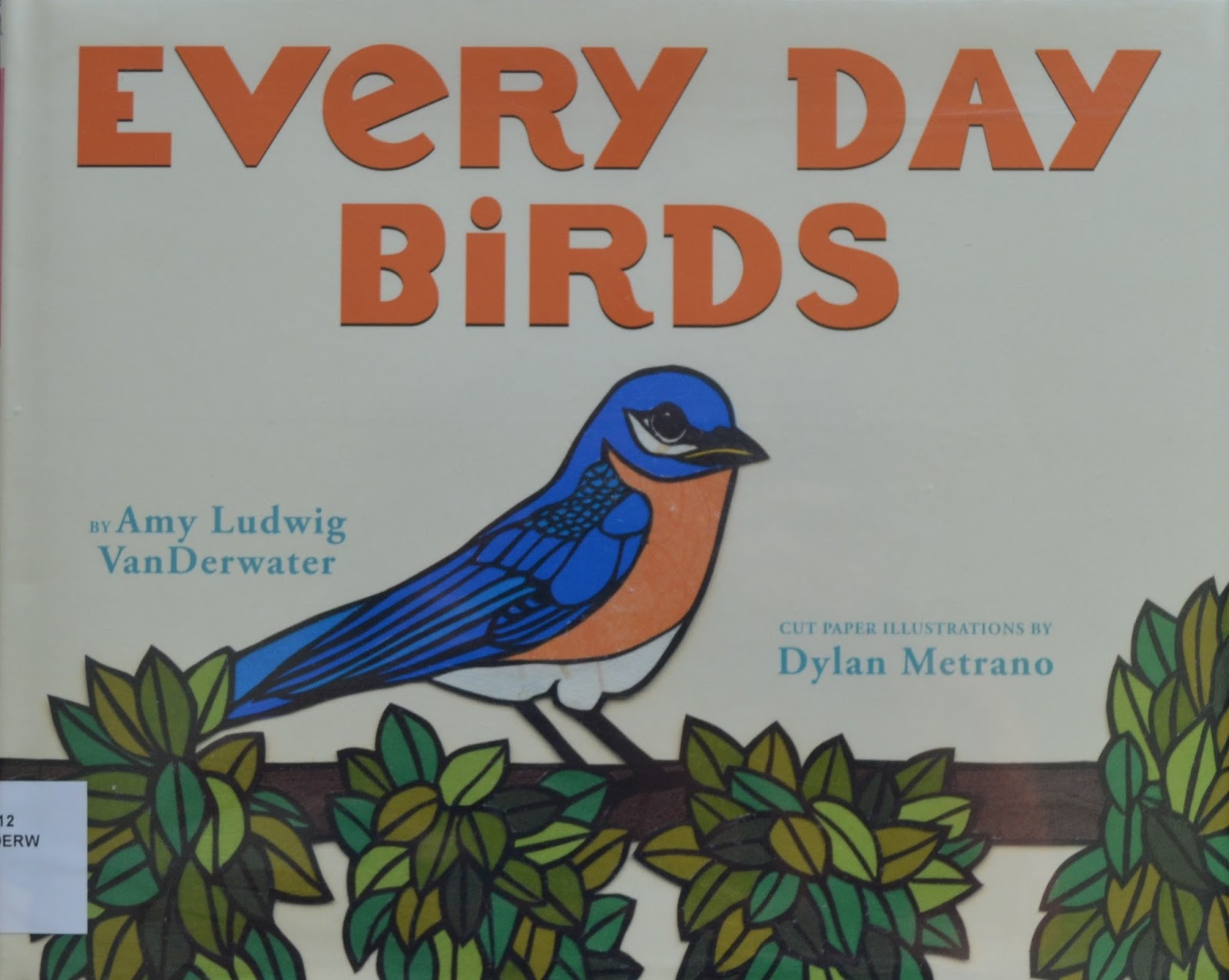
Every Day Birds
By Amy Ludwig VanDerwater
Cut Paper Illustrations by Dylan Metrano
(Orchard Books, 2016)
Birds you see each day are the stars of this book, Every Day Birds.
Simple text, colorful fonts, beautiful cut paper illustrations, and one characteristic or behavior of each featured bird make this book a keeper. Twenty common North American birds are pictured in Every Day Birds. A picture identification and additional information section is included at the end of the book.
Young readers and budding bird lovers will treasure reading Every Day Birds. Reading will be followed up by time outdoors searching for the birds who live among the book pages.
Check out this brand new book. Every Day Birds.
KID KANDY:
Bird Watching
Materials: Every Day Birds, binoculars, hat
1. Read and study the birds found in Every Day Birds.
2. Put on your hat and head outside to look for birds.
3. Use the binoculars to see details of different birds without having to get too close.
4. Compare the birds you found to the ones in the book. How many did you find? Which was your favorite?
5. Some bird enthusiasts keep a lifetime list of the birds they see. You could make your own list by using a notebook for a bird journal. Draw or list the birds you observe.
Are you having fun yet? I’d love to hear which birds you saw on your bird hunt.
Tweet, tweet!
 by Paula Yoo It’s Day 28 of Tara Lazar’s annual Picture Book Idea Month (AKA PiBoIdMo)! Two more days and you’re done. Best of all, you will have 30 ideas to explore for your next…
Source: PiBoIdMo Day 28: Paula Yoo Explores Non-Fiction Biographies (plus a prize!)
PiBoldMo is over, but the information in this post is wonderful! Thank you, Paula Yoo and Tara Lazar!
 by author Catherine Bailey & illustrator Sarita Rich Thank you for hosting us today, Miss Tara. We are excited to be here, and we are excited to celebrate the release of HYPNOSIS HARRY, and we …
Source: HYPNOSIS HARRY is here! Author & Illustrator Interview Each Other (plus a giveaway!)
This new release sounds like a wonderfully funny story! The author & illustrator interviews are very good. Thanks, Tara!
 Note: The following advice has been taken from Lesson 8 (Don’t Write in Rhyme) and Lesson 9 (Rhyming Is All About Rhythm) of Josh Funk’s ‘Resources for Writers – Guide to Wr…
Source: How (Not) to Write a Rhyming Picture Book
I just found this great resource to help writers with rhyming picture books. Yay!
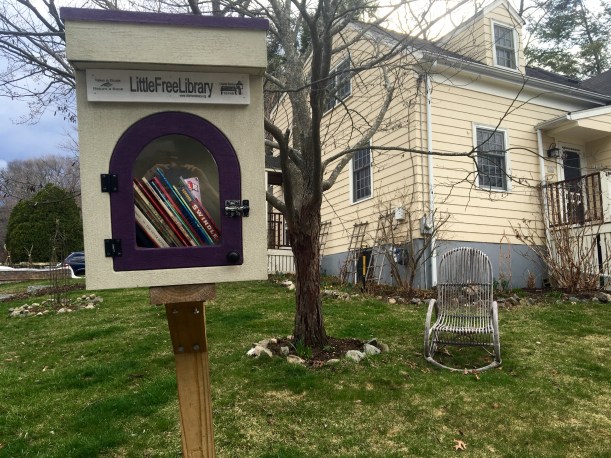 We often support schools and communities with promoting summer reading. We want students to continue their “readerly lives” over the summer. A few years ago, we were researching ideas to get book…
Source: Top 10 Reasons to Create Little Free Libraries in Your Community by Tammy Mulligan and Clare
I want to do this at my house! There are 3 little libraries in our neighborhood. Love them!
 |
|
Pumpkin spice black pepper orange play dough – lots of fun! |
By Angie Quantrell @AngieQuantrell
Play dough is one of the absolute best toy/manipulative/sensory activities available to kid-dom!
I kid you not. Snicker, snicker. And not the snicker of the famed chocolate and peanut variety.
This is the best and most versatile recipe I’ve found. I have used it for over 20 years and have only rarely uncelebrated failure.
 |
|
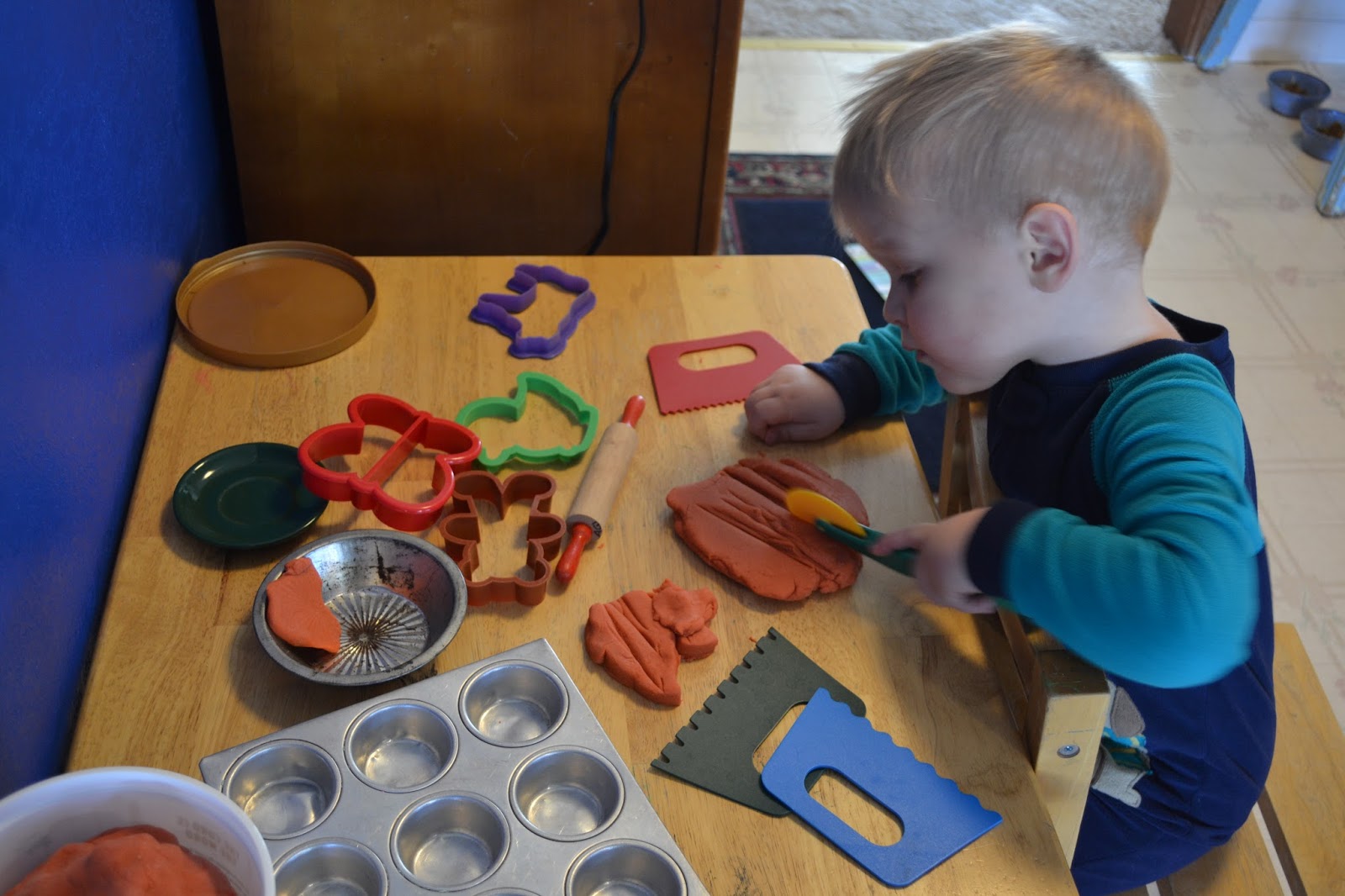
Tools make all the difference. Cutting, chopping, manipulating, and making prints are great activities for little hands. |
Best Ever Play Dough Recipe
3 cups flour
1 cup salt
2 T. oil (vegetable or baby oil)
1 T. alum
3 cups boiling water
Paste food coloring (add to boiling water to melt and mix it)
1. Put dry ingredients in a large mixing bowl. Stir well.
2. Drizzle oil over dry mix.
3. Stir food coloring into boiling water. Pour over ingredients.
4. Stir well with a wooden spoon and spatula.
5. Turn out onto a counter. It will be hot, but you have to knead the dough while it is hot to activate the ingredients. Knead the dough and scrape off sticky bits with a spatula. Don’t worry, it will get less sticky as it cools. If it is horribly sticky, add tiny bits of flour as needed.
6. After the mixture is well mixed, cool completely and store in a lidded plastic container.
7. Enjoy!
This is the basic recipe. I often add spices or textures like pumpkin spice, cornmeal, or cocoa. Play with the recipe. It’s worth the mess.
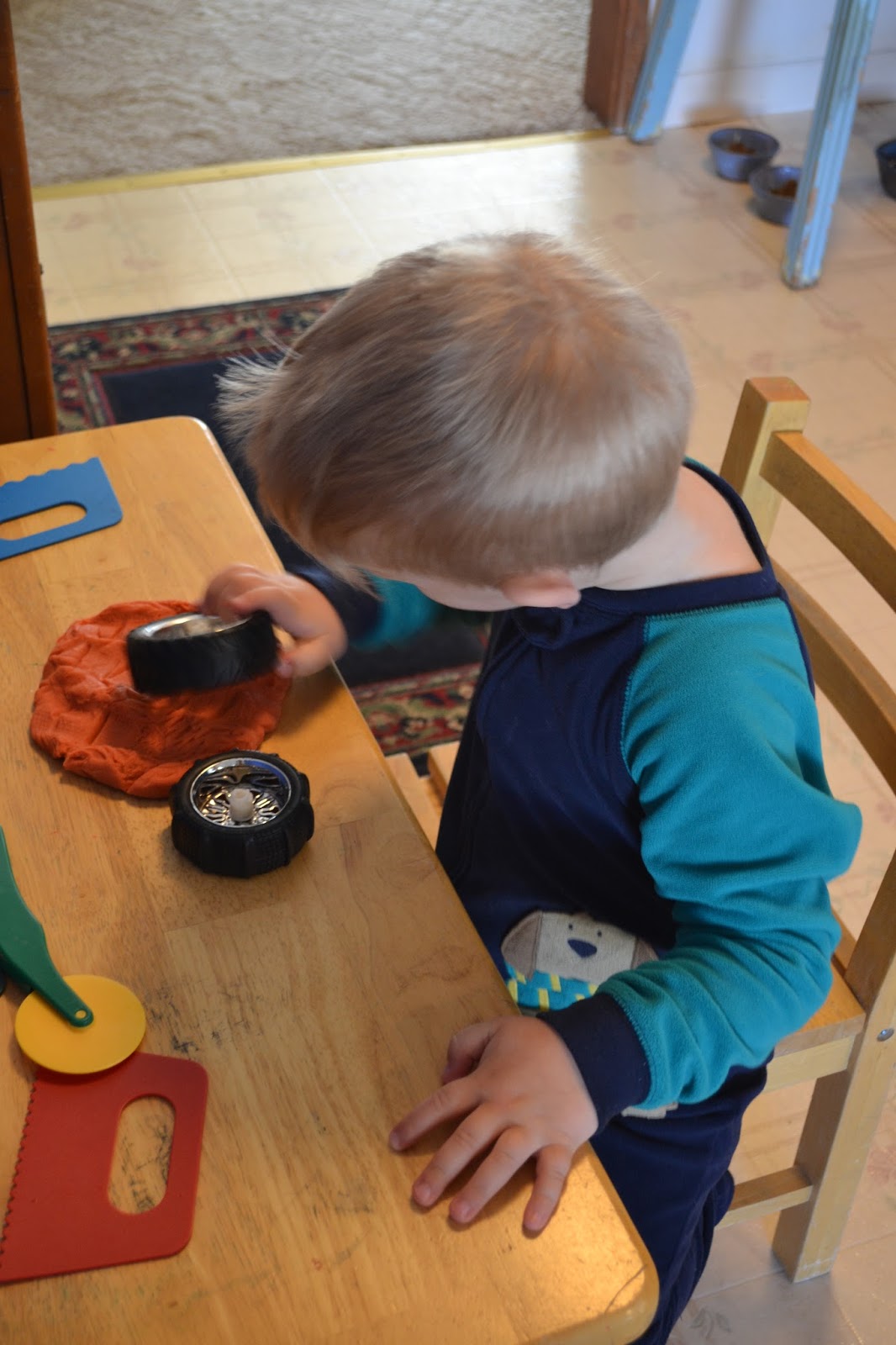
Today Donavyn and I made play dough. He wanted orange, so we made orange. I wanted a scent, so I added pumpkin spice. He also wanted to dump pepper, so we added pepper!
 |
|
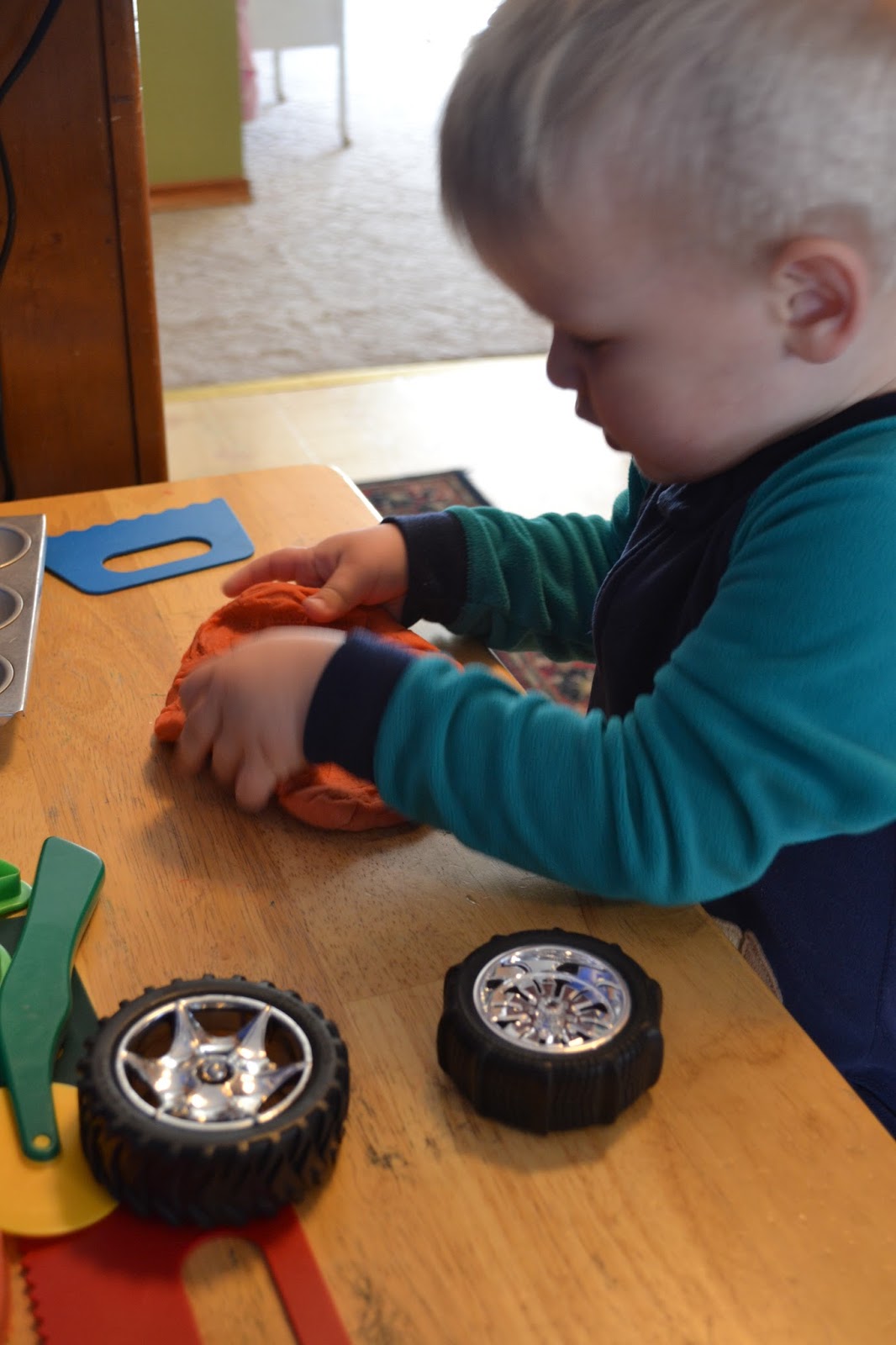
Old tires make great tracks. |
Together with play dough, tools and toys add to the experience. Be creative and grab things that make patterns, cut, chop, shape, and can be used to interact with the play dough. Avoid using anything you truly love. The salt and necessity of a good wash can potentially destroy special items. Stick to the eventually-disposable toys and you can dump your worries in the trash.
 |
|
Even the sides of tires are interesting. Even this 53 years-young kid loves to play with play dough. What’s your favorite sensory toy? |
 Love, Laughter, and Life